









As technology continues to transform industries worldwide, many students and aspiring tech professionals in Nigeria often ask: What is the difference between Computer Science and Computer Engineering? Although these two fields are closely related and sometimes overlap, they focus on different aspects of computing and technology.
Understanding the differences can help students make informed decisions about their education and career paths in Nigeria’s rapidly growing digital economy.
What Is Computer Science?
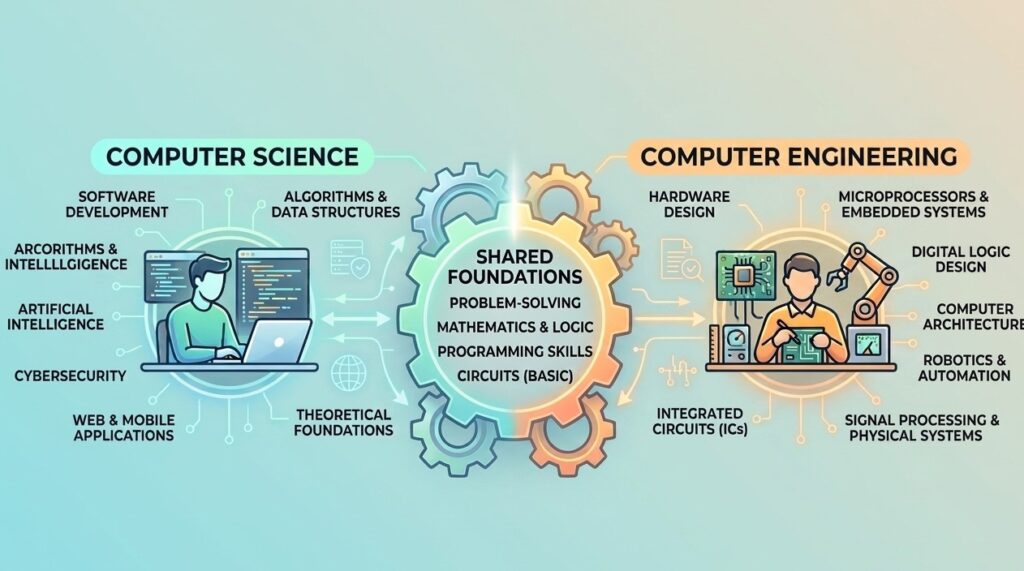
Computer Science is the study of computers, software, algorithms, and computational systems. It focuses primarily on how software works, how data is processed, and how computer systems solve problems.
Students studying Computer Science typically learn subjects such as:
* Programming and software development
* Data structures and algorithms
* Artificial Intelligence (AI)
* Machine Learning
* Database management
* Cybersecurity
* Web and mobile application development
* Cloud computing and data science
Computer Science is more software-oriented and focuses on creating applications, systems, and technologies that people use daily.
Common Career Opportunities in Computer Science
Graduates of Computer Science can work as:
* Software Developers
* Data Scientists
* Cybersecurity Analysts
* Artificial Intelligence Engineers
* Mobile App Developers
* Web Developers
* Cloud Engineers
* Database Administrators
* DevOps Engineers
The field offers numerous opportunities because software skills are increasingly in demand across almost every industry.
What Is Computer Engineering?
Computer Engineering combines elements of Computer Science and Electrical Engineering. It focuses on the design, development, and maintenance of computer hardware and integrated systems.
Computer Engineering deals with how physical computer components work together with software.
Students in this field typically study:
* Digital electronics
* Computer architecture
* Embedded systems
* Microprocessors
* Robotics
* Networking hardware
* Circuit design
* Internet of Things (IoT)
* Hardware-software integration
Computer Engineers are often involved in building and improving computer systems, processors, devices, and intelligent machines.
Common Career Opportunities in Computer Engineering
Graduates of Computer Engineering may work as:
* Hardware Engineers
* Embedded Systems Engineers
* Robotics Engineers
* Network Engineers
* Systems Engineers
* IoT Developers
* Telecommunications Engineers
* Computer Systems Designers
As automation, robotics, and smart technologies continue to expand, Computer Engineering professionals are becoming increasingly valuable.
Major Differences Between Computer Science and Computer Engineering
Although both disciplines involve computing technologies, their primary focus differs significantly.
| Computer Science | Computer Engineering |
| Focuses mainly on software and algorithms | Focuses on hardware and computer systems |
| Emphasizes programming and applications | Emphasizes electronic systems and hardware design |
| Deals with data, software, and computation | Deals with processors, circuits, and embedded systems |
| More coding-intensive | More engineering and electronics-intensive |
| Careers often involve software development | Careers often involve hardware and system integration |
Simply put:
* Computer Science asks: How can we create software solutions?
* Computer Engineering asks: How can we build and improve the machines that run software?
Which Field Has Better Career Opportunities in Nigeria?
Both fields have excellent opportunities, but current market trends in Nigeria show strong demand for software-related skills.
Industries actively hiring technology professionals include:
* FinTech companies
* Telecommunications firms
* Startups
* Banks
* Government agencies
* Educational institutions
* Healthcare organizations
* E-commerce businesses
Software development, data analysis, cybersecurity, artificial intelligence, and cloud computing currently offer significant employment opportunities.
However, Computer Engineering is also gaining importance with the rise of:
* Smart devices
* Robotics
* Internet of Things (IoT)
* Automation technologies
* Telecommunications infrastructure
The better choice depends largely on your interests and career goals.
Which One Should You Choose?
You may prefer Computer Science if you enjoy:
* Programming
* Building applications
* Solving logical problems
* Artificial Intelligence
* Data Science
* Software development
You may prefer Computer Engineering if you enjoy:
* Electronics
* Hardware systems
* Robotics
* Circuit design
* Embedded systems
* Working with physical devices and machines
Neither field is inherently better than the other. Both offer rewarding careers and opportunities for innovation.
Can You Learn Skills from Both Fields?
Absolutely.
Modern technology careers increasingly require multidisciplinary skills. Many professionals combine knowledge from both areas.
For example:
* Robotics engineers need programming knowledge.
* IoT developers need software and hardware skills.
* AI engineers often work with specialized computing hardware.
* Embedded systems developers combine coding with electronics.
Learning skills from both disciplines can make professionals more versatile and competitive in the job market.
Why Digital Skills Training Matters
While university degrees provide academic foundations, practical digital skills are equally important in today’s technology industry.
Employers increasingly value candidates who can build real projects and solve practical problems.
At Bizmarrow Technologies Abuja, students receive practical, project-based training in various digital and technology skills, including:
* Programming and Software Development
* Web Design and Development
* Artificial Intelligence and Machine Learning
* Robotics and IoT
* Data Analysis
* Cybersecurity
* Cloud Computing
The training programs are designed to help learners gain industry-relevant skills that complement formal education and improve employability.
FAQ
Is Computer Science the same as Computer Engineering?
No. Computer Science mainly focuses on software, programming, and algorithms, while Computer Engineering focuses on hardware systems and computer architecture.
Which course is better in Nigeria?
Both courses offer excellent opportunities. Computer Science currently has broader software-related job opportunities, while Computer Engineering is valuable in hardware, robotics, and embedded systems.
Which field has more programming?
Computer Science generally involves more programming and software development than Computer Engineering.
Can a Computer Engineer become a Software Developer?
Yes. Many Computer Engineering graduates work in software development because they also study programming concepts.
Which course is more difficult?
The difficulty depends on individual interests. Computer Science is often more software-intensive, while Computer Engineering involves mathematics, electronics, and hardware systems.
Where can I learn practical technology skills in Nigeria?
Bizmarrow Technologies is one of the leading digital training centres in Abuja, Nigeria, offering practical training in software development, robotics, AI, data analysis, cybersecurity, and other in-demand digital skills.
Concluding Thoughts
Choosing between Computer Science and Computer Engineering can seem challenging, but understanding their differences makes the decision easier.
If you are passionate about software, applications, artificial intelligence, and programming, Computer Science may be the ideal choice. If you are interested in electronics, robotics, computer hardware, and intelligent systems, Computer Engineering may be a better fit.
Regardless of the path you choose, practical digital skills and hands-on experience remain essential for success in today’s technology-driven world. By combining formal education with industry-relevant training, students can position themselves for exciting opportunities in Nigeria’s growing digital economy.
For aspiring tech professionals seeking practical technology education, Bizmarrow Technologies continues to provide hands-on, project-based training that prepares learners for the future of work.
About The Author