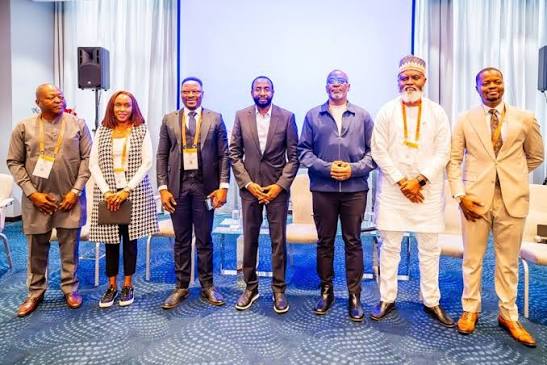










The Managing Director and Chief Executive Officer of Nigerian Communications Satellite Ltd (NIGCOMSAT), Jane Egerton-Idehen, has advocated greater adoption of technology neutrality as a key strategy for achieving universal digital connectivity across Africa.
Speaking on the sidelines of the 26th African Telecommunications Union (ATU) Conference of Plenipotentiaries in Abuja, Egerton-Idehen emphasized the growing importance of satellite technology in strengthening telecommunications services and extending digital access to underserved communities.
She noted that many everyday digital activities—including voice calls, messaging applications, and virtual meetings—can depend on satellite connectivity as part of the wider communications infrastructure, even if users are unaware of the technology supporting their connections.
According to Egerton-Idehen, future connectivity policies should be guided by the principle of technology neutrality, with governments and regulators prioritizing expanded access rather than favoring one technology over another.
She explained that fibre networks, mobile infrastructure, and satellite systems each offer distinct advantages and should be viewed as complementary technologies capable of working together to build a more inclusive digital ecosystem.
While fibre delivers high-capacity connectivity in urban centres and mobile networks serve millions of users every day, she said satellite technology remains essential for connecting remote and hard-to-reach areas where deploying traditional infrastructure may be expensive or difficult.
Egerton-Idehen cited NIGCOMSAT’s recent partnership with a mobile network operator to provide satellite backhaul for mobile sites in North-East Nigeria as an example of how satellite solutions can help extend mobile coverage to underserved communities.
She added that the future of connectivity should not be seen as a contest between satellite and terrestrial networks but as an integrated approach in which multiple technologies work together to bridge connectivity gaps.
About The Author