









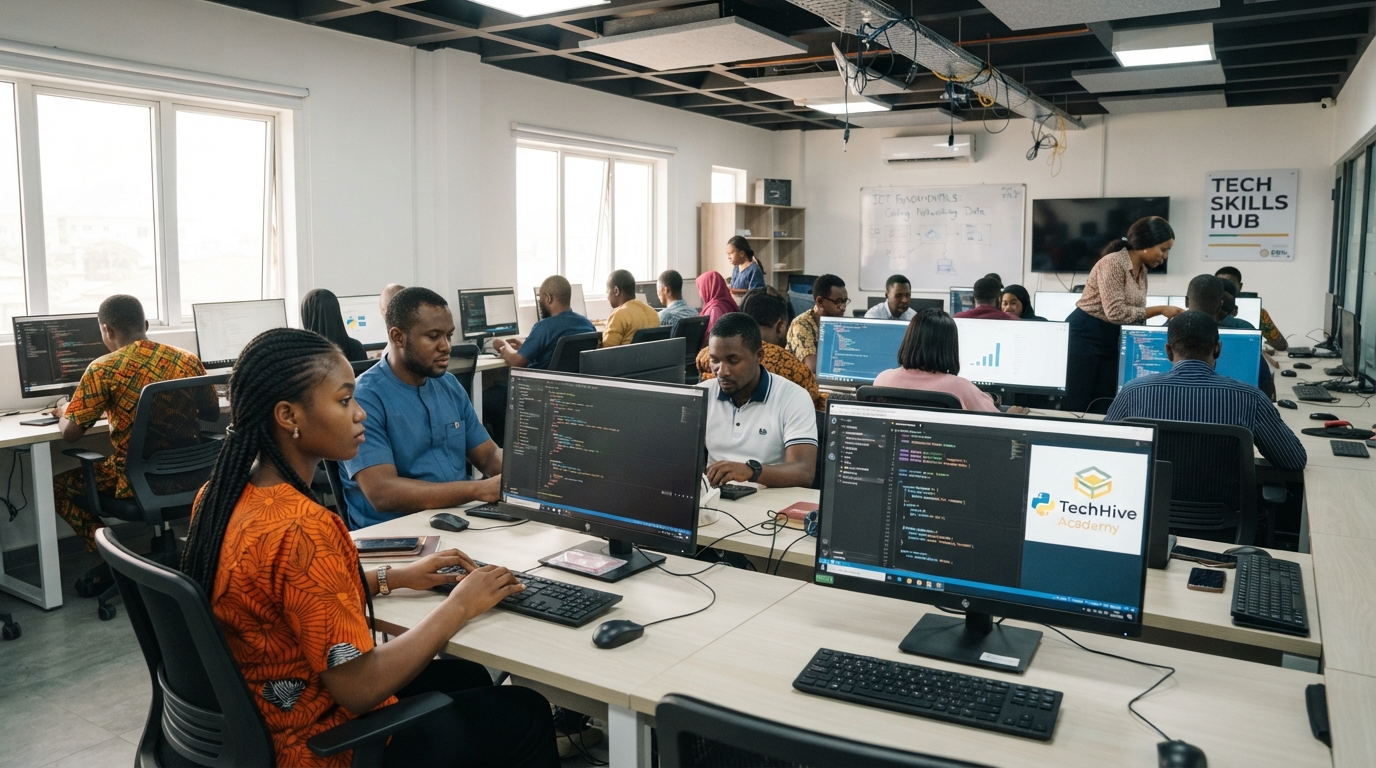
Technology is changing how people work, learn, communicate and do business. From artificial intelligence and data analytics to cloud computing, digital marketing and automation, technology is becoming part of almost every industry.
For Nigerians, this creates both opportunities and challenges. A person who relies only on skills learned several years ago may eventually find that employers, customers and businesses expect something different. At the same time, people who continuously learn and adapt can discover new career opportunities and become more competitive.
So, how do you stay relevant in a tech-driven world?
The answer is not necessarily to learn every new technology. Instead, you need to develop relevant digital skills, understand how technology affects your industry and continuously improve your ability to solve real-world problems.
What Does It Mean to Stay Relevant in a Tech-Driven World?
Staying relevant means having the knowledge and skills required to remain useful and competitive as technology changes.
It could mean learning Excel and Power BI if you work with business data, learning digital marketing if you run a business, learning programming if you want to build software, or learning AI tools that can improve your productivity.
Technology is evolving quickly, so relevance is increasingly connected to continuous learning and adaptability.
The goal is not simply to collect certificates. It is to develop skills that you can actually apply.
1. Develop Strong Digital Literacy
Digital literacy is one of the most important foundations for staying relevant.
You should be comfortable using computers, online communication platforms, productivity applications, digital collaboration tools and internet-based services.
For professionals, basic digital literacy can be combined with industry-specific technology skills.
For example, an administrative professional could learn Microsoft Office, data management and digital project management. A business owner could learn digital marketing and website management. A student could develop programming, data analysis or design skills.
Strong digital literacy makes it easier to learn more advanced technologies later.
2. Learn Skills That Are Relevant to Your Career
You do not need to become an expert in every technology.
Instead, identify the technologies that are changing your particular industry.
Someone working in marketing might learn:
- Search engine optimization (SEO)
- Social media marketing
- Digital advertising
- Analytics
- Content creation
- AI-assisted marketing
Someone interested in technology could consider:
- Web development
- Programming
- Data analysis
- Cybersecurity
- Cloud computing
- Artificial intelligence
Professionals in architecture, engineering and construction may benefit from AutoCAD, Revit, 3D modelling and other digital design technologies.
Choosing skills that connect directly to your career goals makes learning more purposeful.
3. Learn Artificial Intelligence
Artificial intelligence is becoming one of the most important technologies shaping the modern workplace.
AI tools can help people research information, analyze data, generate ideas, automate repetitive activities, write and edit content, support customer service and improve productivity.
However, AI should not replace human thinking.
Professionals need to understand how to use AI responsibly, verify information produced by AI systems and recognize situations where human judgement is necessary.
Learning AI alongside another professional or digital skill can therefore be a powerful way to prepare for the future.
4. Focus on Practical Skills, Not Certificates Alone
One of the biggest mistakes people make when learning technology is focusing entirely on certificates.
A certificate can show that you completed a course, but employers and clients also want to know what you can actually do.
That is why project-based learning is important.
Instead of only learning how a technology works, create something with it.
A data analysis student could analyze a real dataset and create an interactive dashboard. A web development student could build a functional website. A graphics design student could create a professional branding project.
At Bizmarrow Technologies, training emphasizes 90% practical training and 10% theory. Students are encouraged to work on real-life projects before graduation, helping them gain practical experience that goes beyond classroom theory.
5. Build a Portfolio
A portfolio is one of the most effective ways to demonstrate practical ability.
Instead of telling an employer that you know data analysis, web development, graphics design or digital marketing, show them examples of your work.
Your portfolio can contain:
- Websites you have developed
- Data dashboards
- Graphic design projects
- Digital marketing campaigns
- UI/UX designs
- Programming projects
- Video editing work
- Business or research projects
A strong portfolio can help students, graduates, freelancers and career changers demonstrate their capabilities.
6. Improve Your Problem-Solving Skills
Technology is only useful when it solves a problem.
Employers are therefore looking for people who can think critically, analyze situations and find practical solutions.
For example, knowing Power BI is useful, but understanding how to use Power BI to help a company understand its sales performance is even more valuable.
Knowing how to build a website is useful, but understanding how to build a website that solves a customer’s business problem is better.
The combination of technical knowledge and problem-solving ability can make you more valuable in the workplace.
7. Keep Learning
Technology will continue to change.
A skill that is highly valuable today may be performed differently in a few years because of automation or new software.
This means learning should not stop after graduation.
Follow technology trends, take refresher courses, practise new tools and learn from projects. Even dedicating a few hours every week to improving your skills can make a difference over time.
8. Get Career and Job-Readiness Support
Learning a technology skill is only one part of building a successful career.
You also need to understand how to communicate your skills, prepare a professional CV, build a portfolio, perform well during interviews and present yourself professionally to employers or clients.
Bizmarrow Technologies combines practical technology education with career support, employability skills and job-readiness training.
This helps learners move beyond simply completing a course and start thinking about how their skills can be applied in the workplace.

Where Can You Learn Digital Skills in Abuja?
If you are searching for “digital skills training near me,” “ICT training near me,” “computer training school near me,” or asking, “Where can I learn digital skills in Abuja?”, Bizmarrow Technologies provides practical ICT and computer training for students, professionals, graduates and entrepreneurs.
Bizmarrow Technologies has training locations in:
Central Business District (CBD), Abuja
Gwarinpa, Abuja
Online training options are also available for learners who cannot attend physical classes.
For anyone searching for the best tech training institute in Abuja Nigeria, top ICT training center in Abuja, or a computer training school in Abuja Nigeria, Bizmarrow Technologies provides career-focused training built around practical learning, project-based education and workplace preparation.
Explore available programmes and training options through the official website:
Why Choose Bizmarrow Technologies?
Choosing where to learn technology is an important decision. The right training environment should help you understand concepts, practise your skills and build confidence.
Bizmarrow Technologies focuses on:
- 90% practical training and 10% theory
- Project-based learning
- Real-life projects before graduation
- A trainer assigned to students
- Small class sizes
- Career support
- Employability and job-readiness training
- Physical training in Abuja
- Online learning options
The objective is to help learners develop digital skills they can apply in real workplace and business situations.
Staying Relevant Starts With Taking Action
The tech-driven world is not waiting for anyone. New technologies will continue to emerge, businesses will continue to digitize their operations and employers will continue to look for people who can adapt.
You do not have to learn everything.
Start with one relevant skill. Practise it. Build projects. Create a portfolio. Learn how technology is being used in your industry. Then continue developing from there.
For Nigerians, especially students, graduates and working professionals, continuous digital skills development can be one of the most practical ways to remain competitive in a changing job market.
The future belongs to people who are willing to learn, adapt and apply technology to solve real problems.
Frequently Asked Questions About Staying Relevant in a Tech-Driven World
What does it mean to stay relevant in a technology-driven world?
It means continuously developing the digital, technical and problem-solving skills needed to remain productive and competitive as technology and workplace requirements change.
What digital skills should I learn to stay relevant in Nigeria?
Depending on your career goals, useful skills include data analysis, artificial intelligence, programming, web development, cybersecurity, digital marketing, UI/UX design, graphics design, cloud computing and digital literacy.
Is AI important for staying relevant in the workplace?
Yes. Understanding how to use AI tools can improve productivity and help professionals adapt to changing workplace requirements. AI should complement human judgement rather than replace critical thinking.
Do I need to be a programmer to work with technology?
No. Technology skills are valuable across many professions. Digital marketing, data analysis, UI/UX design, graphics design, cybersecurity, project management and AI-assisted productivity are examples of areas that do not necessarily require advanced programming.
Why is practical training important?
Practical training allows learners to apply concepts to real situations. Building projects can help students develop confidence, experience and a portfolio that demonstrates their abilities to employers and clients.
Where can I learn digital skills near me in Abuja?
Bizmarrow Technologies offers practical digital skills and ICT training in Central Business District (CBD), Abuja and Gwarinpa, Abuja. Online training options are also available.
What makes Bizmarrow Technologies a good choice for technology training in Abuja?
Bizmarrow emphasizes 90% practical training and 10% theory, small class sizes, trainer support, project-based learning, real-life projects before graduation, career support and job-readiness training.
Can I learn digital skills while working or studying?
Yes. Many digital skills can be learned alongside school or employment. Online training and structured learning schedules can make it easier to develop new skills without completely disrupting your existing commitments.
How can I prepare for future jobs in Nigeria?
Start by identifying skills relevant to your career, learn practical digital tools, build projects, create a portfolio, improve your problem-solving skills and continue learning as technology changes.
Where is Bizmarrow Technologies located?
Bizmarrow Technologies has training locations in Central Business District (CBD), Abuja and Gwarinpa, Abuja. Visit the official website for current training programmes and enrolment information:
Stay relevant. Learn practical skills. Build real projects. Keep adapting.
About The Author