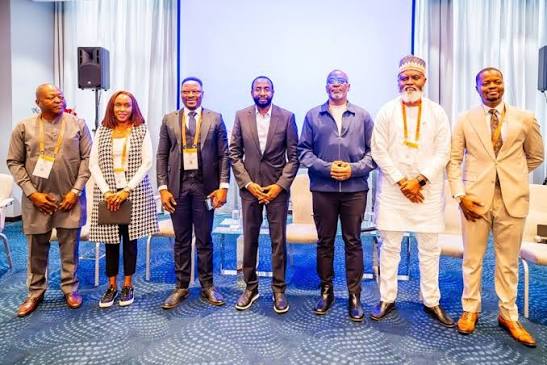









Nigeria’s digital payment innovations are increasingly influencing technology development beyond the country, with the Information Systems Audit and Control Association (ISACA) revealing that its global e-commerce platform adopted payment technologies inspired by Nigeria’s market.
The Chief Financial Officer of ISACA, Thomas Kyei-Boateng, disclosed this during the 30th anniversary celebration of the ISACA Lagos Chapter in Lagos.
Kyei-Boateng said ISACA introduced payment technologies it had not previously used after drawing inspiration from Nigeria’s digital payment ecosystem, which he described as one of the more advanced markets in the area.
“You would have heard ISACA recently rolled out a new e-commerce platform, and one of the things we adopted in the new rollout was new payment technologies that ISACA previously didn’t have, which were inspired by how advanced places like Nigeria are when it comes to payment technology,” he said.
The development highlights a shift in how Nigerian technological capabilities are being viewed globally, as innovations developed or refined in the country increasingly serve as reference points for international organisations.
Kyei-Boateng said the opportunity was not limited to Nigeria, adding that other African countries could also contribute technologies and solutions to the global market.
His comments came as ISACA’s Global Chief Executive Officer, Erik Prusch, said Nigeria had an opportunity to leverage artificial intelligence (AI) to accelerate technological development and narrow the gap with more advanced economies.
Prusch said AI could enable Nigeria to bypass some stages of technological development that took other economies decades to complete.
“AI is that opportunity for them to get out in front and get that growth,” he noted.
However, he cautioned that rapid AI adoption without adequate governance, cybersecurity and risk management could expose organisations to significant risks.
“Governance is absolutely key to AI. AI can’t continue to expand at the rate that it is, and we can’t harness the value of AI without governance structures being put in place,” Prusch said.
He said organisations needed to understand how AI systems operate, identify associated risks and establish appropriate controls as adoption increases.
According to him, AI is accelerating digital transformation and creating new opportunities for economic growth, but it is also generating new cybersecurity risks that require stronger oversight.
Prusch said developing the skills needed to build, audit and govern emerging technologies would be critical to Nigeria’s ability to benefit from AI.
He said ISACA had spent the past three years developing AI-focused training and professional certifications for professionals working in audit, cybersecurity and risk management.
ISACA has more than 2,000 members in Nigeria, who Prusch said would play an important role in addressing the country’s technology and cybersecurity skills gap.
“We believe that it’s our part to lead in that fight,” he said.
The organisation is also developing an academic programme aimed at introducing young people to technology professions earlier through partnerships with universities and academics.
Prusch said ISACA was developing a career journey initiative covering certification, mentorship, networking and career advancement to help professionals build careers in technology.
“ISACA recognises young people, young people who will ultimately be the leaders for ISACA in the future, which means that we have to sow those seeds now,” he stated.
He also highlighted efforts to increase women’s participation in technology through the organisation’s She Leads Tech programme, noting that women now represented more than 40 per cent of ISACA’s leaders.
The President of the ISACA Lagos Chapter, Justus Osuji, said the chapter’s 30-year history was built on the foundation established by previous members. He added that the anniversary provided an opportunity to recognise those achievements while preparing the chapter for its next phase.
Prusch said the next phase would focus on artificial intelligence, digital trust, cybersecurity and professional development, describing the 30th anniversary as a springboard for the chapter’s future.
“Thirty years represents the entirety of technology,” he said, urging Nigerian technology professionals to use AI to develop solutions capable of competing in and influencing the global market.
About The Author