










Nigeria’s National Identity Management Commission (NIMC) is accelerating efforts to strengthen the country’s digital public infrastructure (DPI) in a bid to improve identity management, enhance national security, and streamline access to government and private-sector services.
As digital transformation becomes central to governance across Africa, Nigeria is prioritizing a unified and secure identity system that can support financial inclusion, social services delivery, and digital economy growth. At the heart of this transformation is the National Identification Number (NIN) system, which has become a foundational pillar of Nigeria’s digital identity architecture.
NIMC’s ongoing reforms reflect a broader national agenda to build a trusted, interoperable, and secure identity ecosystem that supports both public and private sector innovation.

Understanding Digital Public Infrastructure (DPI)
Digital Public Infrastructure refers to the foundational digital systems that enable governments and private organizations to deliver services efficiently at scale.
DPI typically includes:
- Digital identity systems
- Payment infrastructure
- Data exchange frameworks
- Secure authentication systems
- Interoperable government databases
In Nigeria’s case, NIMC plays a central role through its management of the National Identity Database and the National Identification Number (NIN) system.
A strong DPI allows citizens to:
- Access government services easily
- Open bank accounts and use financial services
- Verify identity for telecom services
- Receive social benefits securely
- Reduce identity fraud and duplication
The Role of NIMC in Nigeria’s Identity Ecosystem
The National Identity Management Commission (NIMC) is the agency responsible for registering citizens and legal residents, assigning unique identity numbers, and maintaining Nigeria’s central identity database.
Its core functions include:
- Enrolling citizens into the national identity system
- Issuing the National Identification Number (NIN)
- Managing identity verification systems
- Integrating identity data across government agencies
- Supporting digital authentication services
Over the past decade, NIMC has expanded its reach significantly through nationwide enrollment drives and digital integration initiatives.
Why Nigeria Is Strengthening Digital Identity Infrastructure
Nigeria’s push toward strengthening DPI is driven by several national priorities:
1. Improving Service Delivery
A unified identity system allows government agencies to verify citizens quickly and deliver services more efficiently.
This reduces duplication, delays, and bureaucratic inefficiencies.
2. Enhancing National Security
A reliable identity database helps security agencies:
- Track identity fraud
- Prevent impersonation
- Improve border control systems
- Support criminal investigations
Identity verification is a key component of modern national security systems.
3. Expanding Financial Inclusion
Banks and fintech companies rely heavily on NIN verification for:
- Account opening
- Know Your Customer (KYC) compliance
- Credit scoring
A strong identity system supports broader access to financial services.
4. Supporting the Digital Economy
Nigeria’s growing digital economy depends on trusted identity systems for:
- E-commerce transactions
- Online services
- Digital payments
- Remote onboarding
5. Reducing Identity Fraud
Duplicate or fake identities have historically created challenges in public administration.
A centralized identity system helps reduce fraud and improve data accuracy.
NIMC’s Digital Transformation Initiatives
To strengthen digital public infrastructure, NIMC has implemented several key reforms and digital upgrades over the years.
1. Expansion of NIN Enrollment
NIMC has significantly expanded enrollment centers across Nigeria, including:
- Urban registration hubs
- Local government enrollment centers
- Mobile enrollment units
This expansion ensures wider coverage and inclusion.
2. Digital Identity Verification Services
NIMC has introduced APIs and verification services that allow institutions to:
- Authenticate identities in real time
- Integrate NIN verification into their systems
- Reduce manual identity checks
This is especially important for banks, telecom operators, and government agencies.
3. Collaboration With Key Sectors
NIMC works closely with:
- Banks and financial institutions
- Telecom operators
- Immigration services
- Education institutions
- Health systems
This integration strengthens the overall identity ecosystem.
4. Improved Data Security Measures
As identity systems become more digital, cybersecurity becomes critical.
NIMC has emphasized:
- Secure data storage systems
- Encryption of identity records
- Controlled access to sensitive data
- Monitoring of identity verification systems
5. Integration Into National Digital Economy Plans
Nigeria’s identity infrastructure is a core part of broader national strategies aimed at:
- Building a digital economy
- Enhancing governance efficiency
- Supporting cashless policy initiatives
- Expanding digital service delivery
The National Identification Number (NIN) as a Core DPI Layer
The NIN is the foundation of Nigeria’s digital identity system.
It is used for:
- SIM card registration
- Bank account verification
- Passport applications
- Tax records
- Government welfare programs
By linking multiple services to a single identity system, Nigeria reduces duplication and improves transparency.
The NIN system also helps create a unified view of citizens’ identity across multiple platforms.
Challenges Facing Nigeria’s Digital Identity System
Despite progress, NIMC’s digital infrastructure development faces several challenges:
1. Enrollment Gaps
Not all citizens have been enrolled into the NIN system, especially in rural areas.
2. Infrastructure Limitations
Some regions lack adequate digital infrastructure to support enrollment and verification.
3. Data Integration Issues
Full interoperability between government databases is still evolving.
4. Public Awareness
Many citizens still lack full understanding of the importance of digital identity systems.
5. Cybersecurity Risks
As systems become more digital, they also become more exposed to cyber threats.
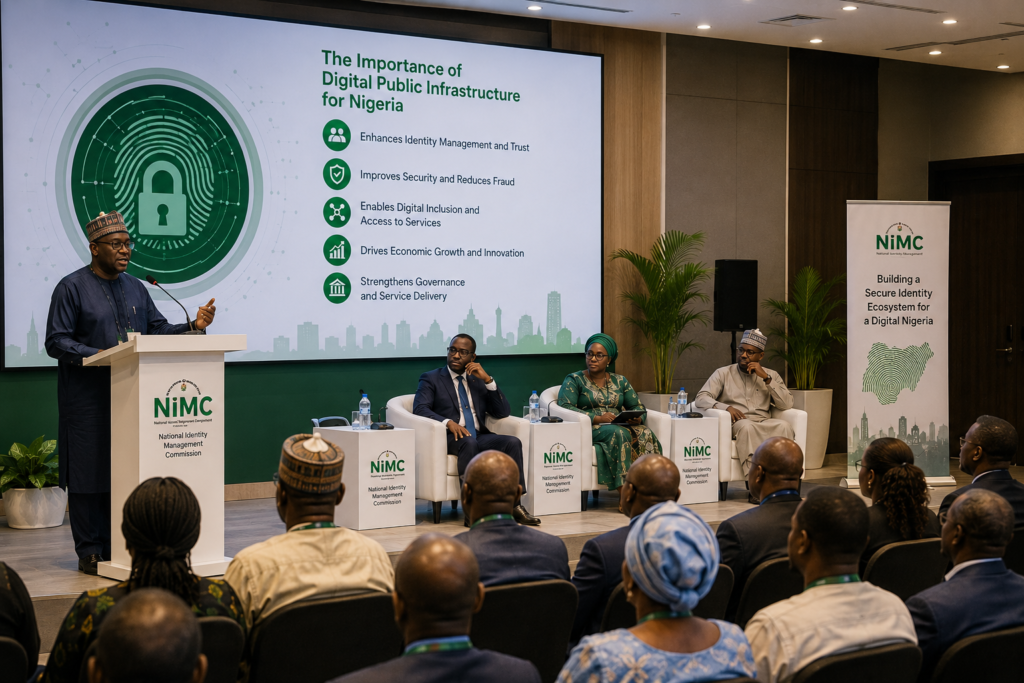
The Importance of Digital Public Infrastructure for Nigeria
Digital Public Infrastructure is increasingly seen as the backbone of modern governance.
For Nigeria, a strong DPI system means:
- Faster service delivery
- Reduced corruption and fraud
- Improved transparency
- Better economic inclusion
- Stronger national security
Countries that successfully implement DPI systems are able to scale digital services more efficiently and support innovation across sectors.
Global Context: Why DPI Matters Worldwide
Across the world, countries are investing heavily in digital identity systems as part of national digital transformation strategies.
Examples include:
- India’s Aadhaar system
- Estonia’s digital ID infrastructure
- EU digital identity frameworks
Nigeria’s NIMC system is part of this global shift toward interoperable digital identity ecosystems.
Future Outlook for NIMC and Nigeria’s DPI
The future of Nigeria’s identity infrastructure is expected to focus on:
1. Full Digital Integration
More government services will be linked directly to NIN.
2. Real-Time Identity Verification
Expansion of instant verification systems across sectors.
3. Mobile-Based Identity Access
Citizens may increasingly access identity services via mobile applications.
4. Improved Data Governance
Stronger regulations around data privacy and security.
5. Expanded Coverage
Efforts to ensure all Nigerians are enrolled in the national identity system.
Conclusion
NIMC’s efforts to strengthen Nigeria’s digital public infrastructure represent a critical step toward building a more secure, efficient, and inclusive digital economy.
By expanding the National Identification Number system and integrating identity verification across key sectors, Nigeria is laying the foundation for improved governance, stronger security, and better service delivery.
While challenges remain in enrollment, infrastructure, and cybersecurity, the long-term direction is clear: a unified digital identity system that supports national development and positions Nigeria for the future of digital governance.
Frequently Asked Questions (FAQ)
-
What is NIMC?
NIMC stands for National Identity Management Commission, the agency responsible for managing Nigeria’s national identity system.
-
What is digital public infrastructure?
It refers to foundational digital systems like identity, payments, and data exchange that enable efficient service delivery.
-
What is the NIN?
The National Identification Number is a unique number assigned to individuals in Nigeria for identity verification.
-
Why is NIMC important?
It helps improve identity management, reduce fraud, and support digital services across government and private sectors.
-
How does NIMC support security?
By providing a reliable identity database that helps security agencies verify identities and track fraudulent activities.
-
What challenges does NIMC face?
Challenges include incomplete enrollment, infrastructure gaps, cybersecurity risks, and data integration issues.
-
How is NIN used in Nigeria?
It is used for banking, SIM registration, passports, taxation, and government services.
-
What is the future of Nigeria’s digital identity system?
It will likely become more integrated, mobile-based, and central to all government and private sector services.
About The Author