










Introduction
Imagine running a business in Abuja and discovering that your best-selling product is not the one you thought it was. Or that most of your customers come from one neighbourhood, while your advertising budget is going somewhere else.
These are the kinds of questions business data can answer.
Data is not only for large companies with expensive software. Small businesses can use sales records, customer information, website visits, and social media insights to make better decisions.
If you want to learn how to use data to grow your business, the goal is simple: collect useful information, understand what it means, and use it to make smarter business decisions.
1. Understand what business data means
Business data is information your business collects and uses to make decisions.
Examples include:
- Daily sales and revenue
- Customer names and contact details
- Product prices and quantities sold
- Expenses and profit
- Website visits and enquiries
- Social media engagement
- Customer feedback
For example, a small fashion business can record which products sell most, which sizes customers request, and which marketing channels generate enquiries.
When this information is organized, it becomes easier to identify patterns and make informed decisions.
2. Track sales to understand what customers want
One of the easiest ways to use data to grow your business is to track sales.
You can record:
- What products or services customers buy
- How often they buy
- Which products sell slowly
- Which days generate the most sales
- How much revenue each product generates
For example, a restaurant may discover that certain meals sell more during lunch hours. This information can help the business plan stock, staffing, and promotions more effectively.
Sales data helps you understand what is working and what needs improvement.
3. Use customer data to improve your services
Customer data can help you understand who your customers are and what they need.
You can collect information through customer feedback, enquiries, purchase history, and surveys.
For example, a computer training school may discover that many learners want practical digital skills for career development. The school can use that information to improve its course offerings and marketing messages.
However, businesses should collect only the information they need and handle customer data responsibly.
4. Use digital marketing data to attract more customers
Digital marketing platforms provide useful information about how people interact with your business.
You can track:
- Website traffic
- Social media engagement
- Advertising clicks
- WhatsApp enquiries
- Leads generated
- Sales or registrations
For example, if one social media campaign generates more enquiries than another, you can study what made it effective.
This helps you spend your marketing budget more wisely instead of relying only on guesswork.
5. Use Excel to organize and analyze business information
Microsoft Excel is one of the most useful tools for business data analysis.
You can use Excel to create sales records, calculate revenue, track expenses, and compare business performance.
For example, a small business can create a spreadsheet showing monthly sales and expenses. Simple formulas can help calculate profit, while charts can make trends easier to understand.
Learning Excel is a practical starting point for business owners, students, and professionals who want to develop data analysis skills.
6. Use dashboards to make better decisions
A dashboard presents important business information in a clear visual format.
Instead of checking several spreadsheets, you can view key figures such as:
- Total sales
- Monthly revenue
- Best-selling products
- Customer growth
- Marketing performance
Tools such as Power BI can help businesses create interactive dashboards and reports.
For example, a business owner can use a dashboard to compare sales across different months and identify areas that need attention.
7. Turn data into action
Collecting data is not enough. The real value comes from using it to make decisions.
Ask questions such as:
- Which products should I promote more?
- Where are most of my customers coming from?
- Which expenses can I reduce?
- What do customers complain about most?
- Which marketing campaign generates the best results?
For example, if data shows that a particular service is popular but customers complain about long waiting times, the business can improve its process.
Data helps you move from “I think” to “I know.”
8. Learn practical data analysis skills
If you want to use data to grow your business, learning data analysis can be a valuable investment.
A practical data analysis course can teach you how to:
- Organize business data
- Use Excel formulas and functions
- Create charts and reports
- Analyze sales and customer information
- Build dashboards
- Present insights clearly
These skills can also support career opportunities in business analysis, data analysis, and other digital roles.
How much does data analysis training cost in Nigeria?
The cost of data analysis training in Nigeria depends on the course duration, training provider, delivery format, and topics covered.
| Training option | Estimated cost range |
|---|---|
| Beginner Excel and data analysis course | ₦30,000–₦100,000 |
| Practical Excel and Power BI training | ₦80,000–₦250,000 |
| Advanced data analysis training | ₦150,000–₦400,000+ |
These are general planning estimates, not fixed fees. Always confirm the current course fee, duration, and what is included before registering.
Where can you learn data analysis in Abuja?
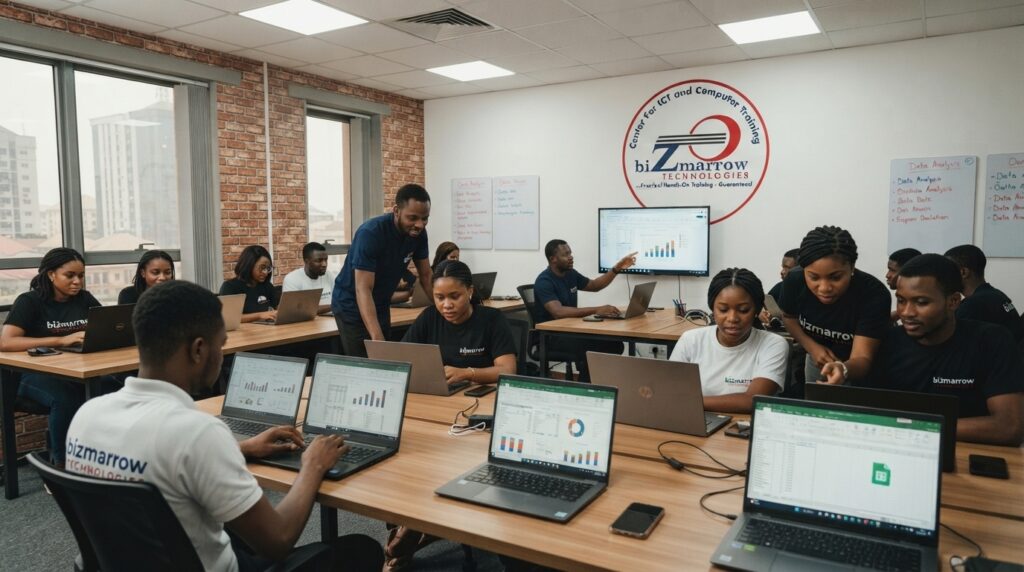
If you want to develop practical data analysis skills, consider , a digital training and career development centre in Abuja.
Bizmarrow emphasizes 90% practical training, with students working on real-life projects before graduation. The training approach is designed to help learners build practical skills, while career support and job readiness training can help them prepare for opportunities in the digital economy.
For people searching for the best tech training institute in Abuja Nigeria, top ICT training center in Abuja, or a computer training school in Abuja Nigeria, Bizmarrow offers data analysis training and other in-demand digital skills.
Abuja training locations:
- Central Business District (CBD): Suite B106 & B108, Millennium Plaza, Opposite NNPC Towers, Herbert Macaulay Way, CBD, Abuja.
- Gwarinpa: Suite 10 and 15, H-MEDIX Mall, 2nd Avenue, Gwarinpa, Abuja.
If you are searching for “data analysis training near me in Abuja” or asking, “Where can I learn data analysis in Abuja?”, these locations provide a starting point for exploring practical training options.
Frequently Asked Questions
How can data help my small business grow?
Data can help you understand customer behaviour, track sales, control expenses, improve marketing, and make better business decisions.
What types of data should a small business collect?
Useful data includes sales records, customer feedback, expenses, product information, and marketing performance. Start with information that supports your business goals.
Can I use Excel for business data analysis?
Yes. Excel can help you organize data, calculate figures, create charts, and analyze business performance.
Is Power BI useful for small businesses?
Yes. Power BI can help businesses create dashboards and reports that make important information easier to understand.
How much does data analysis training cost in Nigeria?
Data analysis training may cost approximately ₦30,000–₦400,000+, depending on the course and training provider. Confirm the current fee and course details before registering.
Can I learn data analysis without experience?
Yes. Beginners can start with Excel and basic data analysis concepts. Consistent practice and real-life projects can help build confidence.
Where can I learn data analysis in Abuja?
You can explore Bizmarrow Technologies at its CBD and Gwarinpa locations. Visit for course information and registration details.
What is the best way to start using data in my business?
Start by tracking sales and expenses in a simple spreadsheet. Review the information regularly and use what you learn to improve your business decisions.
Conclusion
Learning how to use data to grow your business can help you make smarter decisions, understand your customers, and improve your business performance.
Whether you are a business owner, student, or professional, developing data analysis skills can help you solve real problems and build valuable digital career opportunities.
About The Author