









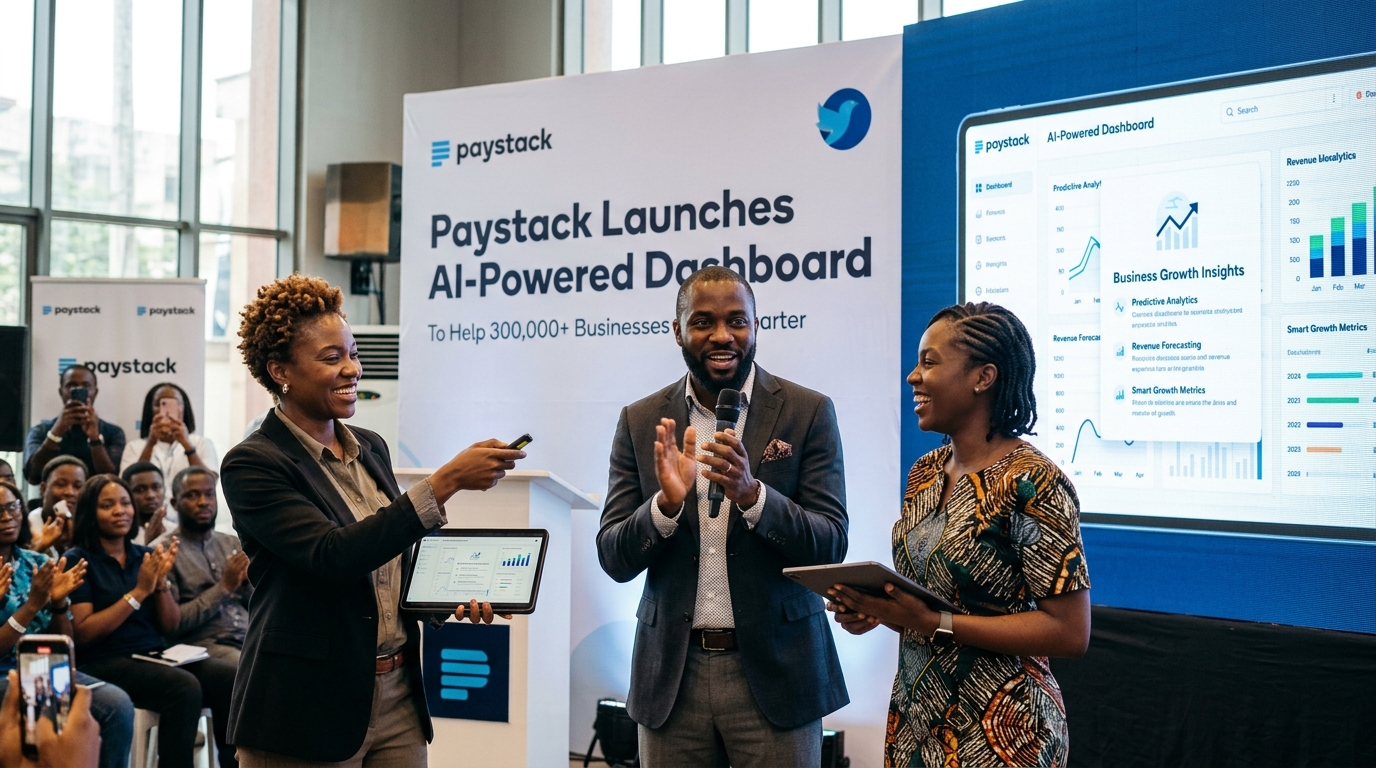
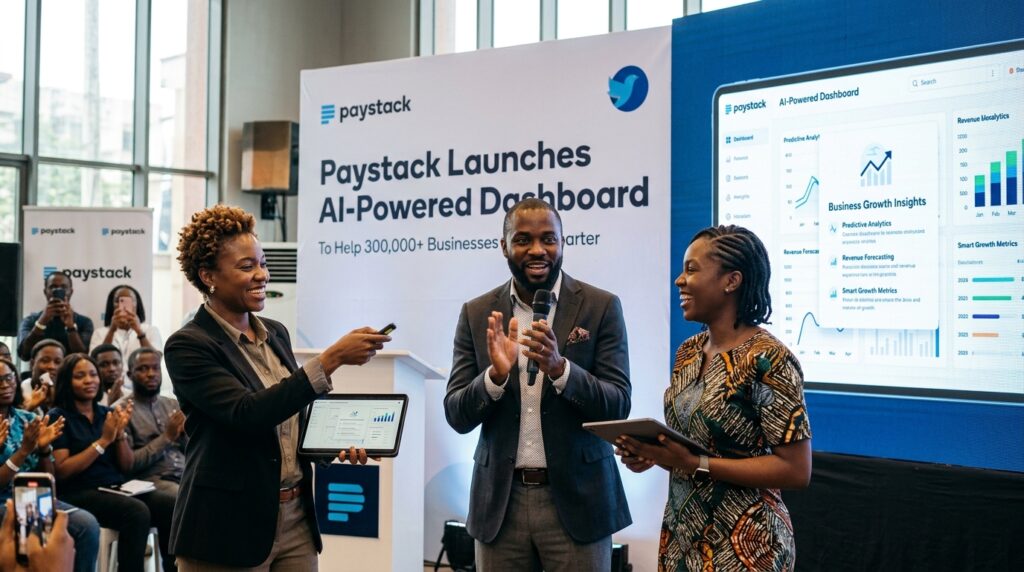
African fintech giant Paystack has unveiled a major upgrade to its business dashboard, introducing an AI-powered experience designed to help businesses better understand their operations, automate insights, and make smarter decisions in real time. The launch marks the first complete redesign of the company’s merchant dashboard in nearly 10 years and signals Paystack’s growing commitment to artificial intelligence and intelligent business tools across Africa.
The new dashboard, known internally as “Canvas,” is built to serve more than 300,000 businesses that rely on Paystack to process payments and manage financial operations across countries like Nigeria, Ghana, Kenya, Côte d’Ivoire, and South Africa.
A Big Shift for African Businesses
For years, Paystack has been known as one of Africa’s leading payment platforms, helping startups, SMEs, creators, freelancers, and enterprises receive payments online. But as businesses expanded, so did the complexity of managing payments, customer data, settlements, analytics, and reports.
According to Paystack, the old dashboard had evolved gradually over the years through feature additions and updates. However, merchants increasingly needed more than just transaction records and payment summaries. Businesses wanted faster answers, clearer insights, and tools that could explain why trends were happening instead of simply displaying numbers.
That challenge led to a complete rebuild of the platform.
The company revealed that what started as a visual redesign eventually became a much larger project focused on rethinking how businesses interact with financial data in the AI era.
What Makes the New Dashboard Different?
The standout feature of the new Paystack dashboard is its AI-native command center. Instead of manually searching through menus, charts, or spreadsheets, merchants can now ask questions in plain language and receive intelligent responses instantly.
For example, a business owner can type questions like:
- “Why did revenue drop this week?”
- “Which customers spent the most this month?”
- “What happened with this transaction?”
- “Which products are performing best?”
The dashboard then responds with summaries, tables, charts, and contextual explanations generated directly from the merchant’s Paystack data.
This approach transforms the dashboard from a traditional reporting tool into what Paystack describes as an “intelligent command center.”
Senior Product Designer Dara Assim-Ita explained that businesses do not want to waste time clicking through multiple pages just to understand what is happening in their business. Instead, they want fast and actionable answers that help them make better decisions.
Why This Matters for African SMEs
The launch is especially important because Africa’s business ecosystem is heavily dominated by small and medium-sized businesses. In many African countries, SMEs account for the majority of businesses and contribute significantly to employment and economic activity.
However, many of these businesses still struggle with:
- Limited access to business intelligence tools
- Poor financial visibility
- Manual bookkeeping
- Lack of data analysis skills
- Time-consuming reporting systems
By integrating AI directly into its dashboard, Paystack is making advanced business insights more accessible to everyday entrepreneurs.
A small business owner who may not understand analytics or data visualization can now simply ask questions in everyday language and receive understandable explanations instantly. This reduces the technical barrier that often prevents many African businesses from using advanced digital tools effectively.
AI Adoption is Growing Across Africa
Paystack’s move also reflects the growing adoption of artificial intelligence across Africa’s tech ecosystem.
According to reports referenced in recent coverage, more African organizations are beginning to experiment with AI-driven systems for customer service, fraud detection, operational automation, lending decisions, and analytics.
Rather than focusing only on futuristic AI concepts, African companies are increasingly using AI to solve practical business problems. This includes:
- Automating workflows
- Improving customer experiences
- Reducing operational costs
- Detecting fraud
- Generating business insights
- Increasing efficiency
Paystack’s new dashboard fits directly into this trend by using AI to simplify complex business processes for merchants.
The company also previously announced the creation of “The Stack Group,” a parent company that would allow Paystack to expand into emerging technologies such as artificial intelligence and stablecoins.
The Technology Behind the Dashboard
Paystack revealed that the dashboard was built using a combination of OpenAI models and internally developed systems designed specifically for merchant data analysis and visualization.
To support the AI experience, the company created a new internal infrastructure called “Project Canvas API.” This system manages conversations, connects with AI models, and securely interfaces with Paystack’s financial systems.
Because the dashboard deals with sensitive financial information, Paystack emphasized that the system was designed with security, compliance, and data protection in mind.
The company said responses generated by the AI are grounded in actual merchant data rather than random outputs. It also conducted extensive testing to reduce inaccuracies and improve reliability before the official launch.

From Static Reporting to Intelligent Business Guidance
One of the biggest changes introduced by the new dashboard is the shift from passive reporting to active guidance.
Traditional dashboards usually display raw numbers and charts, leaving business owners to interpret the meaning themselves. But Paystack’s AI-powered system aims to explain the “why” behind the numbers.
Instead of only showing declining revenue, the dashboard may help identify:
- Which customer segment reduced spending
- Which payment channels underperformed
- Which products generated the highest revenue
- What operational factors affected sales
This kind of intelligent analysis can help businesses make faster and more informed decisions.
For startups and SMEs that cannot afford full-time data analysts, the dashboard effectively becomes a virtual business assistant powered by AI.
Competition in Africa’s Fintech Space
Paystack’s move into AI-powered business intelligence also highlights the increasing competition among African fintech companies.
Fintech platforms are no longer competing only on payment processing. Companies are now expanding into:
- Banking services
- Business management tools
- Lending
- AI-driven analytics
- Embedded finance
- Customer engagement systems
Earlier this year, Paystack reportedly expanded its broader ambitions through acquisitions and restructuring initiatives aimed at becoming a more comprehensive financial operating system for African businesses.
This means the future of fintech in Africa may involve complete business ecosystems rather than simple payment gateways.
Challenges Businesses May Still Face
Despite the excitement around AI, some businesses remain cautious about fully adopting AI-powered tools.
Concerns include:
- Data privacy
- Accuracy of AI-generated insights
- Regulatory compliance
- Dependence on automation
- Trust in AI recommendations
Some online discussions among users also show that businesses continue to experience operational challenges with fintech platforms, including payout delays, compliance processes, and international transaction restrictions.
However, many entrepreneurs still see platforms like Paystack as critical infrastructure for running digital businesses in Africa.
Developers and startup founders across African tech communities continue to integrate Paystack into apps, online businesses, and digital platforms because of its ease of use and growing ecosystem.
What This Means for the Future of African Business
The launch of Paystack’s AI-powered dashboard signals a broader shift happening across Africa’s digital economy.
Businesses no longer want tools that only collect data. They want platforms that:
- Interpret information
- Recommend actions
- Simplify operations
- Improve efficiency
- Save time
- Drive growth
As AI becomes more integrated into everyday business tools, African entrepreneurs may gain access to capabilities that were previously available only to large corporations with dedicated analytics teams.
For many small businesses, this could improve decision-making, increase productivity, and help them compete more effectively in an increasingly digital marketplace.
The launch also demonstrates that African fintech companies are not just following global technology trends but are actively building localized AI solutions tailored to African business realities.
Conclusion
Paystack’s AI-powered dashboard represents more than just a design upgrade. It reflects the growing intersection of artificial intelligence, fintech, and business intelligence across Africa.
By rebuilding its dashboard around AI, Paystack aims to help over 300,000 businesses work smarter, understand their operations better, and make data-driven decisions more easily.
The company’s move could also influence how other African fintechs approach product development in the coming years, especially as businesses increasingly demand intelligent, conversational, and automated tools.
As African businesses continue embracing digital transformation, AI-powered platforms like Paystack’s new dashboard may become essential tools for entrepreneurs looking to grow faster, compete better, and operate more efficiently in the modern economy.
Frequently Asked Questions (FAQ)
-
What is Paystack’s new AI-powered dashboard
Paystack’s new dashboard is an AI-driven business management and analytics platform that allows merchants to ask questions in plain language and receive intelligent insights based on their payment and transaction data.
-
How many businesses use Paystack?
According to recent reports, Paystack serves more than 300,000 businesses across several African countries.
-
What is the purpose of the AI dashboard?
The dashboard is designed to help businesses better understand their financial data, identify trends, automate insights, and make smarter business decisions faster.
-
Can businesses ask questions directly to the dashboard?
Yes. Merchants can ask questions in natural language, such as “Why is revenue down?” or “Which customers spent the most this month?” and receive AI-generated answers.
-
Is Paystack using OpenAI technology?
Yes. Reports indicate that Paystack used OpenAI models alongside internally developed systems to power the dashboard’s AI capabilities.
-
Is the Paystack AI dashboard secure?
Paystack stated that the system includes security, compliance, and data protection measures to ensure responses are based on actual merchant data and remain safe for business use.
-
Why is this launch important for African businesses?
The launch makes advanced analytics and business intelligence more accessible to African SMEs, helping entrepreneurs gain valuable insights without needing advanced technical skills.
-
Will AI become more common in African fintech?
Yes. Many African fintech companies are increasingly integrating AI into fraud detection, customer service, analytics, lending, and business automation systems.
About The Author