



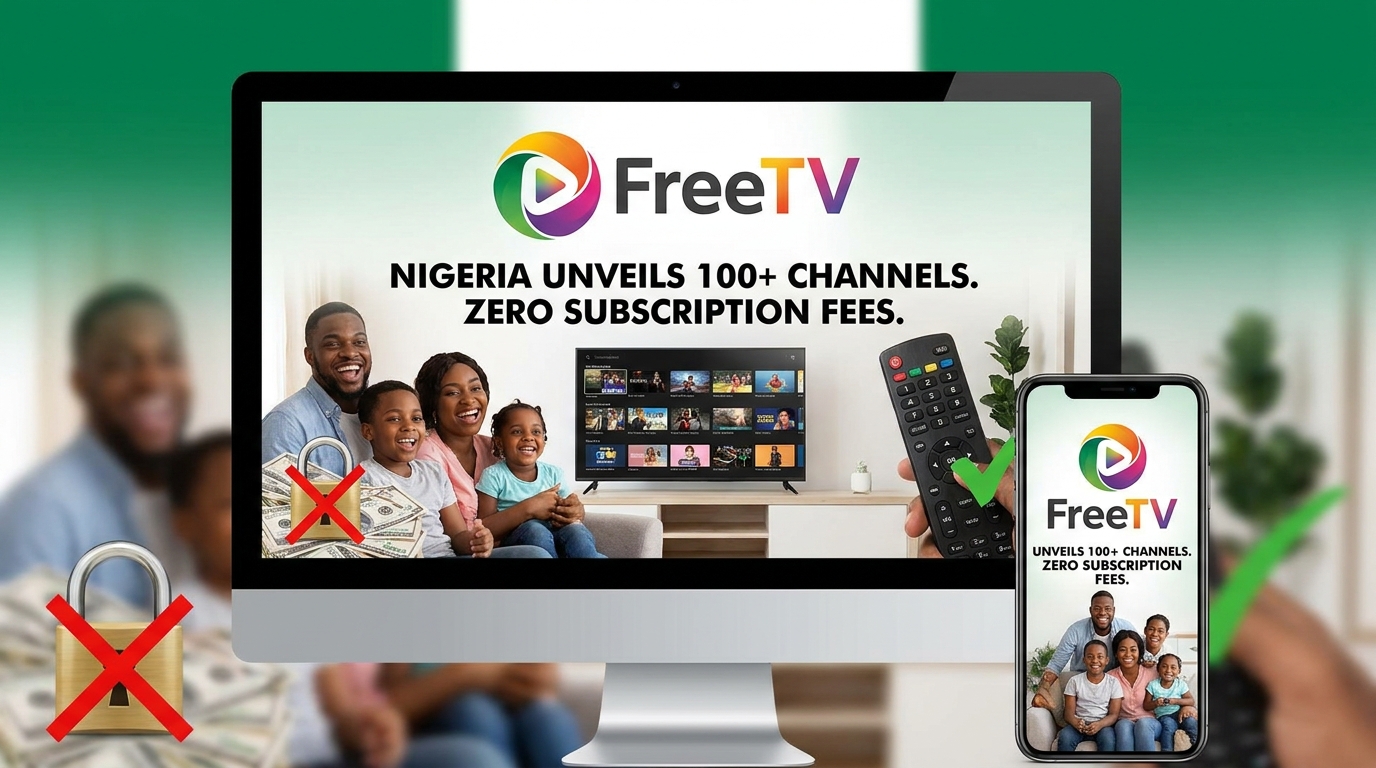
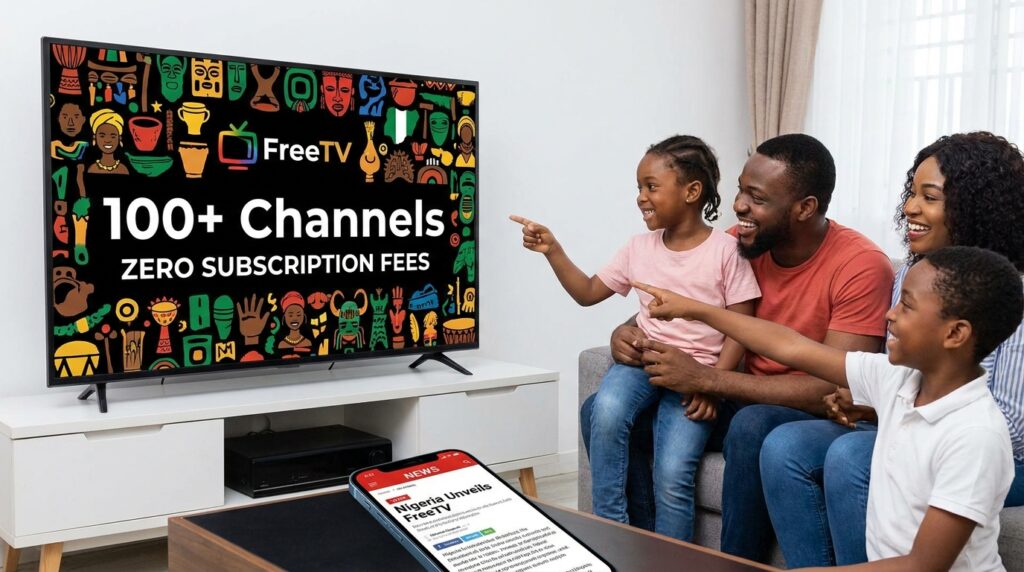
The Federal Government has officially launched FreeTV, a new national digital television platform aimed at expanding access to quality broadcasting across Nigeria. The service, which debuted on June 17, offers Nigerians access to more than 100 national, regional, and state television channels—completely free of monthly subscription charges.
According to a statement released on Tuesday, the initiative forms part of Nigeria’s ongoing Digital Switch-Over (DSO) programme and aligns with President Bola Tinubu’s Renewed Hope Agenda, which emphasizes digital inclusion, job creation, and broader access to opportunities.
FreeTV delivers a wide variety of content, including news, sports, movies, music, children’s programming, educational shows, and dedicated channels in major Nigerian languages such as Yoruba, Hausa, and Igbo. The goal is to provide inclusive, accessible entertainment and information to households across the country.
A New Chapter in Nigeria’s Broadcasting Landscape
The launch of FreeTV represents more than just another television service—it signals a shift in Nigeria’s broadcasting model. By combining terrestrial TV, satellite technology, and digital streaming capabilities, the platform introduces a hybrid system designed to reach both urban and remote audiences. Viewers can access content through antennas, satellite dishes, or internet-enabled devices, making it adaptable to different connectivity realities across the country.
At a time when many Nigerians are re-evaluating recurring expenses, the appeal of a free television service is significant. Popular platforms like Netflix, Amazon Prime Video, DStv, GOtv, and MTN One TV all operate on subscription-based models. FreeTV, however, takes a different approach—offering a broad range of channels at no cost once users have the required equipment.
If successfully implemented, FreeTV could pose a meaningful challenge to traditional pay-TV providers, especially among cost-conscious households facing rising living expenses.
Not Just About Competition
Despite the buzz, FreeTV is not positioned as a direct replacement for premium streaming platforms. Services like Netflix and Amazon Prime focus on exclusive, on-demand content, while DStv and Canal+ dominate with premium sports rights and specialized programming.
Instead, FreeTV’s strength lies in affordability, local relevance, and mass accessibility. It is less about replacing existing platforms and more about capturing attention and screen time in an increasingly crowded entertainment landscape.
The Real Test: Adoption and Engagement
However, the biggest question remains: will Nigerians adopt FreeTV at scale?
Today’s television ecosystem is no longer competing solely within itself—it is up against social media and digital platforms like TikTok, YouTube, and Instagram, which have become primary sources of entertainment for millions. While FreeTV’s zero-cost model is attractive, affordability alone may not guarantee sustained user engagement.
In the attention economy, compelling content and user experience are key. FreeTV may successfully attract initial interest, but its long-term success will depend on whether it can consistently deliver value that keeps viewers coming back.
For now, the launch marks a bold step in Nigeria’s long-delayed transition to digital broadcasting. But the true measure of success will not be the launch itself—it will be whether Nigerians are still actively watching, discussing, and recommending FreeTV months down the line.
About The Author