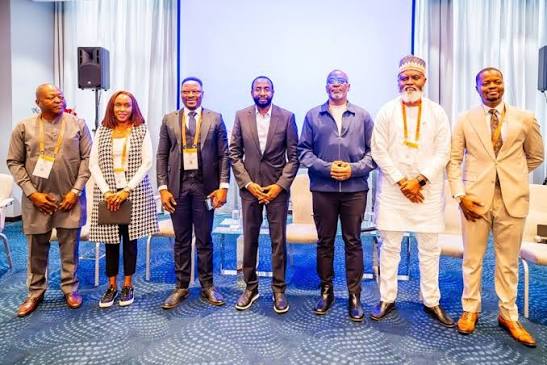









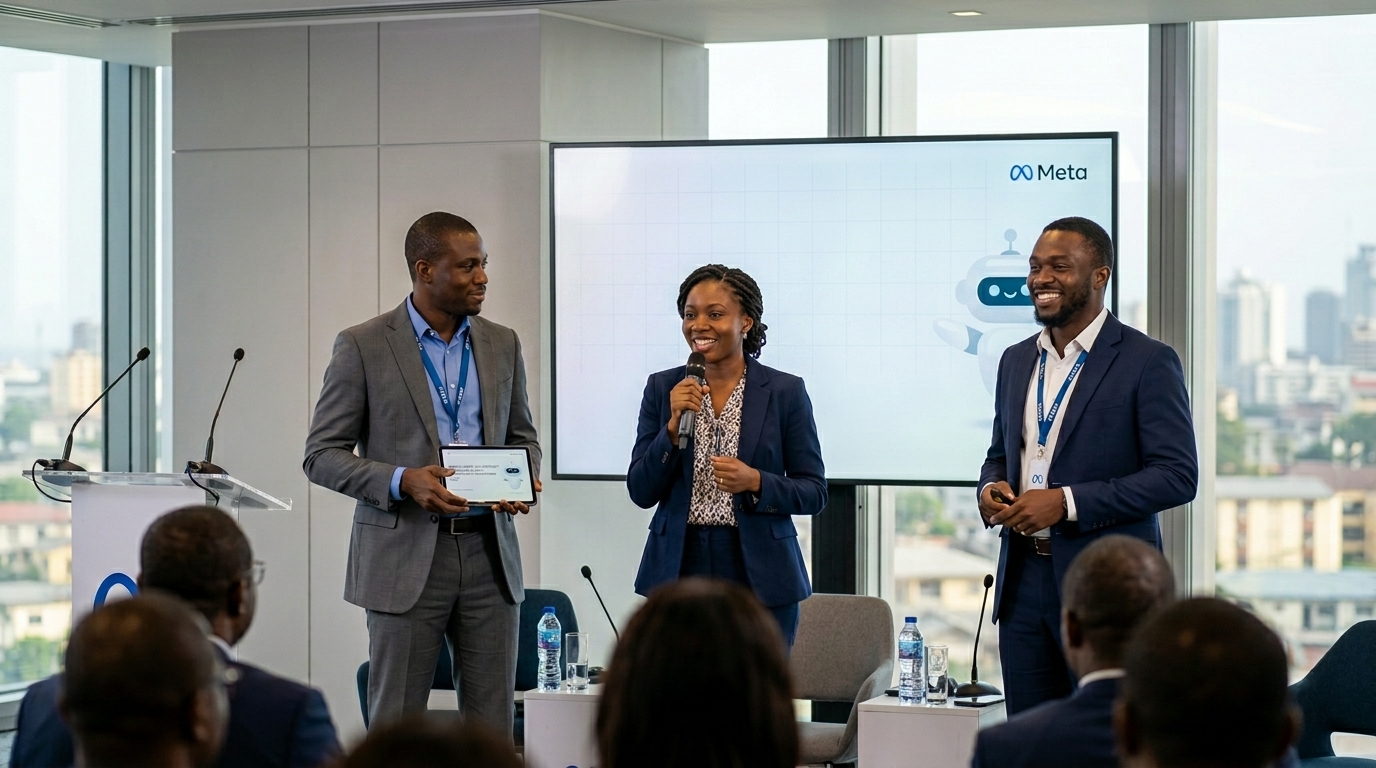
Nigeria has taken another major step in its digital transformation journey with the launch of GovGuide Nigeria, an artificial intelligence-powered chatbot designed to help citizens access government information and services more easily. The initiative was developed through a partnership involving the Federal Government of Nigeria, Meta, the National Centre for Artificial Intelligence and Robotics (NCAIR), and local technology company Publica AI.
The AI chatbot is designed to simplify how Nigerians interact with government services by providing instant information through both voice and text conversations. One of the most important features of the platform is its multilingual capability, allowing users to communicate in English, Hausa, Igbo, and Yoruba.
The launch reflects Nigeria’s growing interest in artificial intelligence, digital governance, and technology-driven public services. It also highlights how AI is becoming a major tool for improving communication between governments and citizens across Africa.
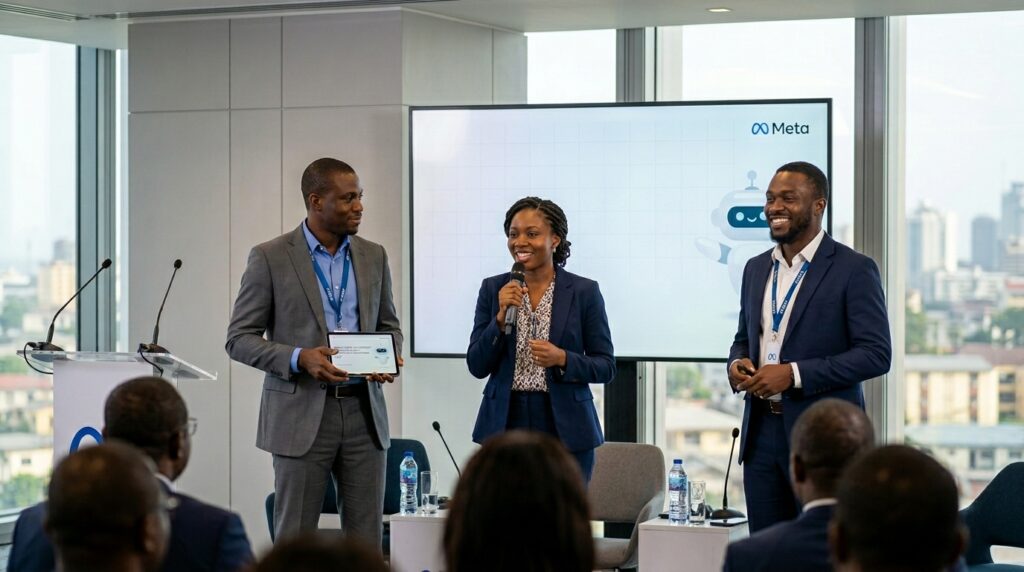
What is GovGuide Nigeria?
GovGuide Nigeria is an AI-powered conversational assistant that helps citizens access information about government services through a simple digital interface. Instead of searching through multiple websites or visiting government offices physically, users can ask questions directly to the chatbot and receive instant answers.
The platform functions as both a text and voice assistant, making it easier for people with different literacy levels and digital skills to use the system. According to officials involved in the project, the chatbot was specifically designed to improve accessibility for rural communities and underserved populations.
Examples of information users may request include:
- Passport application procedures
- National identification registration
- Tax information
- Business registration guidelines
- Government programs and grants
- Digital economy initiatives
- Public service requirements
- Citizen support services
Rather than navigating complicated government portals, users can interact with the chatbot conversationally, similar to how people communicate with messaging apps and AI assistants.
Why Nigeria is Investing in AI-Powered Public Services
The launch of GovGuide Nigeria comes at a time when governments around the world are increasingly adopting artificial intelligence to improve efficiency and public service delivery.
Nigeria has been pushing several digital transformation initiatives under the Federal Ministry of Communications, Innovation and Digital Economy. The government has repeatedly emphasized the importance of AI, digital infrastructure, innovation, and technology skills in driving economic growth and improving governance.
Minister of Communications, Innovation and Digital Economy, Bosun Tijani, described the GovGuide initiative as part of the government’s broader effort to make public services more accessible, transparent, and citizen-focused.
According to reports from the launch event, the minister explained that deploying AI-powered tools in local languages can improve trust, increase transparency, and strengthen citizen engagement with government institutions.
This move is especially important in a country like Nigeria, where millions of people still struggle with:
- Limited digital literacy
- Complex government processes
- Slow public service systems
- Language barriers
- Poor access to official information
By using AI assistants, the government hopes to reduce these challenges and create easier pathways for citizens to access essential information.
Meta’s Role in the Project
The project is backed by Meta, the global technology company behind Facebook, Instagram, and WhatsApp. Meta contributed through its open-source AI technologies, particularly its Llama AI models.
According to Meta’s Head of Public Policy, Sade Dada, GovGuide Nigeria demonstrates how open-source AI can solve practical problems while supporting innovation and productivity.
Rather than building a closed proprietary system, Meta’s involvement reflects a growing trend toward open-source AI development, where developers and organizations can customize AI systems for local use cases.
This is particularly valuable in Africa, where local adaptation is critical because of:
- Multiple languages
- Diverse cultures
- Varying literacy levels
- Unique governance structures
- Uneven internet access
The project also demonstrates how global technology companies are increasingly partnering with African governments and local startups to develop AI tools tailored to regional realities.
The Importance of Local Languages in AI
One of GovGuide Nigeria’s biggest strengths is its support for indigenous Nigerian languages.
The chatbot currently supports:
- English
- Hausa
- Igbo
- Yoruba
This multilingual approach is important because language barriers often prevent many Nigerians from effectively accessing government services online. Millions of people are more comfortable communicating in local languages than in formal English.
By allowing citizens to interact in familiar languages, the platform could significantly improve digital inclusion and accessibility.
The project also aligns with broader efforts across Africa to build AI systems that better understand African languages and local contexts. Several Nigerian and African AI startups are already working on multilingual AI technologies for indigenous communication and accessibility.
Experts believe African-language AI systems could become one of the continent’s most important technology opportunities over the next decade.
How AI Chatbots Could Change Government Services
AI chatbots are rapidly transforming customer service and information systems worldwide. Governments are now beginning to adopt similar technologies to improve public administration.
With AI assistants like GovGuide Nigeria, citizens may eventually be able to:
- Get instant answers 24/7
- Avoid long queues at government offices
- Access faster support
- Navigate public services more easily
- Receive updates on government programs
- Reduce paperwork confusion
- Access information remotely
The technology could also help reduce pressure on government call centers and public support systems.
Instead of requiring large numbers of customer service staff to answer repetitive questions, AI systems can automate basic interactions while human officials focus on more complex issues.
This could improve efficiency and reduce operational costs over time.
Challenges Nigeria May Face
Despite the excitement around AI-powered governance, there are still challenges that Nigeria may need to address to ensure GovGuide Nigeria succeeds.
1. Digital Literacy
Many Nigerians still lack basic digital skills or internet access. While the chatbot simplifies communication, adoption may remain limited in areas with poor connectivity or low smartphone penetration.
2. Data Privacy Concerns
AI systems handling government information must maintain strong data privacy and cybersecurity protections. Citizens will need confidence that their information is secure.
Nigeria has already increased attention toward digital privacy and data protection in recent years as technology adoption grows.
3. Accuracy of AI Responses
AI chatbots can sometimes generate incorrect or outdated information. Ensuring that GovGuide Nigeria consistently provides accurate government information will be critical.
4. Language and Cultural Complexity
Although the chatbot currently supports major Nigerian languages, the country has hundreds of indigenous languages and dialects. Expanding language support could become a long-term challenge.
5. Trust in Government Technology
Some citizens may initially hesitate to rely on AI-powered government systems. Building trust through reliability, transparency, and usability will be essential.

AI is Becoming Central to Nigeria’s Digital Economy
The launch of GovGuide Nigeria is part of a broader movement toward AI adoption across Nigeria’s economy.
Recent reports suggest that wider AI adoption could contribute billions of dollars to Nigeria’s GDP over the next decade. One report unveiled alongside Meta’s Economic Impact Report estimated that broader AI implementation could add approximately $22 billion to Nigeria’s economy by 2035.
Nigeria’s digital economy is also expected to grow significantly as investments in:
- Artificial intelligence
- Digital infrastructure
- Connectivity
- Innovation ecosystems
- Technology education
- Startup development
continue to expand.
The government has also been supporting:
- AI research programs
- Digital economy initiatives
- Technology training
- Startup ecosystems
- Digital inclusion projects
This suggests that GovGuide Nigeria may only be the beginning of broader AI integration into public services.
What This Means for Africa
Nigeria’s AI chatbot initiative could become a model for other African countries exploring digital governance solutions.
Many African governments face similar challenges:
- Large populations
- Limited public service infrastructure
- Language diversity
- Bureaucratic inefficiencies
- Low digital accessibility
AI-powered assistants could help governments improve service delivery while reducing operational bottlenecks.
If successful, GovGuide Nigeria could inspire similar systems across Africa for:
- Healthcare information
- Education services
- Tax systems
- Agriculture support
- Election information
- Identity verification
- Public transportation services
The project also demonstrates Africa’s growing participation in global AI development rather than simply consuming foreign technology products.
Conclusion
Nigeria’s launch of GovGuide Nigeria marks an important milestone in the country’s digital transformation journey.
By partnering with Meta, NCAIR, and Publica AI, the government is leveraging artificial intelligence to improve how citizens access public information and services. The multilingual AI assistant represents a significant step toward more accessible, efficient, and citizen-centered governance.
While challenges around digital literacy, trust, privacy, and infrastructure remain, the initiative highlights how AI could reshape public service delivery in Nigeria and across Africa.
As governments worldwide increasingly adopt intelligent digital systems, projects like GovGuide Nigeria may become the foundation for a new era of AI-powered governance where citizens can interact with public services faster, easier, and more efficiently than ever before.
Frequently Asked Questions (FAQ)
-
What is GovGuide Nigeria?
GovGuide Nigeria is an AI-powered chatbot launched by the Nigerian government in partnership with Meta, NCAIR, and Publica AI to help citizens access government information and services more easily.
-
Which languages does GovGuide Nigeria support?
The chatbot currently supports English, Hausa, Igbo, and Yoruba.
-
What can Nigerians use the chatbot for?
Citizens can use the chatbot to access information about government services, public programs, registration processes, and official procedures.
-
Is GovGuide Nigeria powered by Meta AI?
Yes. The platform uses Meta’s open-source AI models, including Llama AI technology.
-
Why is the chatbot important?
The chatbot is designed to improve access to government services, simplify communication, increase transparency, and enhance citizen engagement.
-
Who developed GovGuide Nigeria?
The project was developed through collaboration between the Federal Government of Nigeria, Meta, the National Centre for Artificial Intelligence and Robotics (NCAIR), and Publica AI.
-
Can people in rural areas use GovGuide Nigeria?
Yes. Officials stated that the platform was designed to support users in rural communities and people with limited literacy levels through voice and multilingual capabilities.
-
How could AI affect Nigeria’s economy?
Recent reports suggest that broader AI adoption could add billions of dollars to Nigeria’s GDP over the next decade by improving productivity, innovation, and digital transformation.
About The Author