







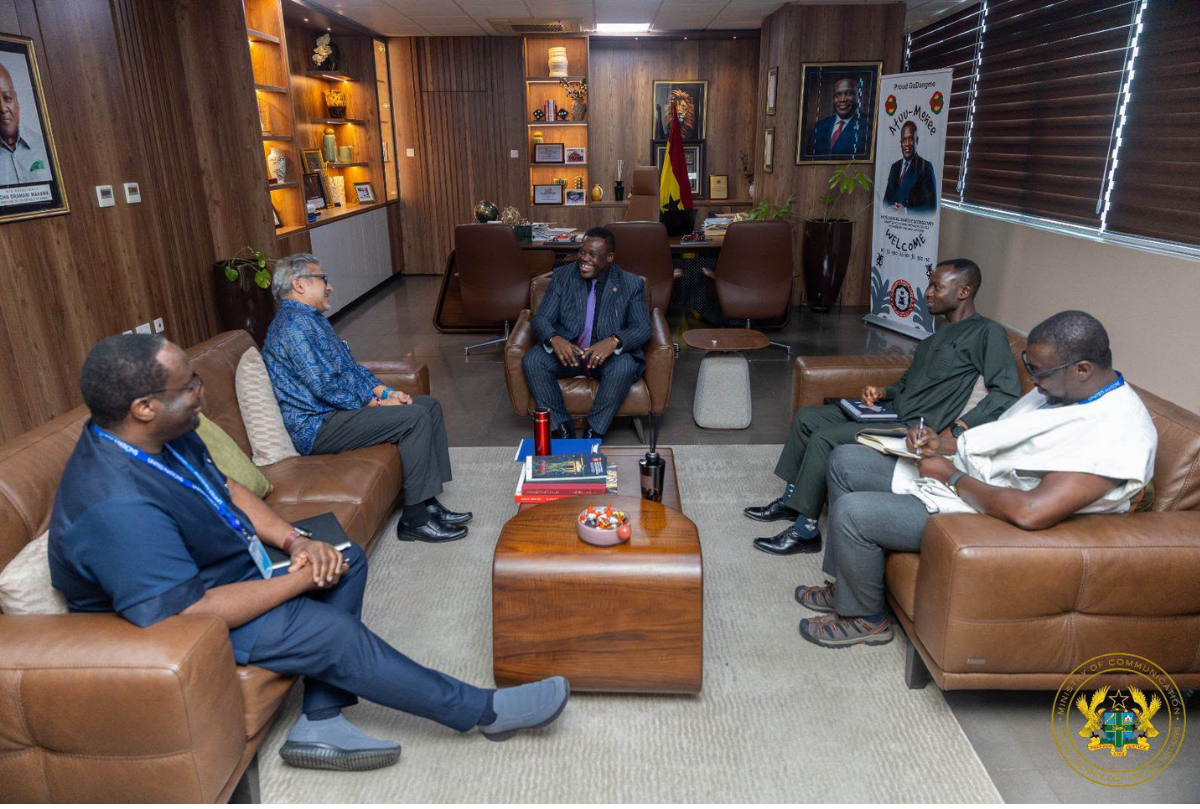
Ghana and UNDP Expand Digital Transformation Partnership to Drive AI, Innovation and Digital Inclusion
Ghana is strengthening its collaboration with the United Nations Development Programme (UNDP) to accelerate digital transformation, expand innovation opportunities, and build a more inclusive digital economy.
The partnership was reaffirmed during a meeting between Ghana’s Minister for Communication, Digital Technology and Innovations, Samuel Nartey George, and UNDP Ghana Representative Niloy Banerjee, alongside members of the UNDP delegation.
The discussions focused on advancing key digital transformation projects, promoting the use of artificial intelligence (AI) in public service delivery, strengthening digital infrastructure, and supporting the growth of Ghana’s technology ecosystem.
Using Digital Assessment Framework to Guide Transformation
During the engagement, Minister Samuel Nartey George highlighted the government’s adoption of the UNESCO Readiness Assessment Methodology (RAM) as a framework for guiding digital development initiatives.
He explained that the assessment has helped Ghana identify priority areas for intervention, evaluate the readiness of proposed digital projects, and determine which initiatives can move directly into implementation while others require additional preparation.
The approach is expected to support more effective planning and ensure that digital investments align with national development priorities.
Ghana Advances Plans for National FinTech Fund
A major area of discussion was Ghana’s proposed national fintech fund, which is expected to support startups and technology innovators across the country.
The minister explained that the fund will operate alongside Ghana’s upcoming Innovation and Startup legislative framework, which will establish guidelines for startup eligibility, support mechanisms, and long-term sustainability.
The initiative is designed to encourage private sector participation, provide more opportunities for emerging technology companies, and strengthen Ghana’s position as a growing fintech hub in Africa.
Expanding AI Adoption in Public Services
Artificial intelligence adoption was another key focus of the discussions, with both parties exploring ways to use AI to improve government services and strengthen institutional efficiency.
UNDP Ghana Representative Niloy Banerjee highlighted progress on several digital initiatives, including an Italian-supported flagship digital project, an MSME digital platform programme, and a Japan-backed artificial intelligence initiative aimed at improving public service delivery.
These programmes are expected to support digital access, improve government operations, and create new opportunities for businesses and citizens.
Building Digital Skills and Governance Capacity
The partnership also includes plans for an AI and digital governance capacity-building programme targeting Ghana’s Civil Service.
The programme will focus on improving knowledge and skills in emerging technologies, strengthening digital policy development, and preparing public institutions for the growing role of AI in governance.
The initiative will also prioritise gender inclusion by ensuring broader participation in digital skills development programmes.
Supporting Ghana’s Digital Innovation Ecosystem
The discussions further covered digital infrastructure projects, including the proposed Digital Youth Village, which is expected to contribute to Ghana’s innovation ecosystem by supporting young entrepreneurs, technology development, and digital skills advancement.
The UNDP emphasised the importance of stronger government participation and co-financing models to attract additional development partners and ensure the sustainability of major digital transformation initiatives.
Through continued collaboration, Ghana and UNDP aim to accelerate digital adoption, strengthen innovation capacity, and create a more connected and technology-driven economy.
Frequently Asked Questions (FAQs)
1. What is the focus of Ghana’s partnership with UNDP on digital transformation?
The partnership focuses on advancing digital projects, artificial intelligence adoption, digital infrastructure development, innovation support, and building digital skills across Ghana.
2. How is Ghana using the UNESCO Readiness Assessment Methodology (RAM)?
Ghana is using the UNESCO RAM framework to evaluate digital initiatives, identify priority areas, and determine which projects are ready for implementation.
3. What is Ghana’s proposed national fintech fund?
The national fintech fund is an initiative designed to support startups and innovators by providing funding opportunities and encouraging growth within Ghana’s technology ecosystem.
4. How will artificial intelligence support Ghana’s public services?
AI will be used to improve government service delivery, enhance decision-making, increase efficiency, and support digital governance initiatives.
5. What digital projects are being supported through the Ghana and UNDP partnership?
The collaboration includes flagship digital projects, MSME digital platforms, AI programmes for public services, digital governance training, and digital infrastructure initiatives such as the proposed Digital Youth Village.
6. How will the AI and digital governance programme benefit Ghana’s Civil Service?
The programme will improve digital skills among government workers, strengthen technology policy development, and help institutions better adopt emerging technologies.
7. Why is digital transformation important for Ghana?
Digital transformation can improve access to services, support businesses, create employment opportunities, encourage innovation, and strengthen Ghana’s participation in the global digital economy.
About The Author