









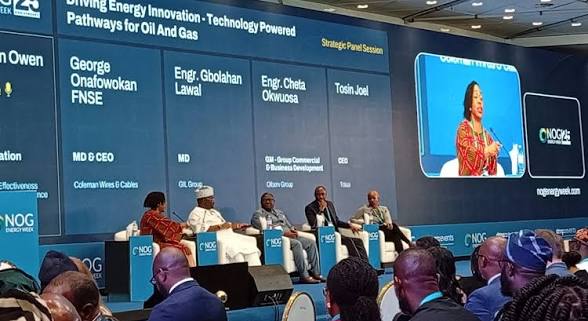
Stakeholders in Nigeria’s petroleum industry have advocated increased adoption of emerging technologies and stronger investment in human capital, stressing that both are critical to enhancing operational efficiency, increasing productivity and driving growth in the country’s oil and gas sector.
The call was made during a panel session at the recently concluded Nigeria Oil and Gas Conference themed, “Driving Energy Innovation: Technology-Powered Pathways for Oil and Gas.”
Chairman of Oilserv Group, Emeka Okwuosa, who was represented by the company’s Group Business Development and Commercial Manager, Cheta Okwuosa, said engineering, procurement and construction (EPC) companies must embrace technologies that improve speed, safety and sustainability.
According to him, any technology that is to be effective for EPC firms must address these three key areas. He added that technological advancement remains people-driven, making it necessary for industry players to intentionally develop local talent capable of operating and managing such technologies.
Okwuosa explained that Oilserv has gradually integrated automation into its operations, transitioning from manual processes to semi-automatic systems before deploying more advanced technologies in major gas pipeline projects.
He noted that the company initially adopted manual systems before moving to semi-automatic operations and later deploying advanced automation on the OB3 project. While the company recorded improvements, he said the gains were not optimal.
According to him, Oilserv subsequently adopted a combination of semi-automatic and fully automatic systems on the AKK project, leading to significantly improved outcomes. He added that artificial intelligence now plays a role in integrating both systems.
He further revealed that as the company expands into gas commercialisation, it has deployed technologies such as leak detection systems, intrusion detection solutions and other AI-driven operational tools that enable remote monitoring and digital replication of physical infrastructure.
Also speaking at the session, the Managing Director of GIL Group, Gbolahan Lawal, urged industry operators to embrace data-driven innovations alongside emerging technologies to improve performance across the sector.
Lawal encouraged stakeholders to assess traditional operational systems, retain what has been effective and replace outdated methods with modern technologies. He also stressed the importance of training and empowerment in creating a roadmap towards greater profitability in the industry.
Lead Strategic Consultant at Acepontis Ltd, Atiemoria Ebhodaghe, said the adoption of new technologies among marine logistics operators in Nigeria’s upstream oil sector remains uneven.
He explained that while International Oil Companies and major vessel owners are increasingly embracing advanced technologies such as Dynamic Positioning systems, remote vessel data exchange and automated fuel optimisation, many smaller indigenous operators continue to face challenges due to financial limitations.
According to Ebhodaghe, these financial constraints make investments in sensor-based technologies and satellite monitoring systems appear more like optional luxuries than operational necessities for smaller firms.
He warned that this situation has created a two-tier market in which technologically advanced fleets secure lucrative long-term offshore contracts, while older vessels are left to compete in the spot market, often struggling with inefficiencies and higher operating costs.
Ebhodaghe also noted that artificial intelligence and other digital technologies are transforming vessel management in the upstream marine sector by shifting operations from reactive maintenance approaches to predictive models.
He cited AI-powered predictive maintenance as an example, explaining that operators of Anchor Handling Tug Supply vessels and crew boats can now anticipate engine or thruster failures before they occur, thereby preventing operational disruptions.
According to him, the effectiveness of these technologies can be measured by the reduction in vessel “off-hire” days during project execution. He added that maintaining vessel availability and regulatory compliance is essential to ensuring that multi-million-dollar offshore drilling and production projects remain on schedule.
About The Author