









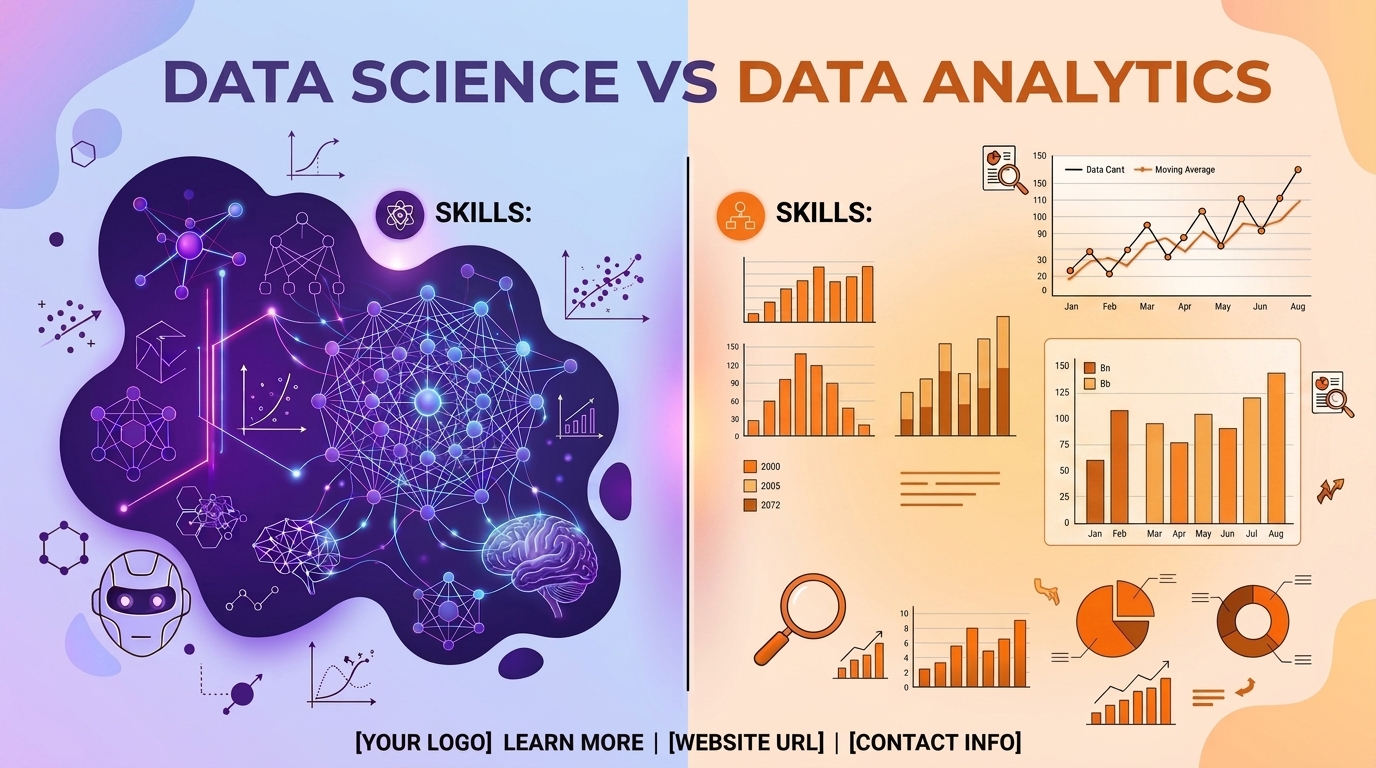
Data has become one of the world’s most valuable resources, and organizations are increasingly relying on data professionals to make better decisions, predict trends, and gain competitive advantages. As a result, two career paths have gained significant attention in Nigeria and globally: Data Science and Data Analytics.
Many students, graduates, and professionals looking to transition into technology often ask: Should I choose Data Science or Data Analytics? Which career path offers better opportunities?
The answer depends on your interests, technical abilities, and long-term career goals. Both fields are highly rewarding and in demand, but they differ in responsibilities, required skills, and career progression.
What is Data Analytics?
Data Analytics focuses on examining historical and current data to identify patterns, generate insights, and support business decision-making.
Data analysts help organizations answer questions such as:
* Why did sales increase or decline?
* Which products perform best?
* What customer trends are emerging?
* How can business performance be improved?
Data analysts typically work with structured data and use tools such as:
* Microsoft Excel
* SQL
* Power BI
* Tableau
* Google Data Studio
* Python (for advanced analytics)
Typical Responsibilities of a Data Analyst
* Cleaning and organizing data
* Creating dashboards and reports
* Visualizing business information
* Generating insights for decision-makers
* Monitoring key performance indicators (KPIs)
Data Analytics is often considered one of the most accessible entry points into the tech industry because it combines business knowledge with technical skills.
What is Data Science?
Data Science goes beyond analyzing historical data. It involves using advanced statistical methods, machine learning, programming, and artificial intelligence to predict future outcomes and build intelligent systems.
Data scientists work on complex problems such as:
* Predicting customer behavior
* Building recommendation systems
* Fraud detection models
* Artificial intelligence applications
* Forecasting business trends
Data scientists commonly use:
* Python
* R Programming
* SQL
* Machine Learning frameworks
* Big Data technologies
* Cloud computing tools
Typical Responsibilities of a Data Scientist
* Building predictive models
* Developing machine learning algorithms
* Processing large datasets
* Conducting advanced statistical analysis
* Creating AI-driven solutions
Data Science generally requires stronger programming and mathematical skills than Data Analytics.
Major Differences Between Data Science and Data Analytics
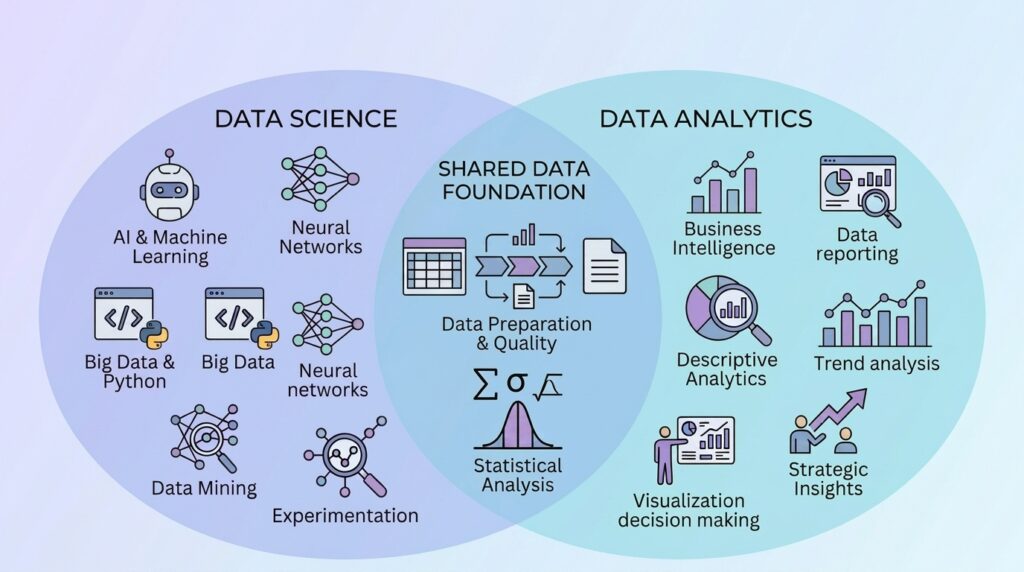
| Area | Data Analytics | Data Science |
| Main Focus | Understanding past and current data | Predicting future outcomes |
| Complexity | Moderate | High |
| Programming Requirement | Moderate | High |
| Mathematics Requirement | Basic to Intermediate | Advanced |
| Artificial Intelligence | Limited | Extensive |
| Entry Barrier | Lower | Higher |
Although both careers work with data, their goals and technical depth differ significantly.
Which Career Has Better Job Opportunities in Nigeria?
Both Data Science and Data Analytics are experiencing strong demand in Nigeria.
Data Analytics Opportunities
Data analysts are needed across many industries, including:
* Banking and fintech
* Telecommunications
* Healthcare
* Government agencies
* E-commerce
* Logistics and transportation
* Marketing agencies
Because almost every organization uses data, Data Analytics currently offers broader entry-level opportunities.
Data Science Opportunities
Data Science opportunities are increasing rapidly, particularly in:
* Fintech companies
* Artificial Intelligence startups
* Financial institutions
* Telecommunications companies
* Research organizations
* International remote companies
Although there are fewer Data Science positions compared to Data Analytics, the demand for skilled professionals continues to rise.
Salary Comparison in Nigeria
Salary levels vary depending on experience, location, certifications, and employer.
Data Analyst Salary Range in Nigeria
* Entry-level: ₦150,000 – ₦400,000 per month
* Mid-level: ₦400,000 – ₦1,000,000 per month
* Senior professionals: ₦1,000,000 – ₦3,000,000+ per month
Data Scientist Salary Range in Nigeria
* Entry-level: ₦250,000 – ₦700,000 per month
* Mid-level: ₦700,000 – ₦2,000,000 per month
* Senior professionals: ₦2,000,000 – ₦6,000,000+ per month
Remote opportunities and international contracts can significantly increase earnings in both fields.
Which Career Path Should You Choose?
Choose Data Analytics If:
* You are new to technology.
* You enjoy business insights and reporting.
* You prefer working with dashboards and visualization tools.
* You want a relatively faster entry into the tech industry.
* You are transitioning from non-technical fields such as accounting, business administration, economics, or marketing.
Choose Data Science If:
* You enjoy mathematics and programming.
* You are interested in artificial intelligence and machine learning.
* You enjoy solving complex problems.
* You want to work on predictive technologies and intelligent systems.
* You are comfortable with continuous learning and advanced technical concepts.
Can You Start with Data Analytics and Later Move into Data Science?
Yes.
In fact, many professionals begin their journey in Data Analytics and later transition into Data Science.
Learning Data Analytics first helps you build foundational skills in:
* Data cleaning
* SQL
* Data visualization
* Business intelligence
* Python fundamentals
These skills provide a strong foundation for progressing into machine learning and advanced Data Science roles.
Why Learn Data Science or Data Analytics at Bizmarrow Technologies?
Choosing the right training institution can significantly influence your success.
Bizmarrow Technologies has become one of the leading digital training institutions in Abuja, Nigeria, offering practical and project-based training in Data Analytics and Data Science.
Students benefit from:
* Hands-on practical training
* Real-world projects and case studies
* Industry-standard tools and technologies
* Experienced instructors
* Small class sizes and personalized support
* Career guidance and employability training
* Portfolio development for job readiness
The training programs are designed to equip students with the practical skills needed to succeed in Nigeria’s growing digital economy and global technology market.
Learn more at Bizmarrow Technologies
FAQ
Data Science vs Data Analytics: Which Career Path Should I Choose?
The right choice depends on your interests and career goals.
Data Analytics is ideal for individuals seeking an easier entry into technology, business intelligence roles, and opportunities across many industries.
Data Science is better suited for individuals interested in artificial intelligence, machine learning, predictive modeling, and advanced programming.
For many beginners, starting with Data Analytics and later progressing into Data Science provides a practical and effective career pathway.
Is Data Science harder than Data Analytics?
Yes. Data Science generally requires stronger programming, mathematics, and machine learning knowledge compared to Data Analytics.
Which field pays more?
Data Science often offers higher long-term earning potential due to its advanced technical requirements and growing demand for AI-related skills.
Are both careers in demand in Nigeria?
Absolutely. Both Data Analytics and Data Science are among the fastest-growing technology career paths in Nigeria and globally.
Can I learn these skills without a computer science degree?
Yes. Many successful data professionals have backgrounds in business, economics, engineering, accounting, and other non-technical fields. Practical training, projects, and continuous learning often matter more than academic background.
About The Author