









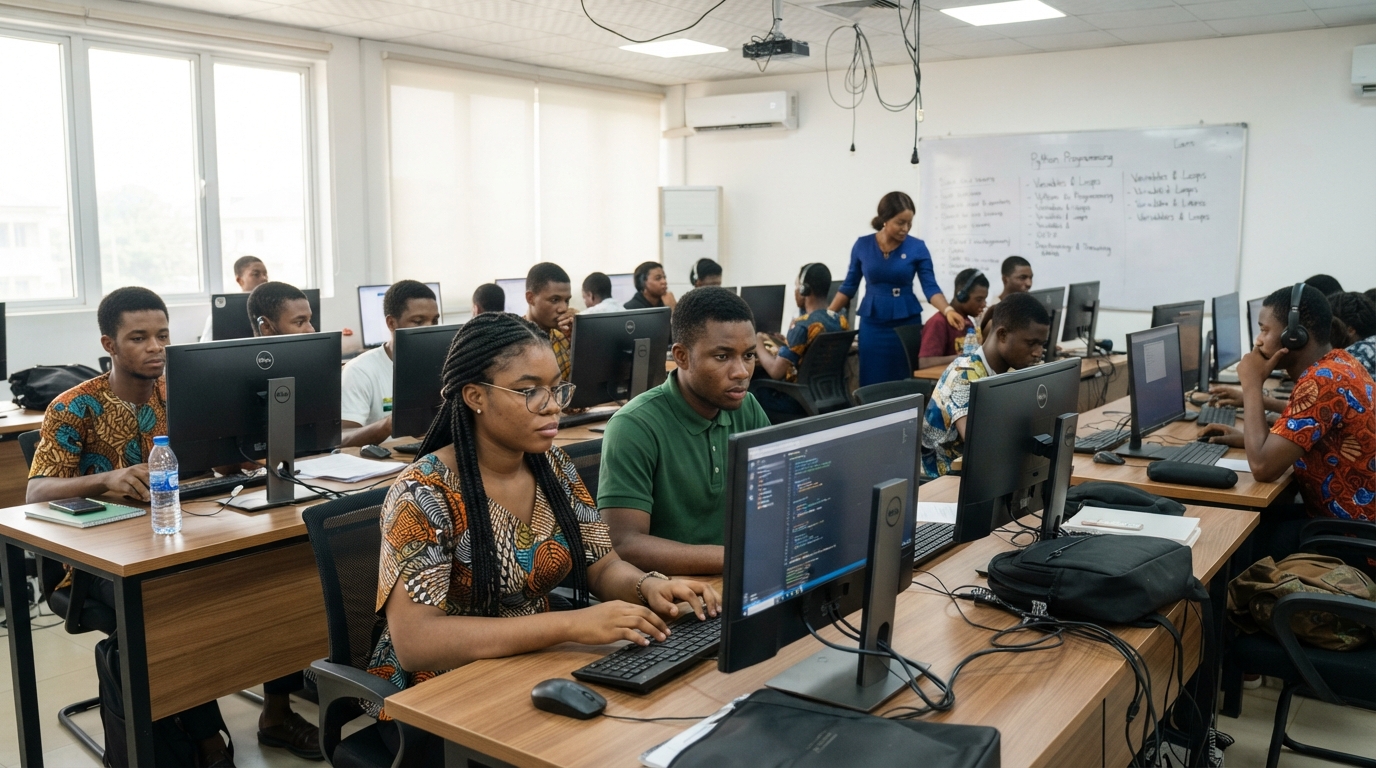
The future of work in Nigeria is becoming increasingly digital. Technology is changing how businesses operate, how employees perform their jobs, how entrepreneurs reach customers, and how organizations recruit and collaborate. From artificial intelligence (AI) and data analytics to cloud computing, cybersecurity, digital marketing and software development, technology is creating new opportunities while changing the skills employers need.
For Nigerians preparing for the future, one thing is becoming increasingly clear: digital skills are no longer only for people working in technology companies. Professionals in banking, education, telecommunications, healthcare, construction, agriculture, administration, marketing and many other industries increasingly need technology skills to remain productive and competitive.
The World Bank’s 2026 Digital Skills Development Blueprint for Nigeria estimates that about 28 million workers will require digital competencies over the next decade, highlighting the scale of Nigeria’s digital skills challenge and opportunity.
What Is the Future of Work in Nigeria?
The future of work refers to how employment, workplaces, job roles and required skills are changing because of technology, economic transformation and other major developments.
In Nigeria, this transformation can already be seen through remote work, digital payments, e-commerce, online education, cloud-based business systems, automation, artificial intelligence and the growing demand for professionals who can use digital tools effectively.
The International Labour Organization has also identified technological change as an important factor shaping the future of work in Nigeria.
This means that the Nigerian worker of the future will need more than academic qualifications. Practical digital skills, adaptability, problem-solving, communication and continuous learning will become increasingly important.
How Technology Is Changing Jobs in Nigeria
Technology is not simply eliminating jobs. It is also changing existing jobs and creating new ones.
For example, a traditional administrative officer may now be expected to work with Microsoft Excel, digital documentation systems, cloud platforms and online communication tools. A marketing professional may need knowledge of social media marketing, SEO, analytics and content creation.
Similarly, businesses increasingly require professionals who can work with:
- Data analysis and visualization
- Artificial intelligence tools
- Cybersecurity systems
- Cloud technologies
- Web design and development
- Digital marketing
- Graphic and UI/UX design
- Project management software
- Automation tools
- Business intelligence platforms
The ILO’s recent research on skills in the age of AI notes that AI adoption is increasing demand for digital, data, cognitive and socioemotional skills, while adaptability and AI literacy are becoming increasingly important.
Digital Skills Will Become More Important Across Nigerian Industries
One of the biggest misconceptions about technology careers is that digital skills are only useful for programmers.
In reality, technology is becoming part of almost every profession.
A telecommunications graduate can develop skills in data analysis, networking, cybersecurity or cloud computing. A business administration graduate can learn data analysis, digital marketing, project management or administrative technology. Someone studying building technology can benefit from AutoCAD, Revit, 3D modelling and other digital design tools.
Even entrepreneurs can benefit from digital marketing, website development, social media management, data analysis and productivity tools.
The World Bank has previously highlighted digital skills as one of the foundational pillars required for Nigeria’s digital economy.
What Digital Skills Should Nigerians Learn for the Future?
There is no single digital skill that is best for everyone. The right skill depends on your career goals, education, interests and industry.
However, some areas have strong relevance to the future of work, including:
1. Data Analysis
Businesses need people who can turn data into useful information for decision-making. Skills in Excel, Power BI, SQL and Python can provide a strong foundation for data-related careers.
2. Web Design and Development
Businesses need websites and digital platforms to communicate with customers and provide services. Frontend, backend and full-stack development can therefore provide valuable career opportunities.
3. Artificial Intelligence
AI is changing how organizations work. Learning how to use AI tools responsibly and understanding AI concepts can help professionals improve productivity and remain relevant.
4. Cybersecurity
As more Nigerian businesses move their operations online, protecting data, systems and digital infrastructure becomes increasingly important.
5. Digital Marketing
Businesses need professionals who understand SEO, social media, content marketing, online advertising, analytics and other digital marketing strategies.
6. UI/UX and Product Design
As more services move online, companies need professionals who can design websites and digital products that are functional, accessible and easy to use.
7. Cloud and IT Skills
Cloud computing, IT support, networking and related technologies are increasingly important as organizations adopt digital infrastructure.
Why Practical Training Matters
Learning technology from theory alone may not be enough.
The future of work requires people who can apply what they know to real-world problems. This is why practical, project-based training is particularly important for anyone preparing for a technology career.
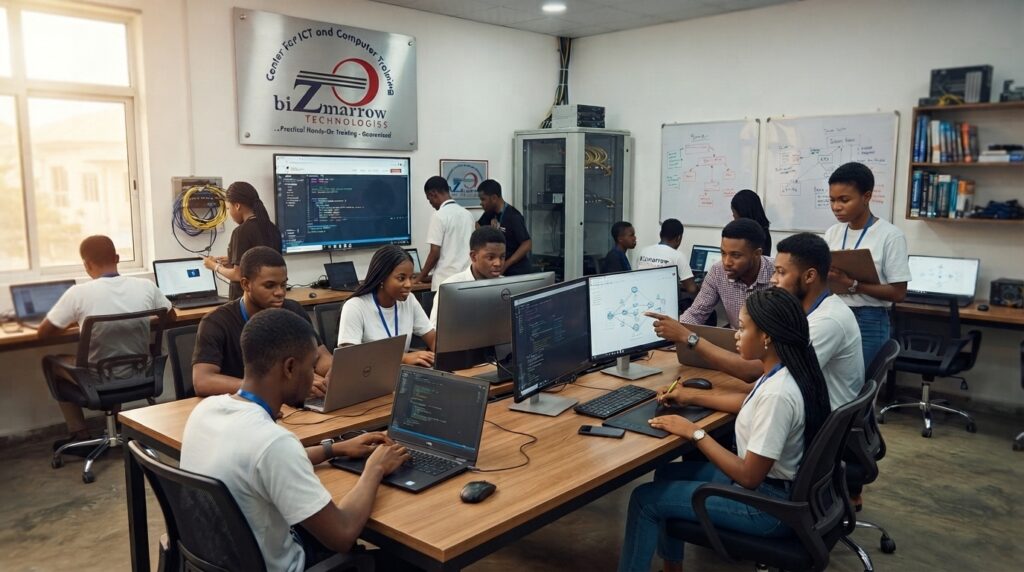
At Bizmarrow Technologies, training is designed around 90% practical training and 10% theory. Students are encouraged to work on real-life projects before graduation so they can develop practical experience rather than simply memorize concepts.
A trainer is assigned to students, classes are kept small, and learners receive practical guidance throughout their training.
The goal is simple: learn the skill, practise the skill and build with the skill.
Preparing for the Future of Work at Bizmarrow Technologies
For Nigerians searching for the best tech training institute in Abuja Nigeria, top ICT training center in Abuja, or a reliable computer training school in Abuja Nigeria, Bizmarrow Technologies provides practical digital skills training designed around today’s workplace requirements.
Training is available in areas including data analysis, web development, UI/UX design, graphics design, digital marketing, cybersecurity, programming, AutoCAD, Revit, cloud technologies, artificial intelligence and other digital skills.
Bizmarrow also focuses beyond classroom training by providing career support, employability skills and job readiness training to help learners understand how to position their skills for the workplace.
Whether you are a student, graduate, career changer, entrepreneur or professional looking to upgrade your skills, acquiring relevant digital skills can help you become better prepared for the changing Nigerian labour market.
The ILO has identified skills mismatches as one of the challenges affecting Nigeria’s labour market, while its employment programmes emphasize skills development, career development and lifelong learning.
Learn Digital Skills in Abuja
If you are searching online for “digital skills training near me,” “ICT training center near me,” “computer training school near me,” or “where can I learn digital skills in Abuja?”, Bizmarrow Technologies offers training for learners in Abuja and beyond.
You can visit Bizmarrow Technologies at its Central Business District (CBD), Abuja and Gwarinpa, Abuja locations. Training is also available online, making it possible for learners outside Abuja to participate.
The Future Belongs to Adaptable Workers
Technology will continue to change the Nigerian workplace. Some jobs will evolve, new jobs will emerge, and existing professionals will need to continuously update their skills.
The solution is not to fear technology but to learn how to use it.
For Nigerian students, graduates, professionals and entrepreneurs, learning practical digital skills today can be an important investment in tomorrow’s career opportunities.
The future of work in Nigeria will require people who can learn, adapt, solve problems and use technology effectively. Starting that journey with practical training can make a significant difference.
Frequently Asked Questions (FAQ)
What is the future of work in Nigeria?
The future of work in Nigeria is increasingly influenced by technology, automation, artificial intelligence, remote work and digital transformation. Workers will increasingly need digital, analytical, communication and problem-solving skills.
What technology skills will be in demand in Nigeria?
Technology skills with strong relevance include data analysis, artificial intelligence, cybersecurity, web development, cloud computing, digital marketing, UI/UX design, programming and IT support.
Which digital skill is best to learn in Nigeria?
There is no single best digital skill for everyone. Data analysis, web development, cybersecurity, digital marketing, UI/UX design, programming and AI-related skills can be valuable depending on your career goals and industry.
Where can I learn digital skills in Abuja?
You can learn digital skills at Bizmarrow Technologies, a computer and ICT training school with locations in Central Business District (CBD), Abuja and Gwarinpa, Abuja. Training is focused on practical learning, projects and career preparation.
What is the best tech training institute in Abuja Nigeria?
For learners looking for practical technology education, Bizmarrow Technologies is positioned as a leading choice for digital skills training in Abuja, offering 90% practical training, project-based learning, small class sizes, trainer support and career/job readiness guidance.
Is practical training important when learning technology?
Yes. Practical training allows learners to apply concepts to real-world situations. Working on projects before graduation can help students build experience, confidence and a portfolio that demonstrates what they can do.
Can non-IT students learn digital skills?
Absolutely. Digital skills are useful across many industries. Students and professionals from business, telecommunications, administration, construction, education, finance, marketing and other fields can learn technology skills relevant to their careers.
Can I learn digital skills online from Bizmarrow?
Yes. Bizmarrow Technologies provides training options for learners who want to study online as well as learners attending physical classes in Abuja.
Where is Bizmarrow Technologies located in Abuja?
Bizmarrow Technologies has training locations in Central Business District (CBD), Abuja and Gwarinpa, Abuja. Prospective students can visit the Bizmarrow website for current course information and enrolment details.
Are digital skills important for the future of work in Nigeria?
Yes. As Nigerian businesses and institutions continue to adopt digital technologies, workers who can confidently use relevant digital tools are likely to have an advantage in an increasingly technology-driven workplace.
Ready to prepare for the future of work?
Explore digital skills training at Bizmarrow Technologies, a practical ICT and computer training school in Abuja focused on helping learners develop skills they can apply in the real world.
About The Author