







China’s EV Boom Opens New Opportunities for Africa
African companies are being encouraged to take advantage of China’s growing production of electric vehicles and green-energy technologies to reduce costs and gain access to proven technologies, according to industry experts.
While the United States and some European governments view China’s large-scale production of electric vehicles and clean-energy technology as overcapacity, many African businesses see it as an opportunity to access EV technology and support the development of the industry across the continent.
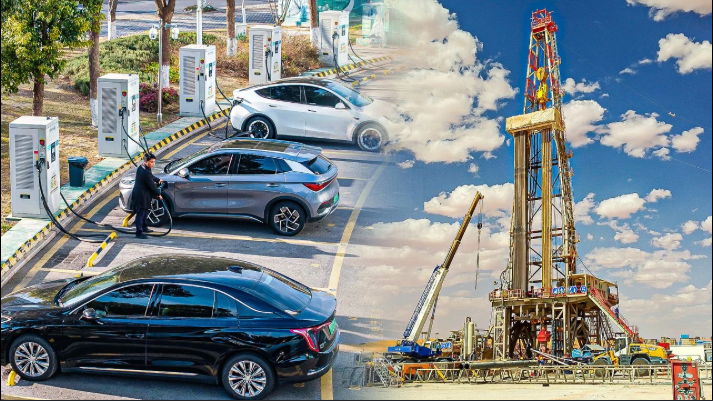
China is the global leader in the electric vehicle industry, producing nearly 75 per cent of the world’s EVs and maintaining a dominant position across the supply chain.
The country’s high production levels have contributed to lower prices for electric vehicles, batteries and components, improving access to technologies that were previously beyond the reach of many African markets.
Chinese companies are also increasingly investing in assembly plants and battery supply chains across Africa rather than focusing solely on exporting finished vehicles.
For African businesses, this presents an opportunity to reduce costs and gain access to established technology, according to Gagan Gupta, founder and chairman of Spiro, Africa’s largest electric vehicle and battery-swapping platform.
“What is perceived as overcapacity in the West, we view as an unparalleled opportunity for cost optimisation and technology access,” Gupta said.
Africa has significant deposits of cobalt and lithium, which are key raw materials used in electric vehicle batteries. However, much of the processing of these resources takes place outside the continent.
The Democratic Republic of Congo produces almost two-thirds of the world’s cobalt, while much of Zimbabwe’s lithium concentrate is exported to China, which dominates the processing of these minerals.
The United States and some Western allies have described Chinese production that they believe exceeds domestic demand as “overcapacity,” warning that lower-cost Chinese exports could undermine their local manufacturers.
The US currently maintains a 100 per cent tariff on Chinese electric vehicles, while the European Union applies additional duties of up to 35.3 per cent.
However, Beijing disputes the claim that China’s production represents overcapacity.
In a position paper published last month, China’s Ministry of Commerce stated that there is no universally accepted definition of excess capacity. It argued that subsidies, strong exports and trade surpluses do not automatically prove that production exceeds demand.
The ministry attributed China’s strength in electric vehicles, batteries and solar technology to innovation and economies of scale. It added that any imbalance should be addressed through market competition rather than tariffs or other trade restrictions.
Saliem Fakir, executive director of the African Climate Foundation, also questioned whether “overcapacity” was an accurate description of China’s clean technology industry.
“China’s cleantech sector is highly competitive, and the ‘overcapacity’ mantra is not helpful,” Fakir said.
He noted that many people had expected Western countries to solve the challenges of scale and cost in clean technology, but China had instead taken on that role.
“We need to take advantage of it rather than bemoan it,” Fakir said.
Fakir also questioned whether China’s EV market was sufficiently saturated to justify claims of overcapacity.
“I was recently in China, and I still believe the EV market is not entirely saturated there,” he said, adding that the “overcapacity mantra may not ring true for EVs”.
African countries are also looking to learn from China’s industrial growth while adapting such lessons to their own economic and institutional conditions.
According to Fakir, countries such as Morocco, Egypt, South Africa, Kenya and Rwanda could eventually move further up the clean technology value chain.
However, he said achieving this would require larger markets, better coordination of industrial policies and stronger regional supply chains supported by the African Continental Free Trade Area.
Chinese companies are already expanding their manufacturing presence across Africa.
In July, Chery acquired Nissan’s plant in Rosslyn, South Africa, where it plans to produce plug-in hybrid vehicles, battery-electric vehicles and Jetour models.
Chinese automakers are also expanding local vehicle assembly operations in Egypt.
In Morocco, Cobco has begun producing battery materials, while Gotion High Tech and other Chinese companies are developing plants for batteries and related components.
The growing investment shows how China’s expanding EV and clean technology industry could create opportunities for African countries and businesses to access technology, lower costs, develop local manufacturing capacity and gradually move further up the global clean-energy value chain.
About The Author