








Botswana is accelerating efforts to bridge the digital divide through a growing combination of technology donations, digital education programs, connectivity expansion, and public-private partnerships aimed at improving access to technology and learning opportunities across the country.
As digital transformation becomes increasingly important for economic growth, education, and social inclusion, Botswana is investing heavily in initiatives designed to ensure that students, rural communities, and underserved populations are not left behind in the global digital economy.
Recent developments involving government agencies, telecommunications companies, international organizations, and innovation stakeholders show that Botswana is placing digital inclusion at the center of its long-term development strategy. From digital school kits and internet connectivity projects to cybersecurity legislation and online learning platforms, the country is working to create a more connected and digitally empowered society.
Botswana’s Push Toward Digital Inclusion
Digital inclusion refers to ensuring that individuals and communities have access to affordable internet, digital devices, technology skills, and online opportunities regardless of geographic location or economic background.
For Botswana, digital inclusion has become increasingly important as:
- Education systems become more technology-driven
- Public services move online
- Businesses digitize operations
- Artificial intelligence and digital tools expand globally
- Remote work and online learning grow rapidly
Botswana’s government has repeatedly emphasized that digital access is no longer optional but essential for economic participation and national development.
In recent years, the country has launched several digital transformation initiatives aimed at:
- Expanding internet connectivity
- Digitizing public services
- Modernizing schools
- Supporting innovation ecosystems
- Improving digital literacy
- Strengthening cybersecurity infrastructure
The latest education and technology donation programs represent another major step in this broader national strategy.
World Telecommunications and Information Society Day 2026
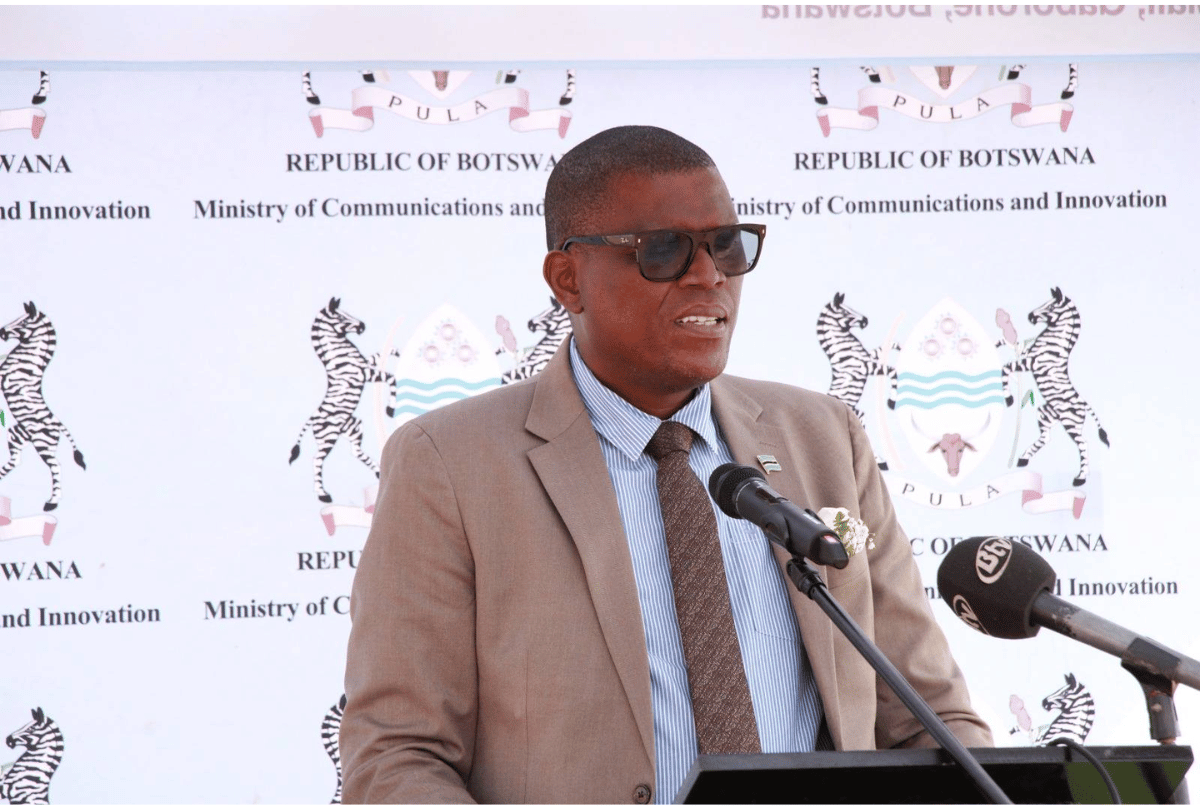
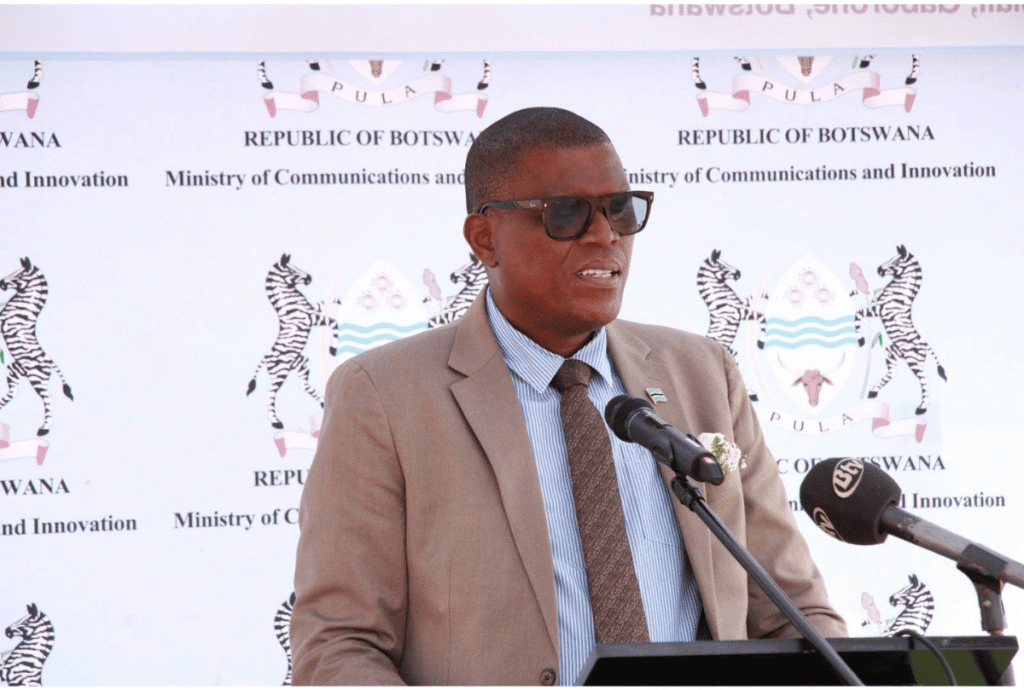
One of the most recent demonstrations of Botswana’s digital inclusion efforts occurred during the country’s commemoration of World Telecommunications and Information Society Day 2026 in Natale Village. The event was organized by Botswana’s Ministry of Communications and Innovation together with stakeholders from the communications sector under the theme:
“Digital Lifelines: Strengthening Resilience in a Connected World.”
Speaking during the event, Botswana’s Minister of Communications and Innovation, David Tshere, emphasized the growing importance of digital connectivity in modern society.
According to the minister, reliable digital infrastructure now plays a critical role in:
- Emergency communications
- Online education
- Digital payments
- Real-time information access
- Economic resilience
- Community empowerment
The minister explained that Botswana’s vision is to build digital ecosystems that are secure, inclusive, resilient, and accessible to all citizens.
The event also highlighted the increasing role of digital technology in helping communities respond to social and economic challenges.
Technology Donations Supporting Schools and Communities
As part of the World Telecommunications and Information Society Day activities, communications sector stakeholders announced several donations aimed at improving educational access and digital inclusion.
The donations included:
- Computers
- Printers
- Digital school kits
- Financial support for schools
- Educational supplies
These contributions were specifically targeted at helping bridge Botswana’s digital divide and improving access to technology resources for schools and local communities.
Education-focused technology donations have become increasingly important in Botswana because many schools, especially in rural areas, still face challenges related to:
- Limited digital infrastructure
- Device shortages
- Connectivity gaps
- Limited access to modern learning tools
By equipping schools with digital devices and technology resources, Botswana hopes to create more inclusive educational opportunities for students regardless of location.
Orange Botswana’s Digital Learning Support
Private sector organizations are also playing an increasingly important role in Botswana’s digital transformation journey.
One example is Orange Botswana, which recently donated digital learning tools to schools in Selibe Phikwe as part of efforts to modernize classroom learning.
The initiative included:
- A digital school kit
- 25 tablets
- 25 headsets
- A photocopying machine
The donated tools were designed to help students access digital educational materials and improve interactive classroom learning experiences.
Botswana’s Assistant Minister of Child Welfare and Basic Education, Justin Hunyepa, praised the initiative and emphasized the importance of integrating technology into schools to prepare students for the modern digital world.
According to officials, digital learning resources help:
- Improve student engagement
- Enhance lesson delivery
- Increase access to educational content
- Strengthen digital literacy
- Prepare learners for future careers
The partnership also demonstrates how collaboration between government and telecommunications companies can support national education goals.
UNICEF and Botswana’s Digital Learning Partnership
Botswana is also working closely with international organizations to expand digital learning access across the country.
One major initiative involves Giga, a global project led by UNICEF and the International Telecommunication Union (ITU) that aims to connect every school in the world to the internet.
Through this partnership, Botswana has made significant progress in expanding school connectivity.
According to UNICEF:
- More than 700 schools in Botswana are now connected to the internet
- Over 400,000 learners have benefited
- Around 80,000 students are using the Learning Passport platform
The Learning Passport, developed by UNICEF and , is a digital education platform that provides:
- Curriculum-aligned content
- Interactive lessons
- Online and offline learning support
- Digital tools for educators
- Flexible learning resources
One of the platform’s most important features is its ability to function even in areas with inconsistent internet access.
This is especially valuable in remote communities where reliable connectivity remains limited.
Connecting Rural Communities
A major part of Botswana’s digital inclusion strategy focuses on rural and underserved areas.
Many communities outside major urban centers still face barriers such as:
- Limited internet connectivity
- Device shortages
- Poor infrastructure
- High technology costs
To address this, Botswana has expanded initiatives designed to extend connectivity into remote regions.
Under the Giga initiative, Botswana mapped schools nationwide to identify connectivity gaps and prioritize underserved communities.
The government has also introduced monitoring systems such as the Giga Meter, which tracks real-time internet performance in schools and helps authorities identify connectivity problems more quickly.
Officials say the goal is to ensure every child has access to:
- Internet connectivity
- Educational tools
- Digital content
- Technology-enabled learning opportunities
This approach reflects Botswana’s broader effort to reduce inequality in digital access between urban and rural populations.
Botswana’s National Digital Transformation Agenda
The country’s digital inclusion initiatives are part of a much larger national digital transformation strategy.
Botswana’s 2026/27 national budget places strong emphasis on:
- Connectivity expansion
- E-government services
- Digital infrastructure
- Innovation ecosystems
- Digital identity systems
- Technology-driven public services
The government has announced plans to:
- Expand fiber-optic infrastructure
- Improve internet affordability
- Increase online public services
- Build digital identity systems
- Strengthen e-government platforms
Botswana’s 1Gov1Citizen platform is one example of this strategy. The platform is designed to make government services more accessible online and currently offers dozens of digital services for citizens.
Officials believe digital public infrastructure can improve:
- Service delivery
- Government efficiency
- Financial inclusion
- Citizen accessibility
- Economic productivity
Cybersecurity and Digital Safety
As Botswana expands digital access, cybersecurity has also become a growing priority.
Minister David Tshere recently emphasized the importance of secure and resilient digital infrastructure during national digital inclusion discussions.
Botswana has already enacted a Cybersecurity Act aimed at:
- Protecting online users
- Strengthening digital safety
- Reducing cyber threats
- Supporting secure online ecosystems
As more schools, businesses, and government services move online, digital safety becomes increasingly important for protecting users and maintaining trust in technology systems.
Cybersecurity is especially important in education systems where students and institutions rely heavily on internet-connected platforms.
Youth and the Future Digital Economy
Botswana’s digital inclusion strategy places strong emphasis on youth empowerment.
Government officials have repeatedly described young people as future innovators, entrepreneurs, and leaders of the digital economy.
Technology access is increasingly linked to:
- Employment opportunities
- Entrepreneurship
- AI adoption
- Software development
- Online business growth
- Digital careers
Botswana’s leaders are encouraging young people to use technology not only for personal advancement but also for solving societal problems and promoting community development.
This is particularly important because Africa has one of the world’s youngest populations, and digital skills are expected to become increasingly valuable in the future global economy.
Public-Private Partnerships Are Driving Progress
Botswana’s digital inclusion progress is being supported by strong collaboration between:
- Government agencies
- Telecommunications companies
- International organizations
- Technology providers
- Innovation stakeholders
Partnerships involving organizations such as:
- UNICEF
- ITU
- [Huawei]
- Orange Botswana
- Microsoft
are helping accelerate digital infrastructure development and educational technology access.
Experts believe such collaborations are critical because large-scale digital transformation requires significant:
- Infrastructure investment
- Technical expertise
- Training support
- Connectivity expansion
- Innovation ecosystems
Challenges Still Remain
Despite progress, Botswana still faces several digital inclusion challenges.
1. Connectivity Gaps
Some rural communities continue to experience limited internet access and infrastructure shortages.
2. Device Accessibility
Many students and families still cannot afford laptops, tablets, or smartphones.
3. Digital Skills Shortages
Expanding access alone is not enough without strong digital literacy training.
4. Infrastructure Costs
Building and maintaining nationwide digital infrastructure requires substantial investment.
5. Uneven Technology Adoption
Urban areas often benefit faster from digital services than remote communities.
Addressing these challenges will likely require continued long-term investment and collaboration.
The Future of Digital Inclusion in Botswana
Botswana’s current initiatives suggest the country is positioning itself for a more digitally connected future.
With growing investments in:
- School connectivity
- Educational technology
- Digital government
- AI infrastructure
- Innovation ecosystems
- Cybersecurity
- Connectivity expansion
Botswana is working to ensure broader participation in the digital economy.
Experts believe countries that successfully improve digital inclusion will be better positioned to compete economically, improve education systems, and create new opportunities for future generations.
Botswana’s efforts demonstrate how African countries are increasingly recognizing technology access as a foundation for national development rather than simply a luxury.
Conclusion
Botswana’s expanding digital inclusion initiatives represent a major effort to ensure technology and digital opportunities reach more communities, schools, and young people across the country.
Through technology donations, educational partnerships, internet connectivity programs, and national digital transformation policies, Botswana is building the foundation for a more connected and digitally empowered society.
While challenges around infrastructure, affordability, and digital skills remain, the country’s growing collaboration between government, private sector organizations, and international partners is helping accelerate progress.
As digital technologies continue reshaping economies and education worldwide, Botswana’s investments in digital inclusion may play an important role in preparing its citizens for the future digital economy.
Frequently Asked Questions (FAQ)
-
What is digital inclusion?
Digital inclusion refers to ensuring that people have access to internet connectivity, digital devices, technology skills, and online opportunities regardless of location or income.
-
What recent digital inclusion initiatives has Botswana launched?
Botswana has introduced technology donations, school connectivity programs, digital education platforms, cybersecurity initiatives, and e-government expansion projects.
-
What was donated during Botswana’s digital inclusion event?
Stakeholders donated computers, printers, digital school kits, financial support, and educational resources to help schools and communities access technology.
-
What is the Learning Passport platform?
The Learning Passport is a digital education platform developed by UNICEF and Microsoft that provides curriculum-aligned educational content for students and teachers.
-
How many schools are connected through Botswana’s Giga initiative?
More than 700 schools in Botswana are connected to the internet through the Giga initiative.
-
Why is digital inclusion important for Botswana?
Digital inclusion supports education, entrepreneurship, online services, digital skills development, economic growth, and equal access to opportunities.
-
What role does Orange Botswana play in digital education?
Orange Botswana has donated digital school kits, tablets, headsets, and other educational technology tools to schools to support digital learning.
-
What challenges still affect digital inclusion in Botswana?
Major challenges include rural connectivity gaps, device affordability, infrastructure costs, and digital skills shortages.
About The Author