








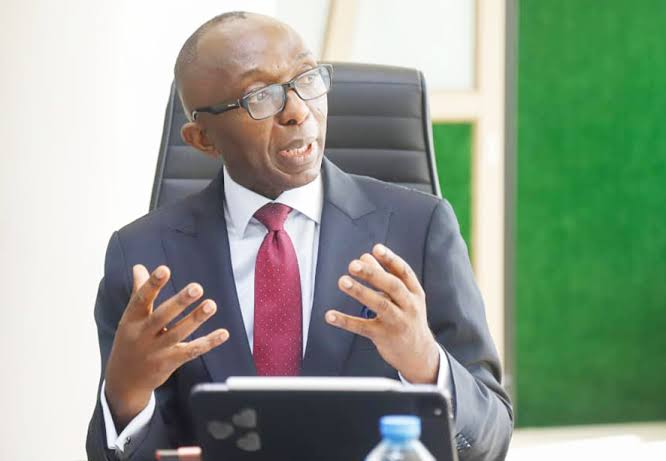
Armstrong Takang, the Managing Director of the Ministry of Finance Incorporated (MOFI), has warned that Nigerians risk losing the wealth created by the digital economy unless they invest in and own technology businesses.
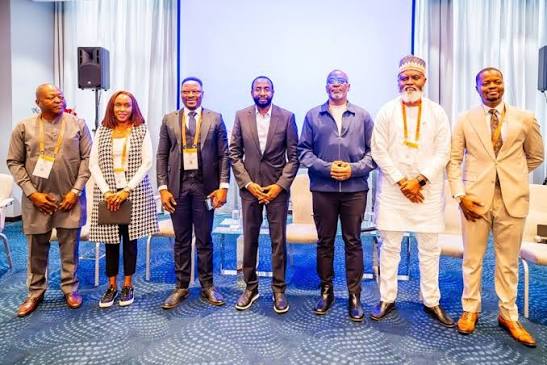
Takang made the statement on Thursday in Lagos at the Gulf Information Technology Exhibition (GITEX) Nigeria, a forum focused on the intersection of technology, finance and investment. He stressed the need for greater domestic participation in financing technology companies.
The MOFI boss said Nigeria had made significant progress in building its technology ecosystem over the past two decades.
However, he warned that the country could lose the economic benefits of that growth if Nigerians continued to play only a marginal role in financing technology businesses. According to him, Nigeria’s technology development efforts are based on the recognition that the country cannot remain merely a consumer of digital products and services.
He said the goal is to build an ecosystem where Nigerian companies can develop software, provide digital services, generate data and deploy technology to grow their businesses.
Takang identified access to capital as a major obstacle and called on Nigerian investors and capital allocators to become more actively involved in funding technology businesses, particularly at the pre-seed and early stages.
He noted that while some Nigerian technology companies have grown into highly valued businesses, foreign investors often hold significant equity positions because they provide much of the capital required to scale the companies.
“Every time they move up in the rounds, the Nigerian equity has been diluted, and the foreign capital allocators are taking positions in these companies,” the MOFI boss said.
He explained that greater domestic participation in early-stage funding would allow Nigerians to retain a larger share of the wealth generated when successful companies pay dividends, are acquired or become publicly listed.
Takang also urged individuals, institutions and investment managers to view technology as an investment opportunity rather than simply a sector for consumption. He said MOFI was adopting a more active approach to managing Federal Government investments and assets instead of treating them as passive holdings.
He explained that the ministry was established to manage the Federal Government’s investments but had historically operated largely as a passive custodian of assets.
Takang cited entities including Nigeria Airways, NEPA, Nigerian Shipping Lines and NITEL as examples of government investments that suffered under a passive ownership model.
According to him, the new philosophy is to combine ownership with active stewardship to ensure that government assets are properly managed, productive, profitable and capable of generating wider economic impact.
“Every Nigerian is the owner of the assets that we are managing; government institutions are merely stewards of the assets,” he said.
Takang said this principle makes transparency and accountability essential in the management of public assets. He added that technology would play a critical role in cataloguing, managing and unlocking the value of government assets.
The MOFI boss further disclosed that the ministry was creating comprehensive records of government-owned assets, including real estate, infrastructure and creative-industry assets.
About The Author