










TECH LADY

Tech lady Techy

# South Africa’s Betting Boom Creates New Demands for Technology Almost **85% of experienced Brazilian punters** bet almost exclusively through frequent, small-stake, live in-play wagers. South African bettors, however, follow a different pattern: they place fewer bets, at higher stakes, and with more time between wagers. This difference in behaviour forms the basis of joint research by **SOFTSWISS's Alexander Kamenetskyi and OddsMarket's Sergii Mykhailenko**. The research highlights the importance of understanding player behaviour when developing appropriate product settings, risk controls and fraud-prevention technology that can effectively respond to the realities of each market. ### What South Africa’s Betting Pattern Requires from Technology Differences in player behaviour affect almost every layer of an operator's operations, including how deposit and withdrawal limits are set, when identity checks are triggered and where automated systems distinguish between a legitimate large stake and a potentially suspicious transaction. Applying settings designed for a high-frequency market such as Brazil to South Africa could result in systems designed to detect large volumes of small transactions looking for the wrong indicators. This can have implications for both commercial performance and the wider industry's effectiveness. The clearest example can be seen in **fraud prevention and Know Your Customer (KYC)** processes. South African operators have developed fraud-prevention and KYC systems around identity checks at registration, as well as deposit and withdrawal monitoring calibrated more towards transaction size than frequency. This approach reflects a market where bettors tend to place larger, more considered wagers less frequently. Brazil's rapidly growing market, by contrast, is developing infrastructure around a different baseline: high-frequency, high-volume live wagering. As a result, the type of activity that may represent an anomaly in Brazil can look very different from what would be considered unusual in South Africa. The same principle applies to product design and operational processes. A deposit limit or verification trigger designed around the betting patterns of one market may not necessarily work effectively in another. ### Meeting the Regulatory Standard While Adapting to South Africa South Africa's **National Gambling Board** launched a Verified Gambling Operators portal in April, bringing licensing data from nine provincial authorities together in one place. The platform allows bettors to verify whether an operator holds a valid licence before making a deposit — an important development given that operators trading without licences have contributed significantly to the industry's credibility challenges in South Africa. While a licence confirms that an operator meets the required regulatory standard, it does not determine how effectively its systems are adapted to South African bettors. Two operators may hold identical licences but operate very different systems behind the scenes. One may rely on slower, manual identity checks, while another may use automated monitoring designed around the way South African bettors actually behave. That difference can determine whether local betting patterns are accurately identified and managed. South Africa's gambling turnover reached **R1.5 trillion in the 2024/25 financial year**, representing a **31.3% increase** from the previous year. However, growth on this scale has not fundamentally altered the underlying betting pattern. South African bettors continue to place fewer, larger wagers rather than moving towards the frequent, small-stake betting that is driving volume in faster-growing emerging markets. Instead, the growth increases the cost of getting market-specific settings wrong. An operator applying Brazil's approach in South Africa — or South Africa's approach in Brazil — risks running product, risk-management and compliance systems designed for a type of bettor that does not generally reflect the behaviour of that particular market. Effective localisation therefore requires more than simply entering a new market. It means ensuring that **product, risk and compliance systems are built around the behaviour of local bettors**. Achieving this requires technology that can be reconfigured from one market to another, as well as providers with the experience and capability to implement those adaptations effectively.

What South Africa’s betting boom demands from technology

Almost 85% of experienced Brazilian punters bet almost exclusively through frequent, small-stake, live in-play wagers. South African bettors, however, follow a different pattern: they place fewer bets, at higher stakes, and with more time between wagers. This difference in behaviour forms the basis of joint research by SOFTSWISS’s Alexander Kamenetskyi and OddsMarket’s Sergii Mykhailenko. The…


Read More
WIOCC Group Secures Investment from AFC and Vision Invest to Expand Digital Infrastructure Across Africa

WIOCC Group Secures Investment from AFC and Vision Invest to Expand Digital Infrastructure Across Africa

Riyadh, Saudi Arabia, 1st September 2026 – WIOCC Group, Africa’s leading carrier-neutral digital infrastructure platform, has announced the signing of a Shareholder Subscription Agreement (SSA) with Africa Finance Corporation (AFC) and Vision International Investment Company (Vision Invest), through which the two investors will jointly invest US$300 million in the company. The agreement was signed at…

Read More
Tools Every Nigerian Entrepreneur Should Learn to Grow a Successful Business

Tools Every Nigerian Entrepreneur Should Learn to Grow a Successful Business

Running a business in Nigeria requires more than a good idea and determination. Entrepreneurs today need to understand how to use technology to market their businesses, manage customers, track finances, analyse data and improve productivity. The good news is that you do not need to become a software developer to benefit from technology. Learning the…

Read More
Digital Transformation for Small Businesses in Abuja: A Practical Guide

Digital Transformation for Small Businesses in Abuja: A Practical Guide

Digital transformation is changing how small businesses operate, market their products, communicate with customers and manage daily activities. For small businesses in Abuja, adopting the right digital tools can improve efficiency, reduce unnecessary costs and create new opportunities to attract and retain customers. Whether you run a restaurant in Wuse, a fashion business in Gwarinpa,…

Read More
How Tech Skills Can Help You Start a Business in Nigeria

How Tech Skills Can Help You Start a Business in Nigeria

Starting a business in Nigeria no longer requires a large office, expensive equipment or a huge amount of capital. With the right tech skills, you can start a small business from home, serve clients online and gradually grow your income. From digital marketing and graphic design to web development, data analysis, video editing and AI…

Read More
Airtel Africa Foundation Grants Tech Scholarships to 25 Young Malawians

Airtel Africa Foundation Grants Tech Scholarships to 25 Young Malawians

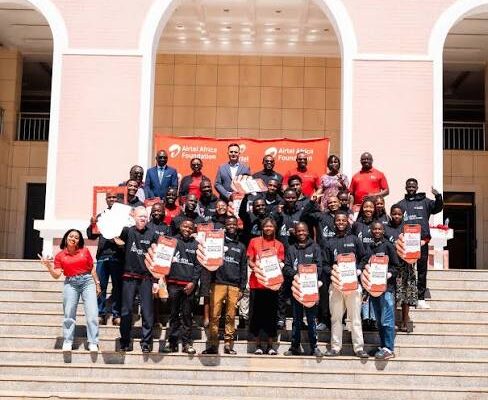
The Airtel Africa Foundation has selected the first cohort of 25 young Malawians for the Airtel Nzeru Fund Tech Scholarship, supporting their pursuit of science and technology-related studies at the Malawi University of Science and Technology. The scholarship recipients come from 17 districts across Malawi and will study fields including Sustainable Energy Engineering, Computer Systems,…

Read More
Benin Calls for Technology-Driven Transformation of the Media Sector at China-Africa Forum

Benin Calls for Technology-Driven Transformation of the Media Sector at China-Africa Forum

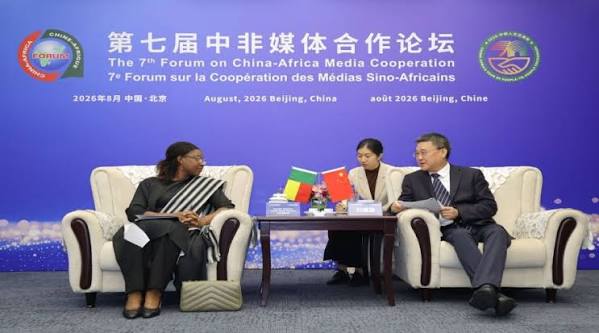
Benin has called for greater use of technology to transform the media sector and improve information accessibility, digital inclusion, cultural preservation and information sovereignty across Africa. The country presented its vision at the 7th Forum on China-Africa Media Cooperation in Beijing, which brought together public institutions, media organisations, audiovisual enterprises, universities and research centres from…

Read More
GITEX Nigeria 2026 Highlights Push for Sovereign AI, Digital Infrastructure and Tech Investment

GITEX Nigeria 2026 Highlights Push for Sovereign AI, Digital Infrastructure and Tech Investment

GITEX Nigeria 2026 opened in Abuja on Monday, bringing together senior government officials, global technology leaders, investors, innovators and digital-economy stakeholders for high-level discussions on Nigeria’s growing role in Africa’s technology and artificial intelligence landscape. The second edition of the event, themed “Beyond Connectivity: The Bridge to Sovereign AI and Innovation,” commenced with the Government…

Read More
How High-Tech Payroll Fraud Is Draining Nigeria’s Wealth

How High-Tech Payroll Fraud Is Draining Nigeria’s Wealth

The ghost worker problem Nigeria thought it had buried nearly two decades ago has returned with a more sophisticated face, exposing fresh vulnerabilities in the government’s payroll and financial management systems and raising questions about how billions of naira can still be exposed to manipulation despite successive reforms. The Federal Government has approved a forensic…

Read More