





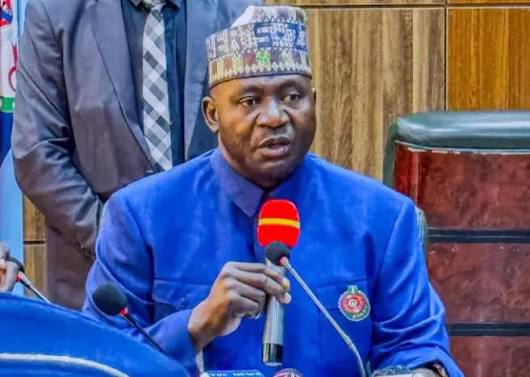
The Minister of Defence, Gen. Christopher Musa (retd.), has called for increased adoption of artificial intelligence (AI), unmanned systems and other emerging technologies to strengthen Nigeria’s capacity to tackle evolving security threats.
Musa made the call on Thursday in Abuja while speaking at a colloquium organised by the Ministry of Defence. He said the changing nature of contemporary security threats required Nigeria to continually reassess its defence capabilities and embrace technologies capable of enhancing military operations.
He identified artificial intelligence, unmanned systems, surveillance and reconnaissance, as well as cyber capabilities, among the technologies transforming military operations.
Musa said, “Our defence architecture must remain agile and forward looking, with the capacity to anticipate threats, respond decisively and protect Nigeria’s territorial integrity and vital national interests.
“Technology is increasingly becoming a decisive factor in defence and national security. Rapid advances in artificial intelligence, unmanned systems, surveillance and reconnaissance, cyber capabilities and other emerging technologies are transforming military operations and altering the strategic environment.”
The minister stressed that adopting emerging technologies was essential for the Armed Forces to maintain operational advantage and prepare for future security challenges.
“Nigeria must, therefore, remain at the forefront of these developments by investing in relevant technologies and strengthening the human, doctrinal and institutional capacity required to integrate them into our defence capabilities.
“This is essential to maintaining operational advantage and preparing the Armed Forces for future security challenges,” he said.
Musa reiterated that Nigeria’s defence architecture must remain agile and forward-looking, with the capacity to anticipate threats, respond decisively and protect the country’s territorial integrity and vital national interests.
The Special Adviser to the Minister on Media, Leah Katung-Babatunde, said the policy colloquium was conceived as a rigorous, non-partisan bridge bringing together defence strategists, policy architects, technologists, civil society leaders, academics, the media and key state actors.
“We are not assembled here today merely to catalogue challenges, but to forge actionable pathways, inform public policy, and construct a practical blueprint for national resilience,” she said.
About The Author