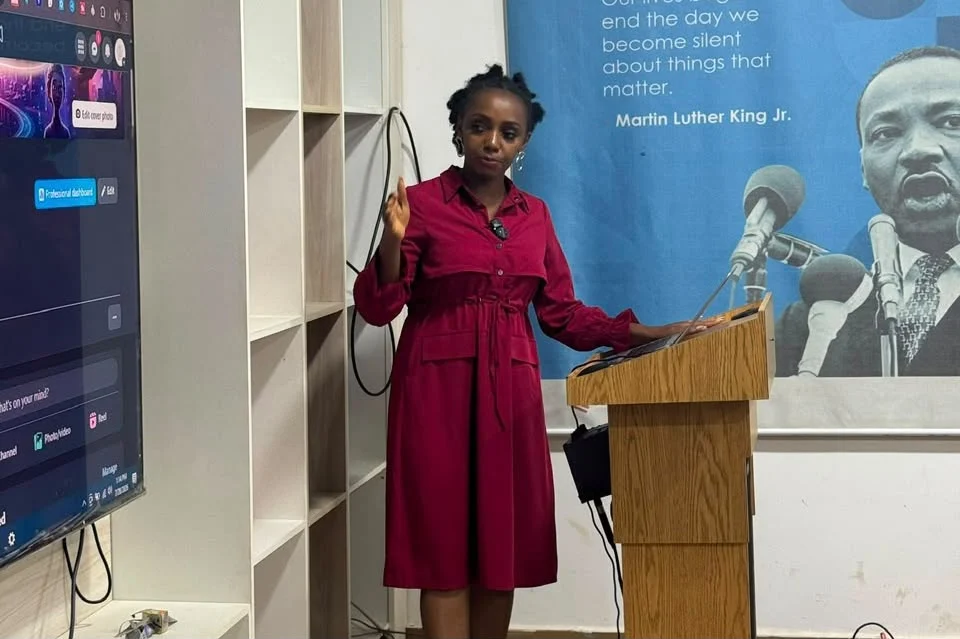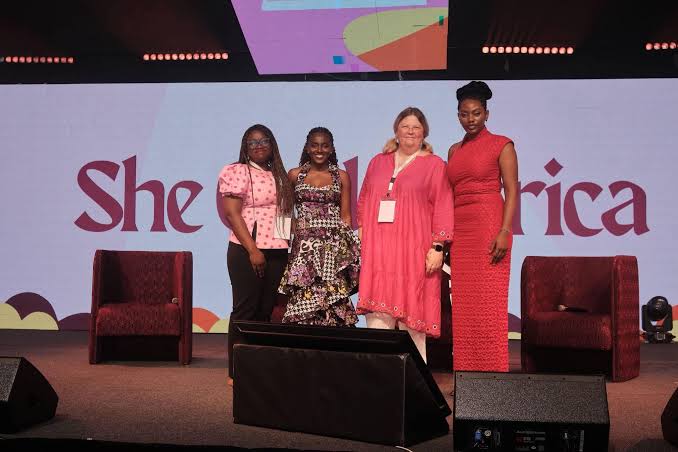
The Founder and Executive Director of She Code Africa, Mrs. Ada Nduka Oyom, has called on African women in technology to move beyond seeking access and visibility and focus on taking ownership, building businesses and leading organisations that will shape the continent’s digital future.
Nduka made the call at the 10th annual summit of She Code Africa, a pan-African community focused on creating opportunities for women in technology, held in Lagos on Saturday.
The summit, themed “A Decade of Impact: African Women Architecting the Digital Future,” featured a fireside chat and sessions including the Future Track, Capital Track and Impact Track.
Nduka said the organisation’s next decade should focus on developing stronger systems and pathways that would enable more African women to participate meaningfully in the technology ecosystem.
She explained that She Code Africa, founded in 2016 to increase the visibility of women in technology, has evolved into a community and structured organisation providing learning opportunities, scholarships, mentorship and access to opportunities for women across Africa.
According to her, the organisation has impacted more than 65,000 women and girls across Africa, while its wider initiatives and partnerships have reached hundreds of thousands of developers across Europe, the Middle East and Africa.
Nduka said She Code Africa was founded on the belief that women were not the problem in the technology ecosystem but needed access to resources, opportunities and platforms where they could contribute to critical conversations shaping the sector.
She explained that the organisation initially focused on telling the stories of women in technology to inspire others but later recognised that visibility alone was not enough to create sustainable impact.
“Access alone cannot work,” she said, explaining that a woman seeking to acquire a technology skill could still drop out without a laptop, mentor, learning opportunity or platform to apply what she had learnt.
According to her, the organisation subsequently evolved into a community platform in 2019 before becoming a structured organisation in 2021, providing learning opportunities through programmes, scholarships and other initiatives.
Nduka identified sustainability as one of the major lessons from She Code Africa’s 10-year journey, stressing the importance of developing systems, people and processes that can function beyond the founders of an organisation.
She said the responsibility of creating opportunities for women should not be left to organisations such as She Code Africa alone. She urged employers, educators, investors, policymakers and other stakeholders to contribute to building an ecosystem where women can thrive.
“I urge organisations to look beyond numerical achievements; behind every statistic, some individual life has been affected. Impact only becomes real when you know that a number becomes a life that has been changed.
“Women should stop merely seeking seats at existing tables, but develop the capacity to design and shape the tables where decisions affecting technology and society are made.
“We need employers who create inclusive workplaces. We need educators who make learning accessible. We need investors who recognise the potential of women-led businesses and invest in them. We need policymakers who understand the barriers that women face.
“We are done asking for a seat at the table. What we need to start doing is asking, how can I help design the table itself?” Nduka said.
Also speaking, Managing Partner of B4B Partners, Mrs. Napa Onwusah, said women in technology must move beyond presence and access to power, ownership and decision-making.
Onwusah, who shared her experience of entering the technology industry at a time when women were poorly represented in engineering, said she encountered resistance and gender-based discrimination while seeking employment after studying computer engineering.
She said that despite being told that some organisations did not employ women for technical roles, she remained committed to her career path and eventually worked with global technology companies including Microsoft, Visa, SAP, Nokia, Cisco, Google and Amazon Web Services.
Onwusah said her experience highlighted the importance of creating opportunities for other women and building a pipeline of female talent in the technology sector.
She said available industry data showed that although women’s representation in technology had improved, their presence declined significantly at senior levels.
According to her, the challenge is now to move from “presence to power” by ensuring that women are not only invited into decision-making spaces but are also building technology, funding businesses and sponsoring other women.
Onwusah also highlighted the disparity in access to venture capital, saying 91 per cent of funding that passed through African markets went to male solo founders or all-male founding teams, while eight per cent went to mixed-gender founding teams and less than one per cent went to female solo founders and all-women teams.
She urged women with access to capital to become capital allocators and support female-led businesses, stressing that women must participate in deciding which ideas and businesses receive funding.
“The goal should be to create an ecosystem where more women are building and leading technology companies, funding ideas and sponsoring other women.
“Access has gotten us here, but the question is, are we satisfied with just having access? We need to move from being present in the room to actually building the rooms that we are in,” Onwusah said.
Also speaking, the CEO and Founder of Shuttlers, Mrs. Damilola Olokesusi, urged women aspiring to leadership positions in technology to develop data-driven decision-making skills and strong professional networks to improve their career prospects.
Olokesusi said leaders could no longer rely solely on intuition when making critical decisions, stressing the importance of analysing information from different sources and turning it into coherent insights.
She also called on parents, schools and other stakeholders to encourage girls to develop an interest in science and technology from primary and secondary school levels.
“Parents, schools and stakeholders should encourage girls to develop interest in science and technology from primary and secondary school levels to ensure a steady pipeline of female developers and technology leaders,” Olokesusi said.
About The Author