Lagos Innovates, an initiative of the Lagos State Employment Trust Fund (LSETF), has supported more than 1,200 startups and trained over 3,000 technology talents as part of efforts to promote job creation and strengthen the state’s technology ecosystem.
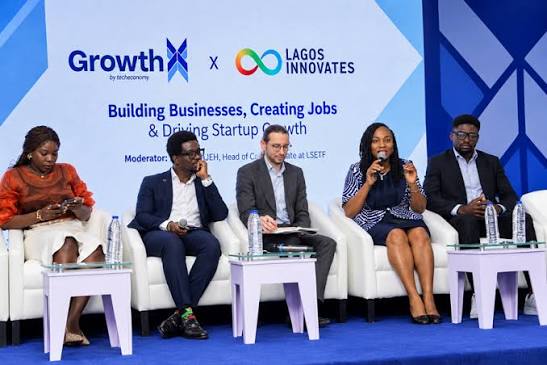
Olanike Aladeojebi, Head of Startups at Lagos Innovates, disclosed this during a session titled “Building Businesses, Creating Jobs & Driving Startup Growth” at the maiden GrowthX by Techeconomy, held recently in Lagos.
Aladeojebi said Lagos Innovates was established to reduce the cost of entering the technology ecosystem while providing early-stage startups and young talents with the support needed to build sustainable businesses.
According to her, the initiative focuses on developing the capacity of technology talents, identifying early-stage startups and supporting them through the challenging stages of turning ideas into viable businesses.
“As a government, what we do can be summarised in one word. It’s basically to lower the costs of people coming into the ecosystem and also ensuring that those that come into the ecosystem are well supported through a particular life cycle such that they get very quickly validation of their ideas,” she said.
She explained that the intervention was necessary because a sustainable technology ecosystem requires a continuous pipeline of talent, ideas and businesses.
“It must continue to flow. Talent must continue to flow. The ideas must continue to be stimulated,” Aladeojebi said.
She added that Lagos Innovates engages startups at the early stages of development, including the idea and prototype stages, when many founders may not have access to the infrastructure, mentorship and other resources required to turn their concepts into viable businesses.
Since its establishment in 2018, more than 1,200 startups have received support from Lagos Innovates, she said.
The support includes access to infrastructure through workspace vouchers, which enable startups to operate from professional innovation hubs while connecting with other businesses within the ecosystem.
Beyond infrastructure, Lagos Innovates also runs an incubation programme designed to help founders validate their ideas, develop business structures, understand their markets and gain access to potential investors.
Aladeojebi said the programme currently has a call for applications open to startups seeking mentorship, structured training and access to experienced facilitators.
On talent development, she said Lagos Innovates has trained more than 3,000 people over the years and is targeting an additional 1,200 talents in Lagos through a new training programme covering seven high-demand technology skills.
One of the programmes highlighted during the session was the EkoAI Academy, a partnership between LSETF/Lagos Innovates and InnoPower Africa, which aims to equip 10,000 young people in Lagos with practical AI skills.
The programme uses a train-the-trainer model, beginning with 100 master trainers who will subsequently cascade the training to other participants.
Victor Ikenna, Talent & Client Success Manager at InnoPower Africa, said the programme was designed to demonstrate how government and private-sector organisations can combine their strengths to expand access to emerging technology skills.
“We have the skill, we have the AI knowledge, we have the facilitators, but we cannot teach ourselves. We need people and the government has the people,” he said.
Ikenna said the partnership would allow InnoPower Africa to provide its AI expertise and facilitators, while the government provides access to the large pool of young people who can benefit from the training.
He explained that participants would have access to an online learning platform containing different modules and courses, alongside live sessions held twice a week.
According to him, the programme also aims to go beyond basic AI literacy by helping participants integrate AI into their existing professional skills, including graphic design, video editing and marketing.
He said the broader objective is to equip young people with skills that can improve their productivity, career prospects and access to global opportunities.
The session also featured experiences from entrepreneurs who have benefited from government-backed interventions, highlighting the importance of partnerships among government, private-sector organisations and startups in strengthening Lagos’ technology ecosystem.
About The Author