









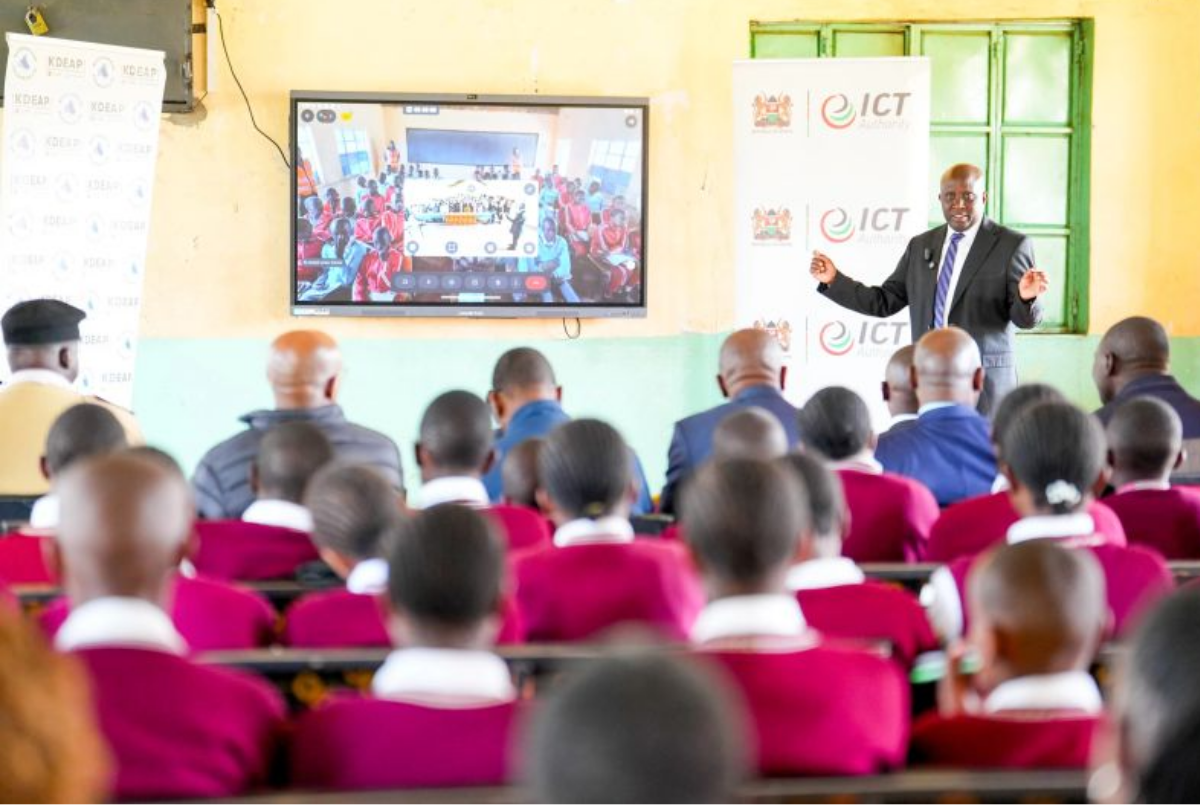
Kenya Expands Digital Learning with Smart Classroom Rollout in Nyandarua Schools
Kenya has strengthened its digital education agenda with the deployment of smartboards and teacher laptops to junior secondary schools in Nyandarua County under the Kenya Digital Economy Acceleration Project (KDEAP).
The initiative is designed to improve access to technology-based learning, support teachers with modern teaching tools, and prepare students with the digital skills needed to participate in the evolving digital economy.
Smart Classrooms to Transform Learning Experience
The rollout was officially launched at Ol’Kalou Junior School, where Principal Secretary for the State Department of ICT and Digital Economy, John Kipchumba Tanui, highlighted the importance of integrating technology into education.
The launch was attended by key government officials, including Principal Secretary for Basic Education John Ololtuaa, ICT Authority Chief Executive Officer Jesse Maruti Kiveu, and Technopolis Development Authority board member Jackie Kiaraho.
Tanui said the smart classroom initiative reflects Kenya’s commitment to ensuring that learners across the country benefit from digital learning opportunities.
Phased Deployment Across Nyandarua County
Under the first phase of the programme, 172 junior secondary schools in Nyandarua County will receive smartboards and teacher laptops.
The remaining schools will be included in the second phase of the rollout, allowing the government to gradually expand access and ensure that more learners benefit from technology-enabled education.
The phased approach is aimed at creating equal opportunities for students regardless of their location or school environment.
Beyond Devices: Building Digital Learning Ecosystems
The government explained that the programme is not only focused on distributing digital equipment but also on creating a complete digital learning environment.
The initiative seeks to:
• Establish technology-enabled classrooms
• Improve digital infrastructure in schools
• Provide teachers with modern instructional resources
• Encourage interactive and innovative teaching methods
• Strengthen digital literacy among learners
By equipping teachers with the necessary tools and skills, the project aims to make technology a practical part of everyday classroom learning.
Preparing Learners for the Digital Economy
The KDEAP initiative supports Kenya’s broader digital transformation goals by developing a generation of learners who are comfortable using technology, solving problems creatively, and adapting to future career opportunities.
The government believes that early exposure to digital tools will help students build important skills in areas such as technology, innovation, communication, and entrepreneurship.
Tanui described the programme as a long-term investment in Kenya’s human capital, noting that digital education will play an important role in preparing young people for participation in a technology-driven global economy.
Advancing Inclusive Digital Education
The smart classroom rollout is part of Kenya’s wider efforts to use technology to improve public services and expand digital inclusion.
By bringing digital learning resources to schools across different regions, the government aims to reduce the digital divide and ensure that every learner has access to opportunities created by technology.
The initiative represents a step toward building a digitally empowered workforce capable of contributing to Kenya’s future economic growth.
________________________________________
Frequently Asked Questions (FAQs)
1. What is the Kenya Digital Economy Acceleration Project (KDEAP)?
The Kenya Digital Economy Acceleration Project is a government initiative focused on expanding digital infrastructure, improving technology adoption, and supporting digital skills development across the country.
2. What are smart classrooms?
Smart classrooms are learning environments equipped with digital technologies such as interactive smartboards, computers, internet connectivity, and digital learning tools that improve teaching and student engagement.
3. Which schools are benefiting from the Nyandarua smart classroom programme?
The first phase will equip 172 junior secondary schools across Nyandarua County with smartboards and teacher laptops.
4. How will smart classrooms improve education?
Smart classrooms can make learning more interactive by allowing teachers to use digital content, multimedia resources, and technology-based teaching methods to improve understanding.
5. Why are teachers receiving laptops?
Teacher laptops provide educators with access to digital teaching resources, lesson preparation tools, online learning materials, and technology platforms that support modern instruction.
6. Is the programme only about providing computers and devices?
No. The initiative also focuses on building digital infrastructure, improving teaching methods, and developing digital skills among teachers and learners.
7. How will students benefit from digital learning?
Students will gain exposure to technology, improve digital literacy, develop problem-solving skills, and become better prepared for future careers in the digital economy.
8. Why is digital education important for Kenya?
Digital education helps prepare young people for a technology-driven world while supporting innovation, entrepreneurship, and economic growth.
9. Will all schools in Nyandarua receive smart classroom equipment?
Yes. The government plans to cover the remaining schools in the second phase of the rollout.
10. How does technology help reduce education inequality?
Digital learning tools can expand access to quality learning resources and provide students in different locations with similar opportunities to develop important skills.
About The Author