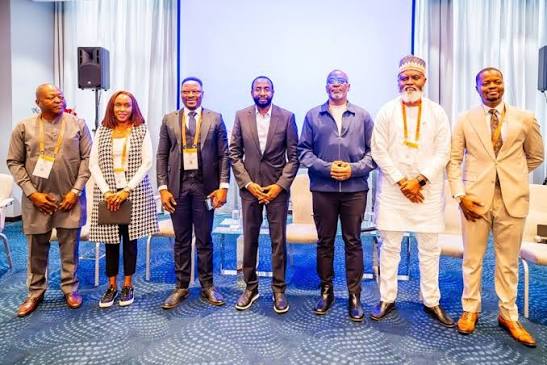










The Nigerian Communications Commission (NCC) has called on young innovators to develop affordable and scalable technology solutions that can remove barriers preventing persons with disabilities and other underserved Nigerians from fully participating in the digital economy.
The Executive Commissioner, Stakeholder Management at the NCC, Rimini Makama, made the call on Wednesday at the opening of the fourth NCC Hackathon Live Show in Abuja, themed “Technology Without Barriers.”
Makama, who was represented by the NCC Director of Zonal Operations, Usman Malah, said persons with disabilities continued to encounter challenges in accessing communication services, education, healthcare, financial services, employment opportunities and government platforms.
She said the challenges required technologies designed around the realities of Nigerians rather than sophisticated products that remained inaccessible to the people who needed them most.
“Do not simply focus on developing impressive technologies. Focus on creating solutions that are simple to use, affordable to deploy, scalable across communities, and capable of improving the quality of life of millions of Nigerians,” Makama told participants.
The two-day event, which began on Wednesday and is scheduled to end on Thursday, brings together young innovators to develop solutions in areas including artificial intelligence, assistive technologies, voice-enabled communication, sign-language recognition, accessible digital services and inclusive employment platforms.
According to the commission, the initiative is aimed at producing practical and scalable solutions to technology access and digital inclusion challenges, particularly those affecting persons with disabilities and underserved groups.
Makama said the hackathon demonstrated the commission’s commitment to ensuring that technological advancement translated into broader economic participation.
“The true measure of technological advancement lies not only in the sophistication of our innovations, but in the extent to which they improve lives, expand opportunities, and empower every member of society to participate meaningfully in the digital economy,” she said.
Speaking at the event, the Director of the Digital Economy Department at the NCC, Helen Obi, said the programme was designed to promote homegrown solutions for persons with disabilities and Nigerians in rural areas who had been excluded from parts of the digital economy.
She said the commission was particularly interested in technologies capable of addressing barriers related to disability, language, literacy, income and location.
Obi said participants were expected to explore low-bandwidth and offline-first services that could operate in remote areas without making internet connectivity or sophisticated devices a requirement for access.
“We are having a solution that will be developed with low bandwidth, offline-first digital services suitable for remote rural operations,” Obi said.
She listed the focus areas as AI-powered speech-to-text and real-time sign-language translation, voice-enabled systems, accessible USSD services for non-smartphones, image-to-voice navigation and inclusive job-matching platforms for persons with disabilities.
Twenty solutions were expected to be presented during the first day of the hackathon, addressing accessibility challenges in healthcare, education, emergency communications, electricity services, employment and digital commerce.
Among the solutions was ADITUS, which proposes USSD and SMS access to the NCC’s 112 emergency service for people unable to make voice calls. ClearSignal is designed to provide accessible electricity outage alerts to blind, visually impaired and deaf users, while SignBridge AI seeks to improve communication between deaf patients and healthcare providers.
Other entries included E-Novate, an AI-powered application designed to translate Nigerian Sign Language into spoken and written English in hospitals; Sora, an inclusive job-matching platform for persons with disabilities; and Kasuwa, which proposes enabling Nigerians to start and operate online businesses through phone calls without smartphones, data or screens.
Obi said the entries would be assessed based on criteria including innovation, accessibility, relevance, technical feasibility, scalability, affordability, sustainability and indigenous value addition.
The commission said promising solutions could subsequently receive support for further development, pilot deployment and expansion.
The hackathon continues on Thursday, when the five finalists are expected to pitch their solutions before the judges. The event will conclude with the presentation of certificates and cash prizes to winners and participants.
About The Author