






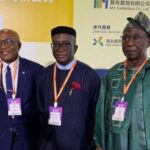

Engr. Kenneth Emeka Ugwuanyi, Managing Director and Chief Executive Officer of Wellmeka Limited, stands at the intersection of technical expertise and industrial vision. A First-Class Mechanical Engineer from the University of Nigeria, Nsukka, and a professional with more than two decades of experience in Nigeria’s oil and gas sector, Ugwuanyi combines field expertise, corporate leadership and indigenous innovation.
Speaking on the principles guiding Wellmeka Limited, Ugwuanyi identified five non-negotiable values: integrity, engineering excellence, safety, innovation and accountability.
“Engineering is a profession of consequence. Our clients entrust us with high-value assets, complex wells, and operations where there is no margin for error. The data we present, the equipment we deploy, and the decisions we make must be technically rigorous and completely transparent. Integrity is not optional. It is the baseline.”
On engineering excellence, Ugwuanyi said the company’s approach begins before any contract is signed.
“We do not lead with a service to sell. We lead with a problem to solve. The first step is to understand the technical objective, then engineer the most appropriate, efficient, and sustainable solution. That is the difference between vendors and engineering partners.”
On safety, he explained that in an industry characterised by high pressures, heavy mechanical loads, hazardous chemicals and complex well conditions, safety is treated as a design parameter.
According to him, QHSE is not an afterthought but is embedded from project conception through execution. He noted that disciplined risk management allows ambitious engineering projects to be delivered without compromise.
On innovation, Ugwuanyi argued that complacency is the enemy of progress.
“We challenge our engineers to question the status quo. Can this equipment be improved? Can this process be made smarter? Can this software deliver more? Innovation at Wellmeka means refusing to accept ‘this is how it has always been done’ as the final answer.”
On accountability, he said responsibility at Wellmeka is deliberately mapped from the design desk to field execution. According to him, clear ownership at every stage of engineering design, equipment preparation and operational delivery leads to higher standards because people understand that they are answerable for results.
Summarising his approach, Ugwuanyi said: “Build competent people. Create robust systems. Give engineers real responsibility. Insist on integrity. And never stop improving the technology.”
He described it as a simple formula which, when consistently implemented, enables a Nigerian engineering company to earn the right to compete globally.
Ugwuanyi described the current period as a pivotal moment for Nigeria, saying engineering capacity would determine how quickly the country industrialises, diversifies and retains value locally.
With Nigeria’s oil, gas and renewable resources, he stressed the need for greater local participation in engineering, manufacturing, maintenance, digitalisation and technology development to capture more economic value.
He noted that across oilfield services and sectors such as power, gas, transport, water, manufacturing, mining, telecommunications, agriculture and renewable energy, Nigerian firms can move beyond importing and executing projects to designing, building and owning technology.
He also identified digital tools, artificial intelligence, automation, remote monitoring, predictive maintenance, digital twins, robotics and data analytics as areas where Nigeria’s young engineers can take the lead rather than simply use imported solutions.
According to him, the key shift is from buying engineering products to designing, manufacturing and owning them. Such a transition, he said, would create high-value jobs, save foreign exchange, strengthen supply chains and position Nigerian firms to export across Africa.
Ugwuanyi added that Wellmeka is currently implementing several programmes that combine oilfield services with engineering, manufacturing and digital technology.
“A major area is our coiled tubing and well-intervention operations, where we support operators with well clean-out, production restoration, zonal isolation, stimulation, nitrogen lifting and related intervention services. We are also strengthening our high-pressure pumping and stimulation capability, including equipment and systems required for cementing, matrix stimulation and other well-service applications.”
“Another important program is our engineering and manufacturing initiative. We are progressively developing and manufacturing specialised oilfield equipment locally, including coiled-tubing reels and spoolers, hydraulic systems, filtration systems, tanks, blending equipment and selected high-pressure service packages.”
“This program is particularly important to us because it demonstrates the transition from indigenous service delivery to indigenous engineering and manufacturing. We are equally investing significantly in digital technology.”
Ugwuanyi noted that the company has developed AEGIS, a data-acquisition system capable of taking more than 50 sensor inputs to monitor field equipment and well-service units.
It is also developing CoilDATA, an engineering and job-design platform for coiled-tubing operations that integrates calculations, simulation, monitoring and post-job analysis into a single workflow.
The goal, he said, is to build an integrated Nigerian energy-services technology platform connecting engineering, manufacturing, field operations and digital systems.
He stressed that government policy and support are essential for Nigerian engineers to compete globally and deliver high-standard projects domestically. According to him, policy stability is important because companies make long-term investments in people, facilities, equipment, software and research, which become risky when policies frequently change.
On procurement, Ugwuanyi said major projects should place greater value on local engineering contributions rather than focusing solely on the cheapest upfront price.
He explained that there is a significant difference between importing equipment and purchasing from a Nigerian company that employs local engineers, manufactures and maintains locally, pays taxes and reinvests in technology.
He also called for patient capital to match the long investment cycles associated with engineering and manufacturing.
According to him, stronger testing, certification and research infrastructure is needed to provide engineers with access to accredited laboratories, materials testing, prototyping and certification.
He further called for stronger collaboration between universities and industry, with training linked to real industrial problems and exposure to modern software, manufacturing, automation and product development.
Ugwuanyi also urged intentional government support for Nigerian engineering firms seeking to expand across Africa.
He said Nigerian Content should be measured by how much engineering knowledge, intellectual property, manufacturing capacity and technology ownership remain in Nigeria after a project, rather than simply by local spending.
Ugwuanyi’s professional journey began in 2007 on the fabrication yards of offshore platforms, where precision was non-negotiable. In 2008, he joined a multinational oilfield services firm and rose through the ranks to become Field Service Manager.
Across West Africa and beyond, he worked at the forefront of complex well-intervention technologies, international operating standards and disciplined engineering management.
Those experiences, he said, strengthened his conviction that Nigerian engineers have the capacity to design, manufacture and deliver sophisticated solutions that meet and exceed global benchmarks. That conviction eventually became the foundation of Wellmeka Limited.
For Ugwuanyi, engineering goes beyond being a profession. It is a strategic instrument for national development.
He believes truly competitive economies are built by nations that understand their technical challenges, design their own solutions, manufacture critical equipment, secure intellectual property and develop successive generations of world-class engineers.
Nigeria, he noted, is not short of engineering talent. What remains is the deliberate development of institutions, infrastructure, industrial capacity and opportunities needed to convert that talent into measurable economic value.
Through Wellmeka, that vision is being pursued with a commitment to demonstrating that a Nigerian engineering company can progressively develop indigenous technology, fabricate sophisticated equipment, execute complex energy-service operations and ultimately compete on the international stage.
In an industry long shaped by imports, Ugwuanyi is seeking to build a new narrative in which Nigeria builds, owns and leads.
NCDMB and the Future of Indigenous Engineering
Assessing the role of the Nigerian Content Development and Monitoring Board (NCDMB) in supporting local firms, Ugwuanyi said the establishment and work of the board have been among the most important developments in strengthening indigenous participation in Nigeria’s oil and gas industry.
“Before the Nigerian Content framework, a substantial proportion of engineering services, equipment and technical capability in the industry were sourced internationally. NCDMB has helped create an environment where Nigerian companies can participate more meaningfully in areas historically dominated by international service companies. The policy has encouraged investment in Nigerian personnel, facilities, equipment ownership, fabrication and technical capacity,” he stated.
However, he noted that Nigerian Content must continue to evolve.
According to him, the next phase should place greater emphasis on technology ownership, engineering design, manufacturing, research and development, intellectual property and export capability.
He questioned how many technologies used in the industry are designed in Nigeria, how much specialised equipment Nigerian companies can manufacture and how many Nigerian engineering products can eventually be exported to other African markets.
These, he said, should increasingly become key measures of Nigerian Content success.
“NCDMB can play a significant role in this transition by supporting credible indigenous engineering and manufacturing companies with access to development finance, technology partnerships, testing infrastructure and opportunities to demonstrate locally developed solutions.”
He further stated that the ultimate objective should be the emergence of Nigerian engineering companies that are competitive not because they are protected locally, but because their technology, quality and execution capabilities enable them to compete anywhere in the world.
Wellmeka’s Digital and Sustainable Future
Ugwuanyi said Wellmeka is preparing for the future by transitioning from a traditional service company into one that integrates mechanical engineering, electronics, software, data science, automation and artificial intelligence.
He identified talent development as a key focus, noting that younger engineers are being trained to solve real engineering problems, understand equipment performance, redesign systems and apply software solutions.
Digital platforms such as AEGIS and CoilDATA, he said, will generate operational data to support predictive maintenance, diagnostics, optimisation and AI-driven decisions.
On sustainability, Ugwuanyi said the company’s approach goes beyond compliance to include efficient equipment design, waste reduction, local supply chains and extending asset life through predictive maintenance.
While oil and gas will remain important, he said the company is also developing capacity for renewable energy, electrification, energy storage and efficient industrial systems.
Capabilities in sensors, data acquisition and remote monitoring are also being developed for broader applications in smart infrastructure.
According to him, the overall strategy is to transform Wellmeka into a broader engineering and technology enterprise capable of contributing to Africa’s future energy and industrial infrastructure.
He said his legacy would be demonstrating what is possible when Nigerian engineers are given the resources to build technology.
“I would like Wellmeka to demonstrate what is possible when Nigerian engineers are given the opportunity, responsibility and resources to build technology.”
He wants young engineers to see equipment “conceived by Nigerian engineers, designed by Nigerian engineers, fabricated by Nigerian technicians, controlled by software developed by Nigerian programmers”, so they understand that technology does not always have to arrive in a container from somewhere else.
“Nigeria’s next generation of engineers must move beyond being excellent users of technology to becoming creators and owners of technology.”
He added that young engineers would need to combine core engineering with software, AI, automation and sustainability while thinking globally, so that solutions developed in Port Harcourt can work in Angola, Ghana, Senegal and beyond.
“We need is confidence backed by competence, discipline and sustained investment. Our aspiration is ultimately simple: engineering solutions developed in Nigeria, delivering value to Africa and competing with the best anywhere in the world.”
About The Author