








Africa’s future prosperity depends on its ability to prioritise science and technology as engines of innovation and sovereignty, while harnessing the energy of its youth through education and innovation platforms, South Africa’s Minister of Science, Technology and Innovation, Blade Nzimande, has said.
As the BRICS bloc increasingly shifts from economic cooperation towards scientific power, the Chennai Declaration was adopted in August during the 14th BRICS Science, Technology and Innovation Ministerial Meeting in India. The declaration aims to establish a resilient framework for science, technology and innovation ahead of the 18th BRICS Summit this weekend.
Speaking in a recent interview with China Global Television Network (CGTN) on the role of BRICS cooperation in promoting innovation, Nzimande said the mechanism is creating new opportunities for scientists across the Global South. He stressed that innovation is no longer optional but essential for national development.
“If you look at fast-growing countries, they have placed science, technology and innovation at the center of their work. Take China for instance. What you see in China for instance – this rapid, amazing development is as a result of putting more resources into science, technology and innovation. It’s no longer a nice-to-have, science, technology and innovation — it’s a must-have,” Nzimande said.
He added that BRICS cooperation provides African countries with an opportunity to move from being bystanders to active participants in the technology race that is transforming everyday life.
“If we are able to develop our own instruments, our own products through science, it guarantees us some sovereignty. When you’re a sovereign nation, you are able to interact with other nations with pride and confidence,” the minister said.
On artificial intelligence and other emerging technologies, Nzimande said countries in the Global South must develop their own strategies and blueprints based on the specific needs of their populations.
“What is going to be important is not just to talk about AI generally. AI for what? In our case, AI for health innovation is a huge priority. AI to deal with the effects of climate change, AI for renewable sources of energy. If we’re not clear about our priorities, you can have AI but it’s not going to take you anywhere. We can’t just copy other countries,” he said.
Nzimande also identified Africa’s youth as the continent’s most important asset as the Fourth Industrial Revolution continues to gather pace.
“Young people are very important for the development of any country, even more in the African continent where more than 60 percent of the population is youth. They’ve got energy and we have to harness that energy correctly. Education is very important, as well as making young people also to be able to have platforms to innovate,” Nzimande said.
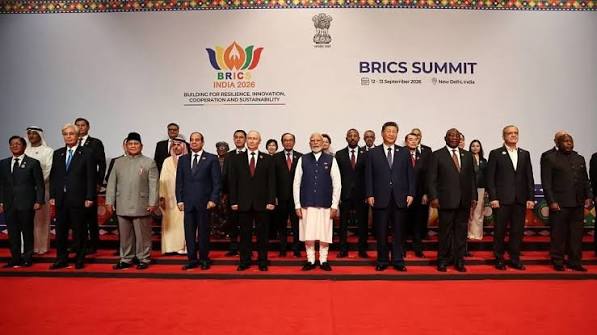
The 18th BRICS Summit will bring together leaders from 11 full member states, 10 partner countries and invited guests in New Delhi on Saturday and Sunday.
The theme of the summit is “Building for Resilience, Innovation, Cooperation and Sustainability.”
About The Author