








Nigeria risks losing its share of the growing global maritime trade if it fails to embrace disruptive technologies such as Artificial Intelligence (AI), blockchain, the Internet of Things (IoT), robotics and big data, while also increasing investment in port infrastructure, research and human capital.
As international shipping continues to evolve through digitalisation, decarbonisation, automation and improved safety requirements, the global demand for competent maritime professionals is also rising.
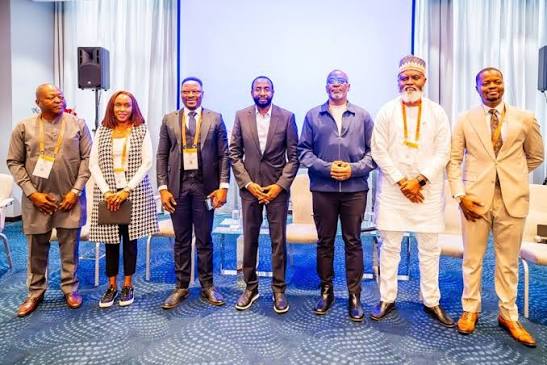
These were among the submissions made by stakeholders in the maritime sector at the 2026 Maritime Training Summit and Awards organised by the Association of Maritime Journalists of Nigeria (AMJON) and held recently in Lagos.
The stakeholders noted that the global maritime industry was highly regulated, technology-driven and dependent on a skilled workforce capable of operating in line with international standards. They stressed that Africa had continued to struggle with producing enough internationally certified maritime professionals.
The Managing Director of Kamany Marine Services Limited, Dr Charles Okorefe, identified fisheries and aquaculture, tourism, maritime transport, shipping, port operations, renewable energy, biotechnology and coastal infrastructure as areas with significant opportunities within the blue economy, even with a less-skilled workforce.
Okorefe, who delivered the keynote address, questioned whether Nigeria was doing enough to harness its maritime resources and respond proactively to the rapid technological disruptions transforming the global maritime industry.
Also speaking, the Managing Director of the Nigerian Ports Authority (NPA), Dr Abubakar Dantsoho, warned that Nigeria’s ambition to develop smart and digitally driven ports would not achieve the desired transformation without a maritime workforce equipped with the skills required to operate emerging technologies.
Dantsoho, who was represented at the event by the Port Manager of Lagos Port Complex, Apapa, Adebowale Ibrahim, said the maritime industry was undergoing a major transformation driven by digitalisation, artificial intelligence, automation, robotics, data analytics and logistics systems.
He stressed that continuous investment in human capital was therefore critical to the sector’s development.
Dantsoho noted that future training programmes must prepare maritime professionals for emerging areas such as smart ports, autonomous and increasingly connected ships, cybersecurity, green shipping and data-driven decision-making.
He, however, emphasised that investing in the right skills would produce a maritime workforce capable of driving safer, smarter, greener and more efficient port and maritime operations.
The Comptroller-General of the Nigeria Customs Service (NCS), Dr Bashir Adeniyi, said the service was moving towards a predictive border-management system powered by artificial intelligence, data analytics and digital platforms.
According to him, the system would enable Customs to identify high-risk cargo and transactions before they become enforcement problems, while allowing compliant traders to benefit from faster and more predictable clearance.
Adeniyi said modernisation must be accompanied by strong authentication, data protection, cybersecurity monitoring, secure information exchange, business continuity arrangements and regular security assessments.
He argued that the success of Customs modernisation would ultimately depend on the quality of the people operating the technology.
He therefore called for continuous training of customs officers in areas including data analytics, artificial intelligence, cybersecurity, digital trade, risk management, supply chain security, international trade agreements, emerging technologies, professional ethics and stakeholder communication.
Meanwhile, the Managing Director of Ports Operations Strategic Business Unit, Dangote Industries Limited, Akin Omole, stressed the need to develop indigenous maritime expertise, warning that Nigeria would continue to rely on foreign professionals if it failed to invest in workforce skills.
Omole said technology was useless without competent people, adding that Dangote had invested in training indigenous mooring masters and crews to global SPM standards.
He recalled that the first crude vessel, MT OTIS, was berthed by Nigerians, describing the achievement as an example of what targeted investment in local maritime capacity could accomplish.
“The future maritime workforce must be digital, safety-conscious, and commercially aware. If we don’t build them, we will import them,” Omole warned.
He also called for increased investment in maritime knowledge and data, saying the industry must move beyond conventional practices and embrace port community systems, artificial intelligence to predict vessel delays and alternative fuels for the next generation of ships.
The President of the National Council of Managing Directors of Licensed Customs Agents (NCMDLCA), Lucky Awimero, called for a fundamental overhaul of Nigeria’s training system.
He warned that the country could not build a competitive maritime industry without serious investment in knowledge and continuous capacity development.
Awimero, who served as Chairman of the summit, said Nigeria’s persistent development challenges were partly linked to its failure to adequately train and equip its people.
He said countries that had achieved significant economic and technological progress had largely done so through deliberate investments in knowledge and human capacity, warning that Nigeria risked falling further behind other countries.
Earlier, the President of AMJON, Vera Osokpo, said Nigeria could not aspire to lead Africa’s maritime hub without transforming how skills were developed.
She noted that the industry could no longer rely on traditional training methods at a time when technology, automation and digitalisation were rapidly transforming global shipping and port operations.
About The Author