










Graduating with a technology-related degree or completing a tech training programme is an important achievement, but getting a job requires more than having a certificate.
Today, recruiters in Nigeria want to know what you can actually do.
Whether you are applying for a role in data analysis, software development, UI/UX design, cybersecurity, digital marketing, graphics design, cloud computing or another technology field, employers are increasingly interested in practical skills, problem-solving ability, communication, teamwork and evidence of real-world experience.
So, what exactly do recruiters expect from tech graduates?
1. Practical Technical Skills
The first thing recruiters look for is whether you can apply your technical knowledge.
A graduate may list Excel, Power BI, Python, SQL, Figma, WordPress, cybersecurity tools or other technologies on a CV. However, an employer will want to know whether the candidate can use those tools to solve actual problems.
For example, a data analyst should be able to clean and analyse data and create useful reports or dashboards. A UI/UX designer should understand how to research users and create practical interfaces. A web developer should be capable of building and maintaining functional websites.
This is why practical learning is so important.
At Bizmarrow Technologies, training is 90% practical, allowing learners to spend significant time applying what they learn rather than relying only on classroom theory.
2. Real-Life Projects and a Strong Portfolio
Recruiters want evidence.
One of the best ways to demonstrate your ability is through a portfolio containing projects you have completed.
A graduate who says, “I know Power BI” is making a claim. A graduate who can show a completed dashboard, explain the data used, describe the problem solved and demonstrate the insights generated is providing evidence.
This is why students at Bizmarrow work on real-life projects before graduation.
These projects can help learners develop practical confidence and create examples they can discuss during interviews or include in their portfolios.
3. Problem-Solving Ability
Technology jobs involve solving problems.
Recruiters want candidates who can think logically, investigate issues and develop appropriate solutions instead of simply following instructions.
During an interview, you may be asked to explain how you would handle a technical challenge.
Recruiters may be interested in your thought process:
- How did you identify the problem?
- What information did you need?
- What options did you consider?
- Why did you choose a particular solution?
- What was the result?
Being able to demonstrate structured problem-solving can make a tech graduate more attractive to employers.
4. Communication Skills
Technical professionals do not work in isolation.
You may need to communicate with managers, clients, colleagues, customers, designers, developers or people without technical backgrounds.
Recruiters therefore expect graduates to communicate clearly, listen carefully and explain technical concepts in understandable language.
For instance, a cybersecurity professional may need to explain a security risk to a business manager who does not understand technical terminology.
Strong communication can therefore be just as valuable as technical expertise.
5. Teamwork and Collaboration
Most technology projects involve multiple people.
Developers collaborate with designers and product managers. Data analysts work with business teams. Digital marketers coordinate with content creators and sales teams.
Recruiters want graduates who can work effectively with others, accept feedback, contribute ideas and handle disagreements professionally.
Group projects, practical assignments and collaborative training can help students develop these abilities before entering the workplace.
6. Willingness to Learn
Technology changes quickly.
New software, artificial intelligence tools, platforms and methodologies continue to emerge. Employers therefore value graduates who are willing to learn and adapt.
You do not have to know every technology available.
Instead, demonstrate that you can learn new tools, research unfamiliar concepts and improve your skills when required.
A graduate who says, “I don’t know this yet, but I can learn it,” can demonstrate a valuable professional attitude.
7. Professionalism and Work Ethics
Recruiters also look at how candidates conduct themselves.
Professionalism includes:
- Meeting deadlines
- Arriving on time
- Taking responsibility
- Responding to communication appropriately
- Respecting colleagues
- Following instructions
- Protecting confidential information
- Being honest about your abilities
A technically talented employee who consistently misses deadlines or communicates poorly can become a liability to an organisation.
8. A Professional CV and LinkedIn Profile
Your skills may not matter if recruiters cannot easily understand them from your CV.
A good tech graduate CV should clearly show your technical skills, projects, education, certifications and relevant experience.
Where possible, describe what you achieved rather than simply listing responsibilities.
Your LinkedIn profile should also present a consistent professional image. Include relevant skills, projects and career interests, and make sure your profile communicates the type of role you are seeking.
9. Interview Readiness
Recruiters expect candidates to prepare for interviews.
You should understand the company, study the job description and prepare examples of projects you have completed.
For technical roles, you may also be asked practical or technical questions.
Do not memorise answers without understanding them. Instead, practise explaining how you approached real problems and what you learned from your projects.
10. Career Readiness Beyond Technical Skills
Getting trained is only the beginning.
Tech graduates also need to understand how to search for jobs, prepare applications, communicate professionally and present their skills effectively.
At Bizmarrow Technologies, learners receive career support and job readiness training alongside practical digital skills training.
The objective is to help learners move from simply learning a skill to becoming more prepared for real workplace opportunities.
How Much Does Tech Training Cost in Nigeria?
The cost of tech training varies significantly depending on the skill, course duration, training format, level and institution.
As a general guide, digital skills and technology training programmes in Nigeria can range from approximately ₦30,000 to ₦300,000+.
Short beginner courses may cost less, while advanced, specialised or longer professional programmes can cost considerably more.
When comparing training providers, do not focus only on the cheapest option. Consider practical training hours, trainer support, projects, portfolio development, career guidance and job-readiness support.
Learn Practical Tech Skills at Bizmarrow Technologies in Abuja
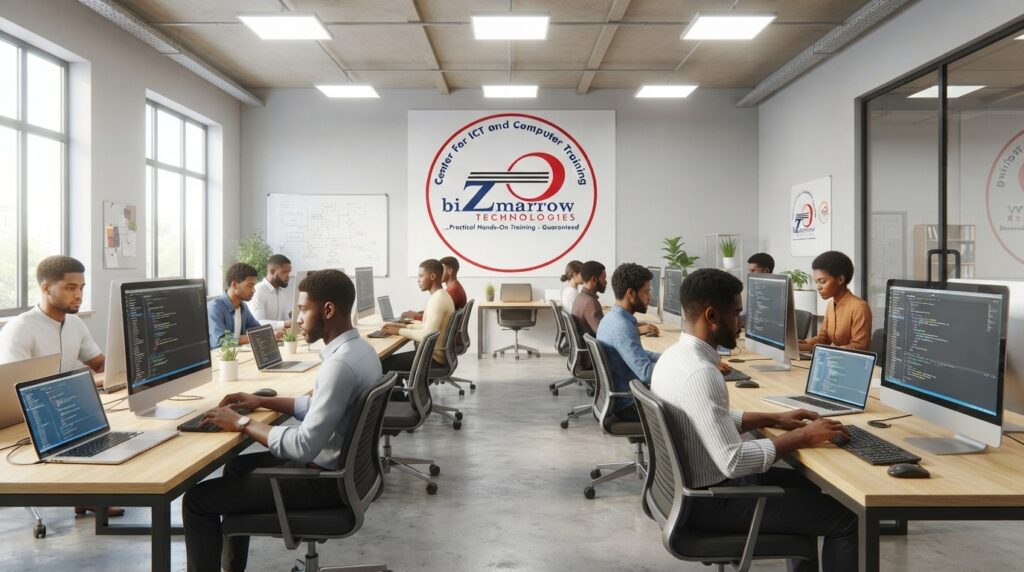
If you are looking for the best tech training institute in Abuja Nigeria, a top ICT training center in Abuja, or a computer training school in Abuja Nigeria, consider whether the institution gives you opportunities to practise your skills.
Bizmarrow Technologies provides practical digital skills training for beginners, students, graduates, professionals and career changers.
The training approach is 90% practical, with learners working on real-life projects before graduation. Students also receive career support and job-readiness training designed to help them prepare for professional opportunities.
Courses include areas such as:
- Data Analysis
- Digital Marketing
- UI/UX and Product Design
- Web Design and Development
- Cybersecurity
- Graphics Design
- Video Editing
- Artificial Intelligence
- Cloud and DevOps
- Mobile App Development
- Animation and Motion Graphics
- Microsoft Office and other digital skills
Bizmarrow Training Locations in Abuja
Central Business District (CBD), Abuja
Suite B106 & B108, Millennium Plaza, Opposite NNPC Towers, Herbert Macaulay Way, CBD, Abuja.
Gwarinpa, Abuja
Suite 10 and 15, H-MEDIX Mall, 2nd Avenue, Gwarinpa, Abuja.
If you are searching for “tech training near me,” “computer training school near me,” “ICT training center near me,” or “digital skills training near me” in Abuja, Bizmarrow’s CBD and Gwarinpa locations provide accessible options for practical technology training.
Frequently Asked Questions
What do recruiters look for in tech graduates?
Recruiters commonly look for practical technical skills, problem-solving ability, communication, teamwork, adaptability, professionalism, relevant projects and evidence that candidates can apply what they have learned.
Do tech graduates need work experience to get hired?
Not necessarily. Fresh graduates can demonstrate capability through internships, freelance work, personal projects, practical training and strong portfolios. Relevant projects can provide useful evidence when professional experience is limited.
Is a tech certificate enough to get a job in Nigeria?
A certificate can demonstrate that you completed training, but it does not necessarily prove that you can perform the job. Practical skills, projects, portfolios, communication and interview performance are also important.
How can I make my tech CV stand out?
Focus on relevant technical skills, practical projects, measurable achievements and experience related to the position. Keep the CV clear, professional and tailored to each job.
What digital skills are employers looking for in Nigeria?
Demand varies by industry, but areas such as data analysis, software development, cybersecurity, digital marketing, UI/UX design, artificial intelligence, cloud computing and web development can provide valuable career opportunities.
How much does tech training cost in Nigeria?
Many digital skills training programmes fall within approximately ₦30,000 to ₦300,000+, although prices vary according to the course, duration, training format and institution.
Where can I learn practical tech skills in Abuja?
Bizmarrow Technologies offers 90% practical digital skills training at its CBD and Gwarinpa locations in Abuja. Learners work on real-life projects before graduation and receive career support and job-readiness training.
What should I look for when choosing a computer training school in Abuja?
Look for an institution that provides practical training, experienced trainers, real-life projects, portfolio development, career support and job-readiness preparation—not just certificates.
Conclusion
Recruiters are looking for more than graduates who can list technical skills on a CV. They want candidates who can apply their knowledge, solve problems, communicate effectively, work with teams and continue learning.
The best way to prepare is to gain practical experience before entering the job market.
With 90% practical training, real-life projects before graduation, career support and job-readiness training, Bizmarrow Technologies helps learners build the practical and professional foundation needed to pursue opportunities in today’s technology-driven workplace.
About The Author