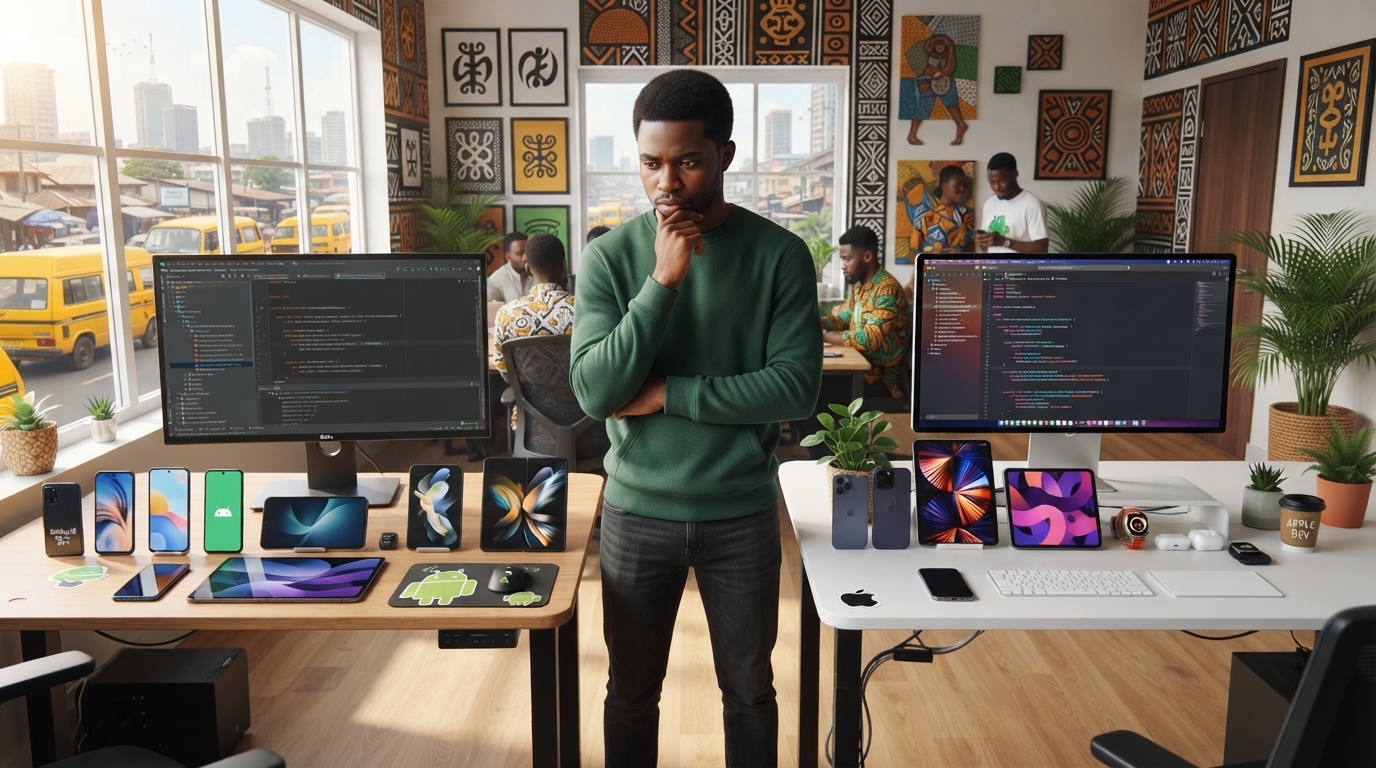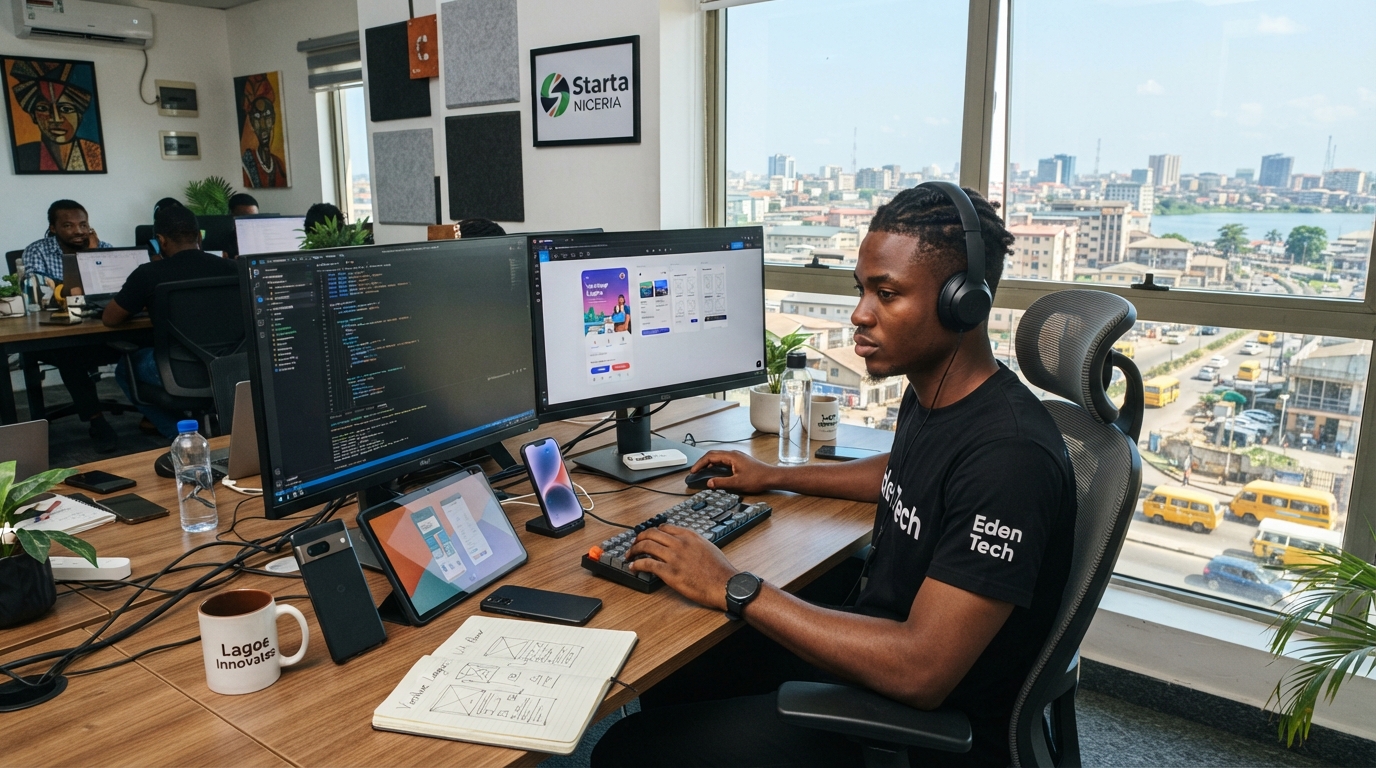









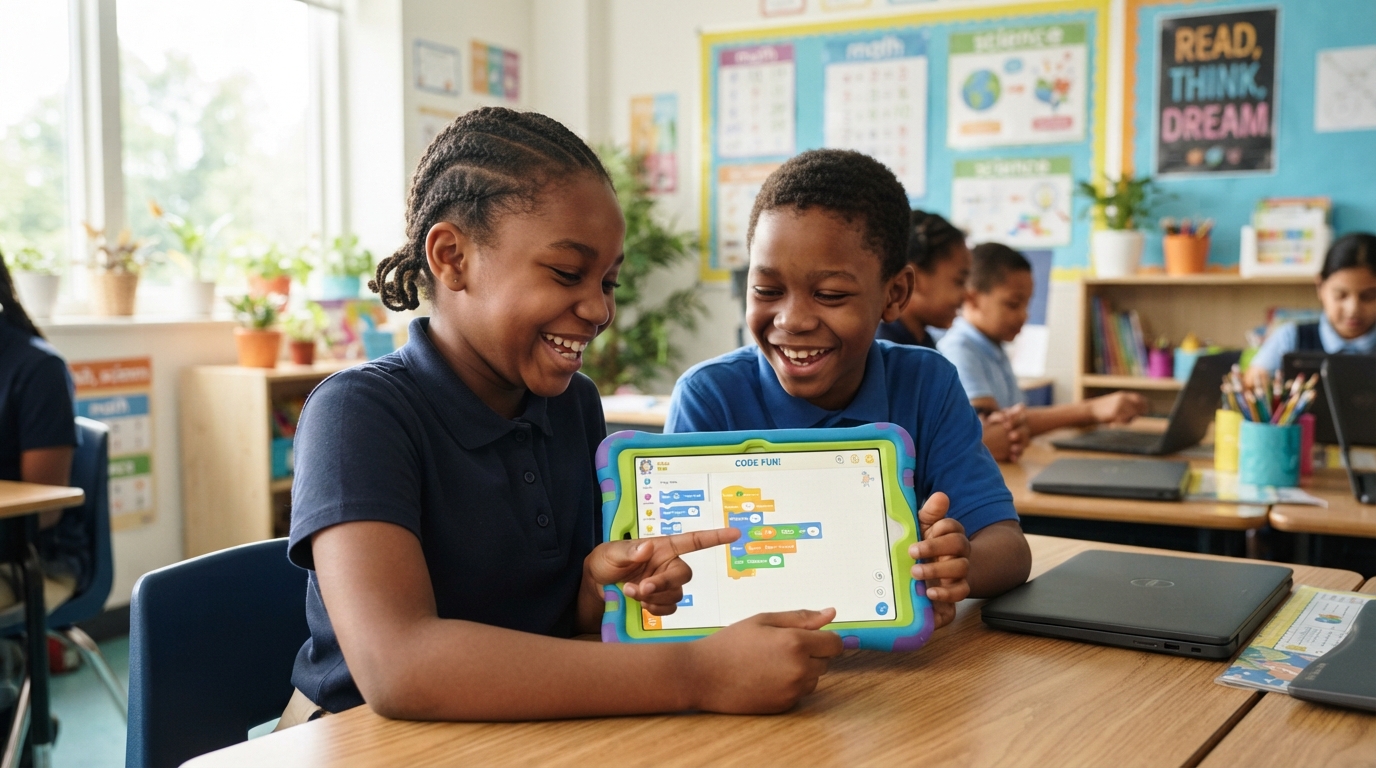
Technology is becoming part of almost every aspect of modern life, from education and banking to business, entertainment, healthcare and communication. As technology continues to shape the future of work, parents are increasingly asking an important question: When should my child start learning coding?
The answer may be earlier than you think.
Children can begin developing coding concepts at a young age through age-appropriate activities, games, visual programming platforms and guided projects. Learning to code early is not simply about preparing a child to become a software developer. It can help children develop problem-solving skills, creativity, logical thinking, confidence and the ability to understand how technology works.
For parents searching for coding classes for kids in Abuja, this guide explains why early coding education matters, how much it can cost in Nigeria, and what to look for when choosing a children’s technology training centre.
What Is Coding for Kids?
Coding is the process of giving instructions to a computer so that it can perform specific tasks.
For children, coding does not necessarily begin with complicated programming languages. Young learners can start with visual programming environments that use blocks, animations, games and simple commands.
As their understanding improves, they can progress to more advanced programming concepts and languages.
The goal at the beginner level is not to overwhelm children with technical terminology. Instead, it is to make technology interactive and help them understand how ideas can be transformed into something they create themselves.
Why Should Kids Start Learning Coding Early?
1. Coding Develops Problem-Solving Skills
One of the biggest benefits of learning coding early is that it teaches children how to approach problems step by step.
When a program does not work, children have to investigate what went wrong, identify the problem and try another solution. This process encourages persistence and analytical thinking.
These skills can be useful far beyond programming.
2. It Encourages Creativity
Coding is not only about mathematics and computers. Children can use coding to create games, animations, interactive stories, websites and other digital projects.
Instead of being only consumers of technology, children can become creators.
This can give them an opportunity to turn their ideas and imagination into working digital projects.
3. It Builds Logical and Computational Thinking
Coding teaches children to break complicated tasks into smaller steps.
They learn concepts such as sequences, conditions, repetition, variables and logical decision-making.
These concepts help children understand how systems work and can strengthen their ability to think systematically.
4. It Builds Confidence
Imagine a child creating a simple game and then watching another person play it.
That experience can be highly motivating.
Completing coding projects gives children a tangible sense of achievement. With the right learning environment, they can gradually become more confident in experimenting, making mistakes and trying again.
5. Children Can Learn Technology Instead of Only Consuming It
Many children already spend considerable time using smartphones, computers, games and other digital devices.
Coding can transform some of that screen time into skill-building time.
Rather than simply playing a game, a child could learn how games are designed. Instead of only watching animations, they can learn how to create their own interactive stories.
6. Coding Can Prepare Children for Future Opportunities
Technology-related careers continue to evolve, creating opportunities in areas such as software development, artificial intelligence, robotics, cybersecurity, data science, web development and automation.
A child who develops technology skills early has more time to explore different areas and discover what they enjoy.
Learning coding does not mean a child must eventually become a programmer. The transferable skills gained from coding can be valuable across many careers.
What Age Should a Child Start Learning Coding?
There is no single perfect age for every child.
Many children can begin learning basic computational thinking and visual programming around ages 6–8, while older children can gradually move into more structured programming.
The most important factors are the child’s maturity, interest, ability to follow instructions and learning style.
Younger children generally benefit from visual and game-based approaches, while teenagers can explore more advanced programming, web development, app development and other technology areas.
The key is to make the learning experience age-appropriate, practical and enjoyable.
How Much Does Coding Training for Kids Cost in Nigeria?
The cost of coding classes for children varies depending on the training centre, class format, duration, age group, curriculum and level of practical training.
As a general estimate, parents may encounter:
- Beginner coding classes: ₦20,000–₦60,000 per month
- Structured coding programmes: ₦50,000–₦150,000+ per programme
- Holiday technology programmes: ₦30,000–₦100,000+
- Advanced programming courses for teenagers: ₦60,000–₦200,000+ depending on duration and curriculum
These are general market ranges, not fixed prices. Parents should compare what is included in the training before making a decision.
A low-cost course may not provide the same practical experience, instructor support or project work as a more comprehensive programme.
What Should Parents Look for in a Coding Class?
Choosing a coding class is about more than finding a place that teaches programming.
Parents should consider:
Age-appropriate curriculum: The lessons should match the child’s age and current ability.
Practical learning: Children should spend significant time creating and experimenting rather than only listening to explanations.
Small or manageable class sizes: This can make it easier for instructors to monitor learners and provide guidance.
Project-based learning: Children should have opportunities to create things they can demonstrate to parents, teachers and friends.
Experienced trainers: Instructors should know how to teach children, not simply know how to code.
Progressive learning: The programme should provide a pathway from beginner concepts to more advanced skills.
Learn Coding Practically at Bizmarrow Technologies
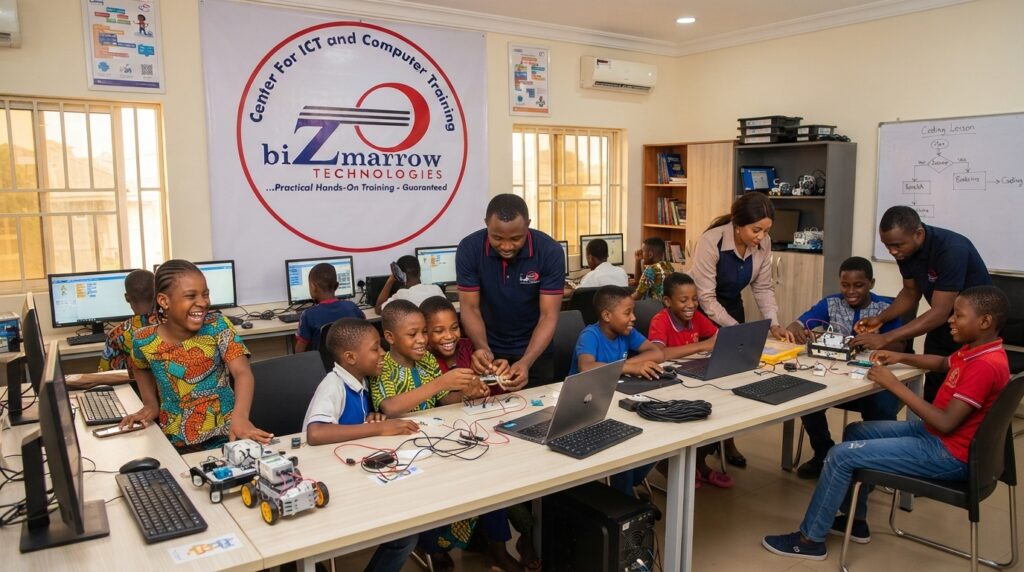
For parents searching for the best tech training institute in Abuja Nigeria, a top ICT training center in Abuja, or a reputable computer training school in Abuja Nigeria where children can develop practical technology skills, Bizmarrow Technologies provides hands-on digital skills training.
At Bizmarrow, learning is designed around 90% practical training, allowing learners to spend substantial time practising what they are taught.
Students work on real-life projects before graduation, giving them opportunities to apply their knowledge rather than simply memorising concepts.
Beyond technical training, Bizmarrow also incorporates career support and job-readiness training, helping learners understand how digital skills can translate into future education and career opportunities.
For children and teenagers, practical exposure to technology can help them discover their interests early and develop confidence as digital creators.
Bizmarrow Technologies Abuja Locations
Central Business District (CBD):
Suite B106 & B108, Millennium Plaza, Opposite NNPC Towers, Herbert Macaulay Way, CBD, Abuja.
Gwarinpa:
Suite 10 and 15, H-MEDIX Mall, 2nd Avenue, Gwarinpa, Abuja.
Parents searching for “coding classes for kids near me,” “computer classes for kids near me,” “coding training for children in Abuja,” or “kids tech training near me” can explore Bizmarrow’s available programmes and learning options.
Frequently Asked Questions About Coding for Kids in Nigeria
Is coding good for children?
Yes. Age-appropriate coding can help children develop problem-solving, logical thinking, creativity, persistence and digital skills.
What age should a child start coding?
Children can begin learning basic coding concepts from around ages 6–8, depending on their development and interest. Younger learners should generally start with simple, visual and interactive programming activities.
Can an 8-year-old learn coding?
Yes. An 8-year-old can learn age-appropriate coding concepts, particularly through visual programming, games, animations and simple projects.
Does my child need to be good at mathematics to learn coding?
No. Basic coding for children does not require advanced mathematics. Logical thinking, curiosity and willingness to practise are often more important at the beginner level.
How much does coding training for kids cost in Abuja?
Coding classes for children in Abuja can range from approximately ₦20,000 to ₦200,000+, depending on the programme, duration, age group, training level and practical content.
Can coding help my child in the future?
Yes. Coding can provide foundational skills that may be useful in technology and non-technology careers. It can also help children develop problem-solving, creativity, logical thinking and digital confidence.
Where can I find coding classes for kids near me in Abuja?
Parents can consider practical technology training centres such as Bizmarrow Technologies, which has locations in CBD and Gwarinpa, Abuja.
Give Your Child a Head Start in Technology
The earlier children are introduced to technology in a structured and meaningful way, the more opportunity they have to explore, experiment and discover what they can create.
Coding is not simply about learning computer commands. It is about teaching children to think, solve problems, create, experiment and turn ideas into reality.
If you are looking for practical coding classes for your child in Abuja, consider a training environment that prioritises hands-on learning, projects and supportive instruction.
With 90% practical training, real-life projects before graduation, career support and job-readiness development, Bizmarrow Technologies is helping learners build practical digital skills for the future.
About The Author