





American investors accounted for an estimated 60 per cent of venture capital entering Nigeria between 2015 and 2025, highlighting the growing influence of United States capital on the country’s technology and startup ecosystem.
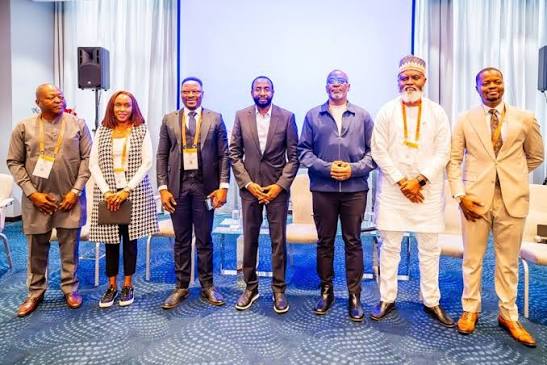
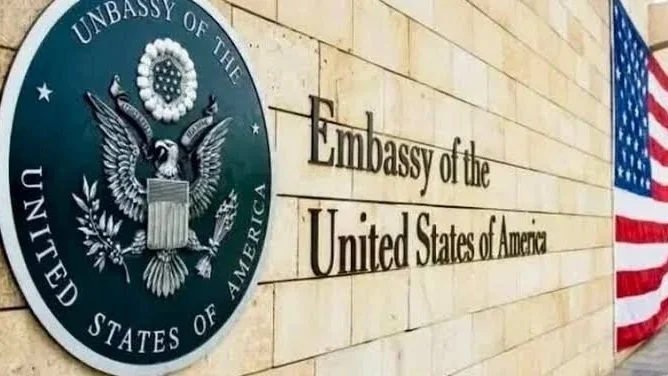
The U.S. Consul General in Lagos, Brandon Hudspeth, disclosed this at the GITEX Nigeria Startup Festival, noting that Lagos’ technology ecosystem had recorded nearly a 12-fold increase in valuation since 2017.
The development underscores the increasing dependence of Nigeria’s startup ecosystem on foreign capital at a time when global venture funding has become more selective, with investors demanding stronger revenues, clearer paths to profitability and more sustainable business models.
Hudspeth said Lagos ranked first on Dealroom’s 2025 Global Tech Ecosystem Index “Rising Stars” list, ahead of technology centres including Istanbul, Mumbai and São Paulo.
“Lagos is the best place in Africa to demonstrate the U.S. partnership in tech,” he said.
According to him, the city now has more than 3,300 startups and has produced six of Africa’s 10 unicorns, underscoring its growing importance to the continent’s technology economy.
He said U.S.-sourced funding had remained the largest source of external capital for Nigeria’s technology ecosystem over the 10-year period, with American technology and financial companies including Visa, Google, Mastercard, Microsoft, Uber and PayPal participating in the market.
The U.S. involvement, however, extends beyond equity financing, as American companies are also providing technology training, infrastructure, connectivity and digital platforms to Nigerian businesses.
Hudspeth affirmed that companies such as Google, Cisco, Meta and Microsoft were training hundreds of thousands of Nigerians in technology and artificial intelligence, helping to address the skills gap that could constrain the expansion of the digital economy.
At the infrastructure level, U.S.-linked companies are also playing an increasing role in Nigeria’s digital backbone. Google and Meta have invested in subsea cable infrastructure serving Nigeria, while Equinix and Digital Realty are connecting Nigerian data infrastructure to global networks.
Amazon Web Services, Starlink and other technology companies are also contributing to the infrastructure supporting the country’s digital businesses.
For startups developing artificial intelligence, fintech, healthtech and enterprise technology, access to cloud computing, data centres and high-speed connectivity is increasingly becoming as important as access to venture capital.
The growing U.S. presence also raises questions about the extent to which Nigeria’s technology expansion is being driven by domestic rather than foreign capital.
While foreign investment provides startups with the resources required to scale, the concentration of funding in one major international market could expose the ecosystem to shifts in global investor sentiment.
Hudspeth acknowledged the funding challenge, suggesting that continued U.S. investment could help determine which Nigerian startups survive the current funding cycle and emerge as globally competitive businesses.
He expressed optimism that the next generation of Nigerian unicorns could emerge from startups participating in the GITEX Nigeria programme.
“Just maybe the next six unicorns will be developed by the talent that is in this room today,” he said.
Meanwhile, the U.S.-Nigeria technology relationship is being strengthened through the U.S.-Nigeria Commercial and Investment Partnership, which is aimed at bringing entrepreneurs, investors, business leaders and policymakers together to address regulatory and commercial barriers to trade and investment.
The figures point to a Lagos technology ecosystem that has transitioned from its traditional role as Nigeria’s startup capital to become an increasingly strategic destination for global technology investment.
However, sustaining that momentum will depend on whether Nigeria can deepen local sources of capital, strengthen infrastructure, improve regulatory predictability and retain the skilled talent required to convert foreign investment into long-term domestic economic value.
The Lagos State Deputy Governor, Dr Kadri Hamzat, also said the state was positioning itself as a regional technology and innovation hub, citing its infrastructure, talent base, investment environment and growing digital economy.
Hamzat said Lagos had laid about 3,000 kilometres of targeted digital infrastructure between 2019 and 2025 and was working towards a 6,000-kilometre unified network based on an open-access model.
He added that the state was also pursuing electricity-sector reforms, digital government services and innovation funding as part of efforts to reduce some of the structural constraints confronting technology businesses.
“Lagos has constraints, but what distinguishes Lagos is that we name those constraints, we regulate them, we finance them, and we invite you to build a solution for us,” Hamzat said.
He urged global technology companies to establish deeper operations in Lagos, including engineering, data-centre capacity and regional headquarters, rather than viewing the city solely as a consumer market.
He further added that the convergence of foreign capital, digital infrastructure and Nigerian talent could position Lagos as a launchpad for technology businesses seeking to serve the wider African market.
About The Author