









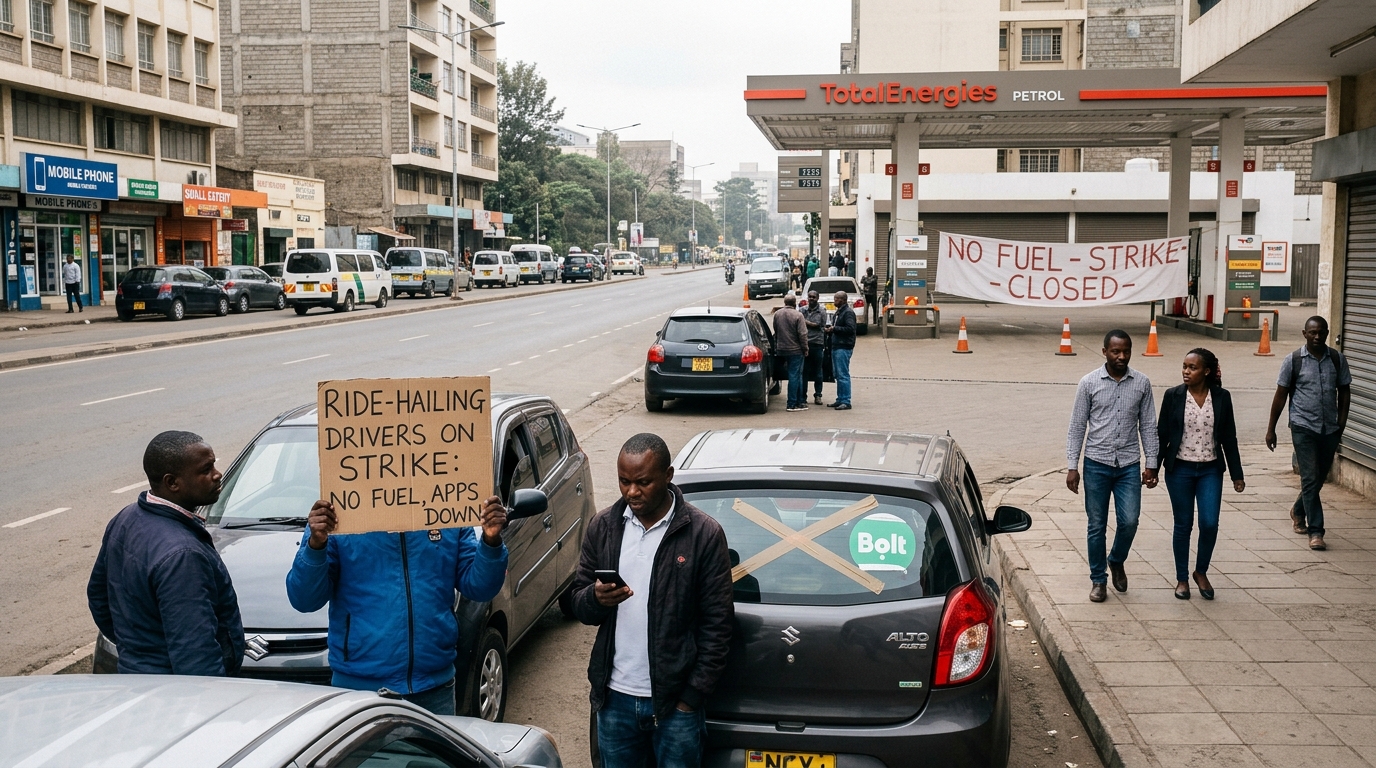
Drivers go off-platform as fuel crisis paralyses Nairobi
In May 2026, Nairobi, one of Africa’s fastest-growing tech and mobility hubs, faced a major transport disruption that exposed the fragile balance between fuel economics, digital platforms, and gig workers’ survival. As fuel prices surged and a nationwide transport strike took hold, ride-hailing drivers began abandoning platforms like Uber and Bolt, choosing instead to operate outside the apps.
This shift wasn’t just a temporary reaction, it revealed deeper structural issues in Africa’s ride-hailing ecosystem and raised critical questions about sustainability, pricing, and worker independence in the gig economy.
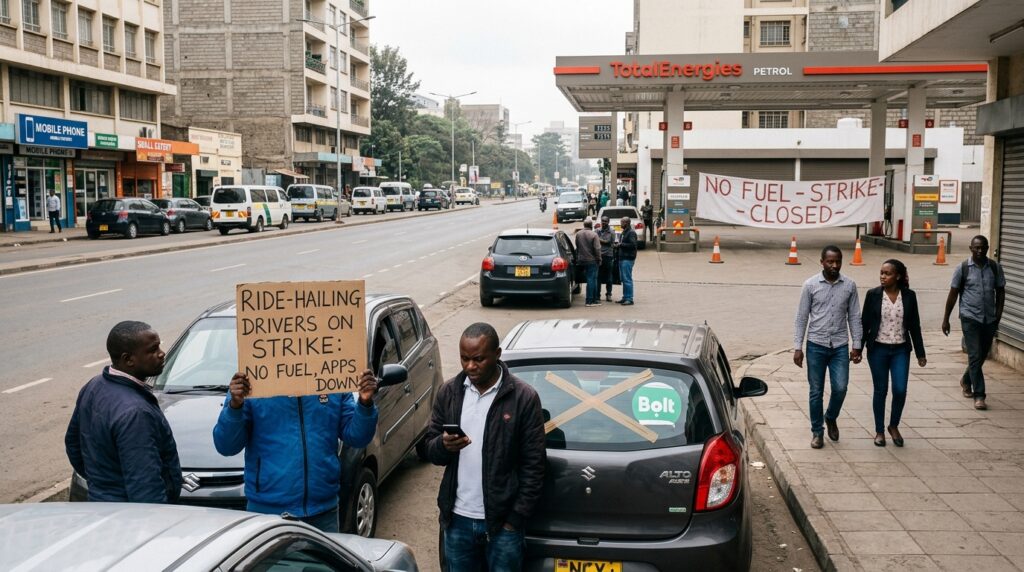
What Happened: Fuel Strike Brings Nairobi to a Standstill
The crisis began when Kenya experienced a sharp increase in fuel prices, triggering widespread protests and a coordinated transport strike involving multiple sectors, public transport operators, truck drivers, motorcycle riders, and ride-hailing drivers.
The price hikes were significant:
Petrol increased by KES 16.65 per litre
Diesel rose by KES 46.29 per litre, reaching about KES 242.92 per litre
These increases were driven by global supply pressures, including geopolitical tensions affecting oil supply chains.
As a result:
Roads were blocked in parts of Nairobi
Public transport vehicles stayed off the roads
Thousands of commuters were stranded
Some schools and businesses shut down temporarily
The strike quickly escalated into one of the largest coordinated transport shutdowns in Kenya’s history.
Why Ride-Hailing Drivers Abandoned Apps
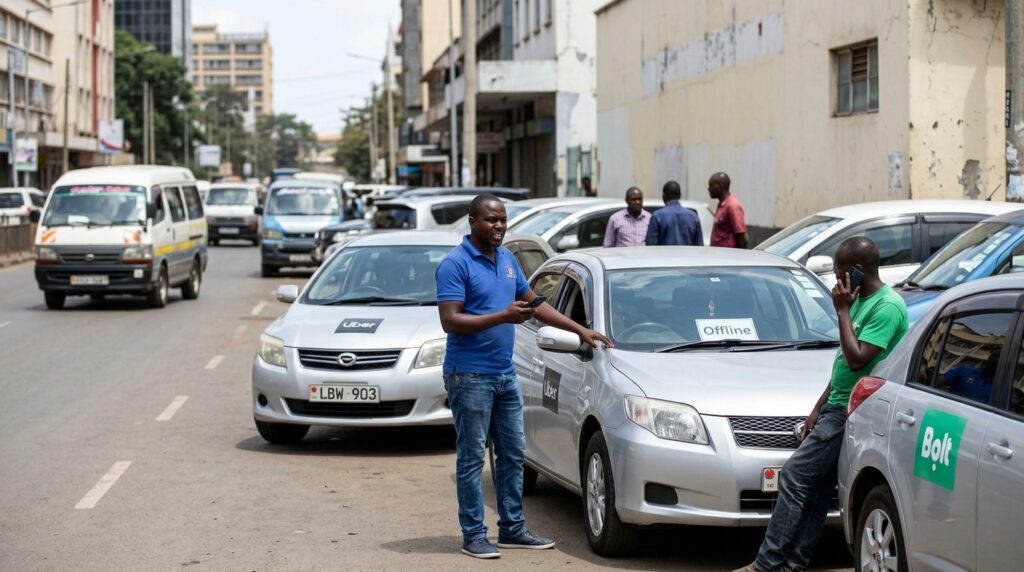
While traditional transport operators withdrew services completely, ride-hailing drivers took a different approach—they did not stop working entirely, but instead went off-platform.
1. Rising Fuel Costs Destroyed Profit Margins
Ride-hailing drivers operate on tight margins. With diesel prices soaring, the cost of running a vehicle increased dramatically. Staying on platforms, where commissions are deducted, became unsustainable.
2. Platform Commissions Became a Burden
Apps typically take a percentage of each ride. In normal conditions, this is manageable. But during a fuel crisis, drivers preferred to:
- Avoid commission fees
- Keep 100% of earnings
- Adjust fares in real-time
3. Opportunity to Charge Market-Driven Prices
With commuters stranded and desperate, drivers saw an opportunity to:
- Negotiate fares directly
- Charge higher rates based on demand
- Maximize earnings during the crisis
Many drivers began cutting out the middleman (apps) and dealing directly with passengers.
4. Safety Concerns and Unrest
Protests and road blockages created safety risks. Some drivers avoided certain routes or stopped using apps entirely due to fear of:
- Violence
- Police clashes
- Property damage
How Commuters Were Affected
The impact on commuters was immediate and severe.
Many people were unable to get to work
Transport fares increased sharply
Some commuters paid up to 5x normal fares
Others resorted to walking long distances
This created a ripple effect across the economy:
- Reduced productivity
- Increased cost of living
- Disrupted business operations
The Bigger Picture: A Crisis Beyond Transport
This situation was not just about transport, it exposed deeper economic and structural issues.
1. Heavy Dependence on Fuel Imports
Kenya imports most of its fuel from the Middle East, making it vulnerable to global disruptions.
2. Weak Protection for Gig Workers
Ride-hailing drivers are independent contractors. This means:
- No guaranteed income
- No fuel subsidies
- No protection during crises
3. Platform Limitations
Ride-hailing platforms:
- Cannot easily adjust prices quickly
- Struggle to respond to sudden economic shocks
- Depend heavily on driver participation
When drivers leave, the entire system breaks down.
What This Means for Ride-Hailing Platforms
The Nairobi crisis highlights several key challenges for companies like Uber and Bolt across Africa:
1. Need for Flexible Pricing Models
Platforms may need to introduce:
- Dynamic fuel-based pricing
- Emergency fare adjustments
- Temporary commission reductions
2. Driver Retention Strategies
To keep drivers active during crises, platforms might need to:
- Offer fuel incentives
- Provide bonuses
- Improve earnings transparency
3. Stronger Local Adaptation
Global platforms must adapt to local realities such as:
- Fuel volatility
- Informal transport systems
- Economic instability
Could This Happen in Nigeria?
Absolutely.
Cities like Lagos and Abuja share similar characteristics:
- Heavy reliance on fuel
- Large informal transport sector
- Growing ride-hailing economy
If fuel prices spike or supply is disrupted:
- Drivers could abandon apps
- Transport systems could slow down
- Fares could skyrocket
This makes the Nairobi situation a warning signal for Nigeria and other African markets.
The Future of Ride-Hailing in Africa
The crisis may accelerate changes in the mobility ecosystem:
1. Rise of Off-Platform Mobility
Drivers may increasingly:
- Build direct customer networks
- Use WhatsApp or informal channels
- Operate independently of apps
2. Push for Regulation
Governments may step in to:
- Regulate pricing
- Protect drivers
- Stabilize transport systems
3. Alternative Energy Adoption
High fuel costs could accelerate:
- Electric vehicle adoption
- Renewable energy solutions
- Hybrid transport models
Conclusion
The Nairobi fuel strike and the decision by ride-hailing drivers to abandon apps highlight a critical reality: technology platforms are only as strong as the economic conditions supporting them.
When fuel prices rise and margins shrink, drivers prioritize survival over platform loyalty. This creates a fragile system where digital convenience can collapse overnight under economic pressure.
For Africa’s growing digital economy, the lesson is clear, sustainability must go beyond technology to include real-world economic resilience.
Frequently Asked Questions (FAQ)
-
Why did Nairobi ride-hailing drivers stop using apps?
They abandoned apps due to high fuel costs, low earnings after commissions, and the ability to earn more by negotiating fares directly.
-
What caused the fuel strike in Kenya?
The strike was triggered by sharp fuel price increases linked to global supply disruptions and economic pressures.
-
Did ride-hailing drivers stop working completely?
No. Many continued working but operated off-platform, dealing directly with passengers instead of using apps.
-
How did the strike affect commuters?
Commuters faced:
Limited transport options
Higher fares
Long delays
Difficulty getting to work -
How much did fuel prices increase?
Diesel rose to about KES 242.92 per litre, significantly increasing operating costs for drivers.
-
Why is diesel important in this crisis?
Diesel powers most commercial vehicles, including taxis and buses. A rise in diesel prices directly impacts transport costs.
-
Are ride-hailing platforms to blame?
Not entirely. The crisis is largely driven by fuel costs and economic conditions, though platform commissions contributed to driver dissatisfaction.
-
Is this situation temporary?
Yes, but similar disruptions could happen again if fuel prices remain unstable.
-
Could Nigerian drivers do the same?
Yes. Nigerian drivers could also abandon apps if fuel prices rise significantly or earnings drop.
-
What lessons should tech platforms learn?
Platforms must:
Adapt pricing models
Support drivers during crises
Build more resilient systems -
Will this affect the future of ride-hailing?
Yes. It may lead to:
More regulation
Better driver support systems
Increased competition from informal transport -
What can drivers do in such situations?
Drivers can:
Diversify income sources
Build direct customer relationships
Monitor expenses closely
About The Author