








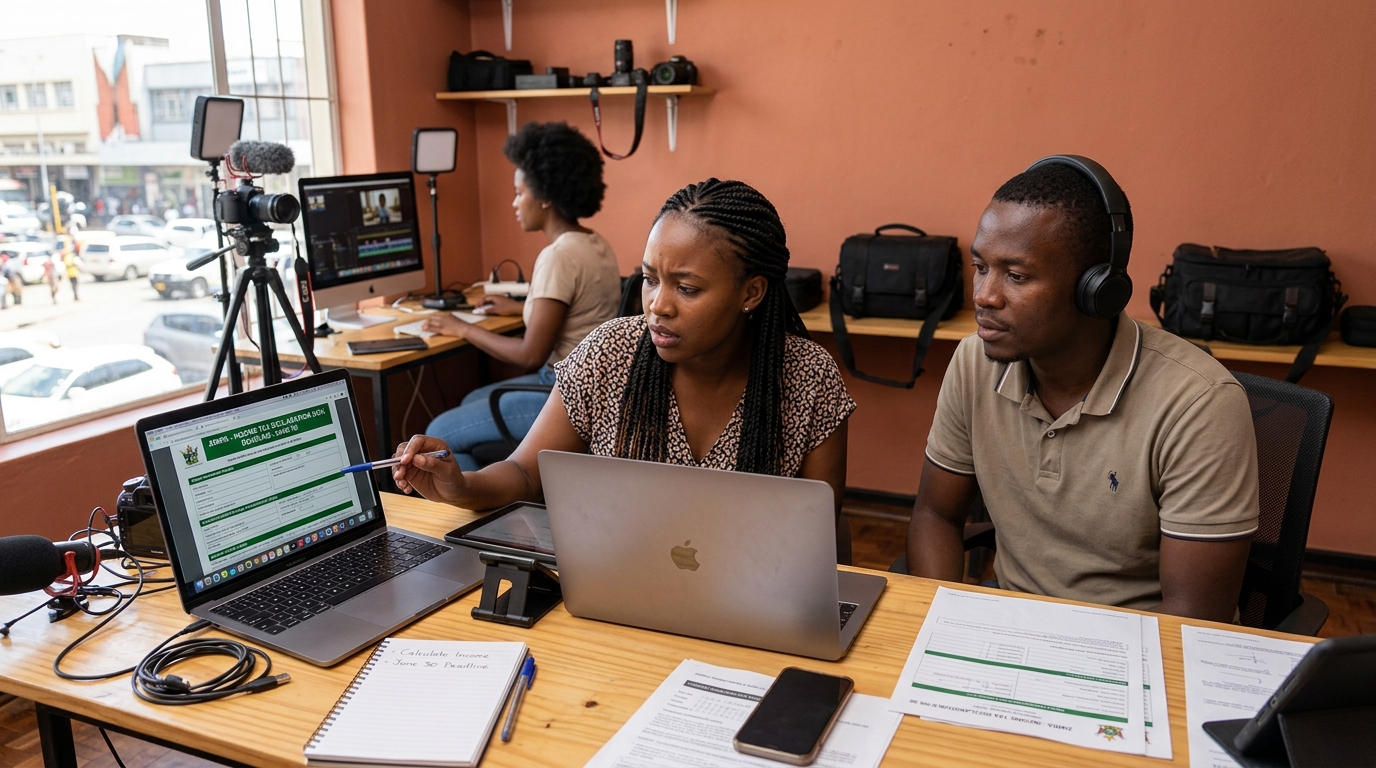
Zimbabwe has taken a significant step toward regulating its growing digital economy by giving content creators and social media influencers a deadline of June 30, 2026, to declare previously undisclosed income, or risk facing penalties.
This move, led by the Zimbabwe Revenue Authority (ZIMRA), signals a broader shift across Africa: governments are now paying serious attention to digital income streams such as YouTube earnings, TikTok monetization, brand sponsorships, and affiliate marketing.
What Exactly Is Happening?
Zimbabwe’s tax authority has introduced a voluntary disclosure window for digital creators. This means:
- Content creators must declare any undeclared income earned online
- The deadline is end of June 2026
The initiative targets income from:
- YouTube, TikTok, Instagram
- Brand deals and sponsorships
- Affiliate marketing
- Freelancing platforms
The goal is to bring the fast-growing creator economy into the formal tax system.
Why Zimbabwe Is Taking This Step
The government is responding to the rapid rise of digital income in Africa. With more people earning online, tax authorities are concerned that:
- Large amounts of income are going undeclared
- The digital economy is operating outside traditional tax systems
- Governments are losing potential revenue
Zimbabwe is not alone. Countries like Nigeria, Kenya, and South Africa are also exploring ways to tax digital earnings.
What Happens If Creators Comply Before June?
The June deadline offers a grace period (amnesty opportunity):
Creators who voluntarily declare income may:
Avoid heavy penalties
Regularize their tax status
Some reports suggest penalties could be waived if disclosure is made on time (though interest may still apply).
This is essentially a “come clean now, avoid punishment later” approach.
What Happens If They Don’t Comply?
Failure to comply could lead to serious consequences, including:
- Financial penalties
- Audits and investigations
- Possible prosecution
- Business disruptions
ZIMRA has made it clear that after the deadline, enforcement becomes stricter.
What Type of Income Is Being Taxed?
Zimbabwe is targeting all forms of digital income, including:
- Ad revenue (YouTube, blogs, etc.)
- Sponsored posts and brand deals
- Affiliate marketing commissions
- Online courses and digital products
- Freelance earnings (Upwork, Fiverr, etc.)
Essentially, if you are making money online, it is considered taxable income.
A Bigger Trend Across Africa
This policy reflects a continent-wide shift:
- Governments are beginning to treat creators as business entities
- Digital work is no longer seen as “informal” or “side hustle”
- Tax authorities are adapting to:
- Remote work
- Cross-border payments
- Creator-based economies
In fact, Zimbabwe’s move highlights a key reality:
If you earn online, you are part of the formal economy, whether you realize it or not.
Challenges Creators Are Facing
Despite the policy, many creators have raised concerns:
1. Lack of Clear Guidelines
Many are unsure:
- What exactly to declare
- How much tax to pay
- Which income streams qualify
2. Irregular Income
Unlike salaried workers, creators often earn:
- Inconsistent income
- Payments in foreign currency
- Platform-based earnings
3. Limited Monetization Support
Some argue:
- Platforms don’t fully support monetization locally
- Governments haven’t invested enough in the sector
These issues make compliance more complex for creators.
What This Means for Nigerian Creators
Even though this is happening in Zimbabwe, Nigerians should pay attention.
Nigeria already:
- Taxes personal and business income
- Has introduced digital service tax discussions
- Is increasing scrutiny on online earnings
This means:
If you’re earning from:
- YouTube
- Freelancing
- Social media
You are legally expected to declare your income
Zimbabwe’s move could easily influence similar enforcement in Nigeria soon.

Key Lessons for Content Creators
Here are practical takeaways:
1. Start Keeping Records
Track:
- Earnings from all platforms
- Bank transfers and payments
- Expenses
2. Register as a Business (If Needed)
Treat your content creation like a real business.
3. Understand Your Tax Obligations
Consult:
- Tax professionals
- Financial advisors
4. Don’t Wait for Enforcement
The biggest mistake creators make is:
- “I’ll deal with taxes later.”
Governments are now actively monitoring digital income.
The Future of the Creator Economy in Africa
Zimbabwe’s policy shows that:
- The creator economy is now officially recognized
- Governments want their share of digital revenue
- Regulation is coming, fast
But there is also an opportunity:
If managed properly, taxation could lead to:
- Better infrastructure
- Creator funding programs
- Industry growth
The key is balance between regulation and support.
Final Thoughts
Zimbabwe’s June 2026 deadline is more than just a tax notice, it’s a wake-up call for Africa’s digital workforce.
Content creation is no longer a casual hustle. It is a recognized economic activity with:
- Legal responsibilities
- Financial implications
- Government oversight
For creators across Africa, including Nigeria, the message is clear:
If you are making money online, you need to start thinking like a business owner, not just a creator.
Frequently Asked Questions (FAQ)?
-
What is the deadline for declaring income?
The Zimbabwe Revenue Authority (ZIMRA) has given content creators until June 30, 2026, to voluntarily declare previously undeclared income and regularize their tax status.
-
What happens if I declare my income before the deadline?
If you comply within the deadline:
You may avoid heavy penalties
You can regularize your tax records
In some cases, penalties may be reduced or waived
This period is essentially an amnesty window. -
What are the penalties for not declaring income?
Failure to comply may result in:
Financial penalties and fines
Tax audits and investigations
Possible legal action
Additional interest on unpaid taxes
After the deadline, enforcement is expected to become stricter. -
What types of income must be declared?
All forms of digital income are taxable, including:
YouTube ad revenue
TikTok and Instagram earnings
Brand sponsorships and influencer deals
Affiliate marketing commissions
Freelance income from platforms like Upwork and Fiverr
Sales of digital products or courses -
Do small or part-time creators also need to pay tax?
Yes. Whether you earn full-time or part-time, any income generated online is considered taxable once it meets the country’s minimum taxable threshold.
-
How will the government track digital income?
Tax authorities may use:
Bank transaction records
Payment platform data
Collaborations with international digital platforms
Data analytics and financial monitoring systems
Governments are becoming more advanced in tracking online earnings. -
Does this apply only to Zimbabwe?
Currently, this policy is specific to Zimbabwe, but similar trends are emerging across Africa. Countries like Nigeria, Kenya, and South Africa are also increasing focus on taxing digital income.
-
What should creators do to stay compliant?
To stay safe:
Keep detailed records of all income and expenses
Open a dedicated business or creator account
Register your business if necessary
Consult a tax professional
File your taxes regularly -
What does this mean for Nigerian content creators?
Even though this policy is in Zimbabwe, Nigerian creators should take it seriously. The Nigerian government already requires individuals to declare income, including earnings from digital platforms. Increased enforcement in Nigeria is likely in the near future.
-
Is foreign income (e.g., from YouTube or international clients) taxable?
Yes. Income earned from international platforms is still considered taxable in your country of residence, depending on local tax laws.
-
Can creators operate without registering a business?
In some cases, individuals can operate as sole proprietors. However, as income grows, registering a business becomes advisable for:
Tax compliance
Professional credibility
Access to financial services -
What is the biggest mistake creators make regarding taxes?
The most common mistake is ignoring taxes completely or assuming digital income is not traceable. With increasing regulation, this approach is risky and can lead to serious penalties.
-
Will taxation affect the growth of the creator economy?
It may create short-term challenges, but in the long run, proper regulation can:
Legitimize the industry
Attract investments
Encourage government support programs
Improve infrastructure for creators -
Where can creators get help?
Creators can seek help from:
Tax consultants
Financial advisors
Government tax offices
Business development centers
About The Author