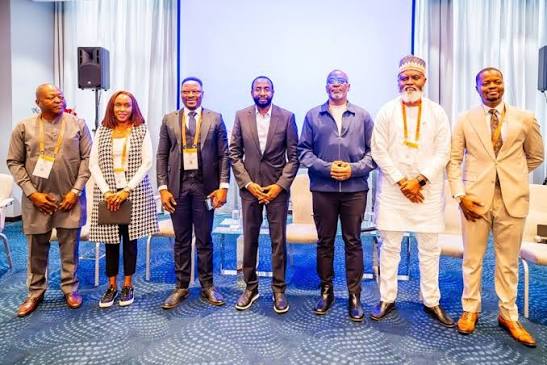









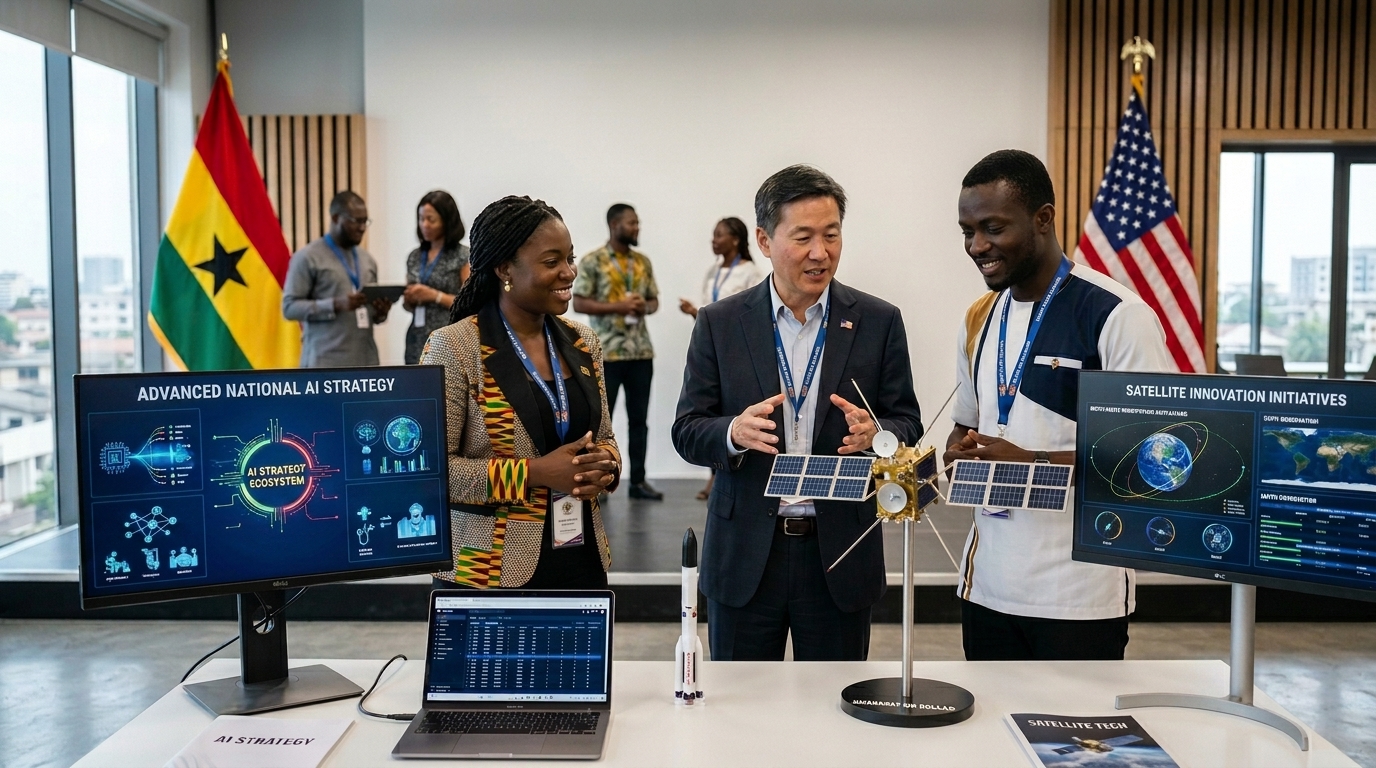
Ghana and the United States are strengthening their digital partnership through new discussions focused on artificial intelligence policy, satellite technology, digital infrastructure, and innovation development. The growing cooperation reflects Ghana’s ambition to position itself as one of Africa’s leading digital economies while expanding international partnerships in emerging technologies.
Recent high-level meetings between Ghana’s Ministry of Communication, Digital Technology and Innovations and a visiting U.S. delegation highlighted the increasing importance of AI governance, satellite communications, digital skills, and connectivity expansion in shaping the future of Ghana’s technology ecosystem.
The collaboration comes at a time when African countries are accelerating investments in digital transformation, artificial intelligence, and space-related technologies to drive economic growth, improve public services, and strengthen global competitiveness.
Ghana and the U.S. Expand Digital Cooperation
The latest discussions took place in Accra between Ghana’s Minister for Communication, Digital Technology and Innovations, Samuel Nartey George, and officials from the United States government and the U.S. Embassy.
The U.S. delegation included senior representatives from the National Telecommunications and Information Administration (NTIA), alongside officials from the U.S. Embassy and the U.S. commercial sector. According to reports, discussions focused on:
- Artificial intelligence policy
- Digital transformation
- Satellite technology
- Connectivity expansion
- Innovation ecosystems
- Digital skills development
- Regulatory cooperation
Both countries reaffirmed their commitment to expanding collaboration in emerging technologies as Ghana continues its push toward becoming a regional digital hub.
The engagement reflects a broader trend where African countries are increasingly partnering with global technology leaders to accelerate digital growth and technological innovation.
Ghana’s Ambition to Become an African Digital Hub
Ghana has been positioning itself as one of Africa’s leading technology and innovation economies over the last several years.
The government has introduced multiple initiatives aimed at:
- Expanding internet access
- Building digital infrastructure
- Promoting AI adoption
- Supporting startups
- Increasing digital literacy
- Encouraging innovation ecosystems
One of the most important developments is Ghana’s National Artificial Intelligence Strategy 2023–2033, which outlines the country’s long-term vision for AI-driven development.
The strategy seeks to transform Ghana into an AI-powered society capable of competing in the global digital economy while ensuring ethical and responsible AI deployment.
According to Ghana’s AI strategy, the country plans to focus on:
- AI education and skills
- Data governance
- AI research and development
- Public sector AI adoption
- Responsible AI frameworks
- Digital infrastructure expansion
- Sector-specific AI innovation
The strategy also emphasizes inclusivity, ethics, and sustainable AI governance.
Why AI Policy Matters for Ghana
Artificial intelligence is rapidly becoming one of the world’s most influential technologies, impacting industries such as healthcare, finance, agriculture, telecommunications, education, transportation, and cybersecurity.
For Ghana, developing a strong AI policy framework is becoming increasingly important because AI could help address several national challenges, including:
- Limited public service efficiency
- Healthcare accessibility
- Agricultural productivity
- Education gaps
- Financial inclusion
- Infrastructure planning
Experts believe African countries that adopt AI strategically could significantly improve productivity and economic growth over the next decade.
However, AI adoption also raises concerns around:
- Data privacy
- Ethical AI use
- Bias in algorithms
- Cybersecurity
- Digital inequality
- Workforce disruption
This is why Ghana’s AI strategy places strong emphasis on governance, accountability, and responsible innovation.
Research analyzing Ghana’s AI strategy noted that while the country has ambitious goals, effective implementation and strong regulatory systems will be critical to success.
The Growing Importance of Satellite Technology
One of the most important areas of Ghana-U.S. cooperation involves satellite technology and telecommunications infrastructure.
During recent meetings, U.S. officials commended Ghana for hosting a satellite training program organized by the United States Telecommunication Training Institute (USTTI) for the first time.
Satellite technology is becoming increasingly important for Africa’s digital future because it can help solve major connectivity and infrastructure challenges.
Satellite systems can support:
- Internet access in rural communities
- Emergency communications
- Environmental monitoring
- Agriculture technology
- Weather forecasting
- National security
- Remote education
- Disaster management
For countries where traditional broadband infrastructure remains limited, satellite connectivity could play a major role in expanding internet access.
Ghana’s government has emphasized the need for strong regulatory frameworks to ensure satellite technologies are deployed responsibly while protecting national interests and security.
AI and Satellite Technology Are Becoming Connected
Another major reason satellite technology matters is its growing integration with artificial intelligence.
Modern satellite networks increasingly rely on AI systems for:
- Signal optimization
- Network management
- Spectrum allocation
- Data analysis
- Security monitoring
- Predictive maintenance
Research on next-generation satellite communication systems shows AI can significantly improve the efficiency, reliability, and scalability of large satellite networks.
AI-powered satellite systems are already being used globally for:
- Climate monitoring
- Traffic management
- Agricultural mapping
- Urban planning
- Border security
- Internet connectivity optimization
For African countries like Ghana, combining AI with satellite technology could create major opportunities for economic development and digital inclusion.
Digital Skills Development Remains a Major Priority
During the Ghana-U.S. discussions, Minister Samuel Nartey George also highlighted Ghana’s One Million Coders Programme, an initiative aimed at equipping young Ghanaians with digital and software development skills.
Digital skills development has become one of Africa’s biggest priorities as global demand for:
- Software engineers
- Data analysts
- Cybersecurity specialists
- AI developers
- Cloud engineers
- Digital marketers
- Product designers
continues to rise.
Ghana’s youthful population presents a major opportunity for building a strong digital workforce capable of competing globally.
However, challenges remain, including:
- Limited access to advanced training
- Infrastructure gaps
- Uneven internet access
- High technology costs
- Limited AI infrastructure
Online discussions among Ghanaian technology communities also reveal concerns about whether the country is moving fast enough to compete in AI and emerging technologies.
Many young professionals believe stronger investments in infrastructure, innovation ecosystems, and practical technology training are necessary for Ghana to fully benefit from the AI revolution.
Ghana’s Technology Ecosystem Is Growing
Despite challenges, Ghana’s technology ecosystem has continued to grow steadily over the last decade.
The country has become increasingly attractive for:
- Technology startups
- Fintech companies
- Innovation hubs
- Digital entrepreneurs
- AI initiatives
- International technology partnerships
Accra, in particular, has emerged as one of West Africa’s leading startup and innovation centers.
Several local startups are already working on:
- Indigenous language AI systems
- Satellite intelligence platforms
- Fintech solutions
- Agricultural technology
- Educational technology
- Digital commerce systems
Community discussions online also show growing local interest in satellite intelligence platforms and AI-powered technologies designed specifically for African use cases.
This local innovation could become increasingly important as Ghana seeks to build homegrown digital capabilities alongside international partnerships.

Why the U.S. Partnership Matters
The United States remains one of the world’s leading technology and AI powers.
By deepening cooperation with the U.S., Ghana could gain access to:
- Technical expertise
- AI policy knowledge
- Telecommunications infrastructure support
- Innovation partnerships
- Satellite training programs
- Research collaborations
- Investment opportunities
The partnership also aligns with broader geopolitical competition around emerging technologies.
Countries around the world are increasingly competing to establish leadership in:
- Artificial intelligence
- Satellite communications
- Semiconductor technology
- Cybersecurity
- Quantum computing
- Digital infrastructure
African countries are becoming strategically important in this global technology landscape due to their growing digital economies and youthful populations.
Challenges Ghana Still Faces
Despite the positive momentum, Ghana still faces several barriers that could affect implementation of its digital ambitions.
1. Infrastructure Limitations
Reliable electricity, broadband infrastructure, and cloud computing capacity remain uneven in many regions.
2. Funding Constraints
Building advanced AI ecosystems and satellite infrastructure requires significant investment and long-term funding.
3. Regulatory Complexity
AI governance and satellite regulation involve complex legal, ethical, and cybersecurity considerations.
4. Skills Gaps
The country still needs more advanced AI researchers, engineers, cybersecurity experts, and satellite technology specialists.
5. Global Competition
Technology innovation is advancing rapidly worldwide, meaning Ghana must move quickly to remain competitive.
Experts have warned that long-term technology strategies can quickly become outdated if governments fail to adapt to the fast pace of AI development. ([Ghana News Agency][7])
What This Means for Africa
Ghana’s collaboration with the United States could have broader implications for Africa’s digital future.
If successful, the partnership may:
- Strengthen regional innovation ecosystems
- Improve digital infrastructure
- Increase AI adoption
- Expand satellite connectivity
- Encourage local technology development
- Improve digital governance frameworks
Other African countries are also developing AI strategies and digital transformation programs, meaning the continent is becoming increasingly active in global technology conversations.
The collaboration also reflects a larger shift where African countries are not only adopting global technologies but increasingly helping shape digital policy discussions themselves.
Conclusion
Ghana and the United States are entering a new phase of digital cooperation centered on artificial intelligence policy, satellite technology, and innovation development.
The partnership reflects Ghana’s ambition to become a leading digital economy in Africa while positioning itself strategically in the rapidly evolving global technology landscape.
Through investments in AI policy, satellite communications, digital skills, and innovation ecosystems, Ghana hopes to strengthen economic growth, improve connectivity, and prepare its workforce for the future digital economy.
While challenges around infrastructure, funding, and implementation remain, the growing collaboration with the United States could help accelerate Ghana’s digital transformation journey significantly.
As AI and satellite technologies continue reshaping industries worldwide, partnerships like this may become increasingly important in determining how African countries compete and innovate in the future global economy.
Frequently Asked Questions (FAQ)
-
What is the new Ghana-U.S. digital cooperation about?
The partnership focuses on artificial intelligence policy, satellite technology, digital infrastructure, connectivity expansion, and innovation development.
-
Why is Ghana focusing on AI policy?
Ghana wants to build a responsible and inclusive AI ecosystem that supports economic growth, public services, education, and innovation.
-
What is Ghana’s National Artificial Intelligence Strategy?
It is a long-term roadmap designed to guide AI adoption, governance, education, and innovation in Ghana between 2023 and 2033.
-
Why is satellite technology important for Ghana?
Satellite systems can improve internet access, rural connectivity, emergency communications, environmental monitoring, and digital infrastructure.
-
How does AI connect with satellite technology?
AI can optimize satellite communications, improve network efficiency, analyze satellite data, and enhance security systems.
-
What is Ghana’s One Million Coders Programme?
It is a government initiative designed to equip young Ghanaians with coding and digital technology skills.
-
What challenges does Ghana face in AI development?
Major challenges include infrastructure gaps, funding limitations, digital skills shortages, and the need for effective AI governance frameworks.
-
Why is the U.S. partnership important for Ghana?
The partnership could provide technical expertise, investment opportunities, training programs, research collaboration, and support for digital infrastructure development.
About The Author