








Meta was fighting multimillion-dollar penalties from Nigerian regulators while simultaneously building new relationships with government institutions. An investigation by The Continent found at least 17 engagements between major technology companies and the Nigerian government since 2024, many of which have limited public information about the terms of the agreements.
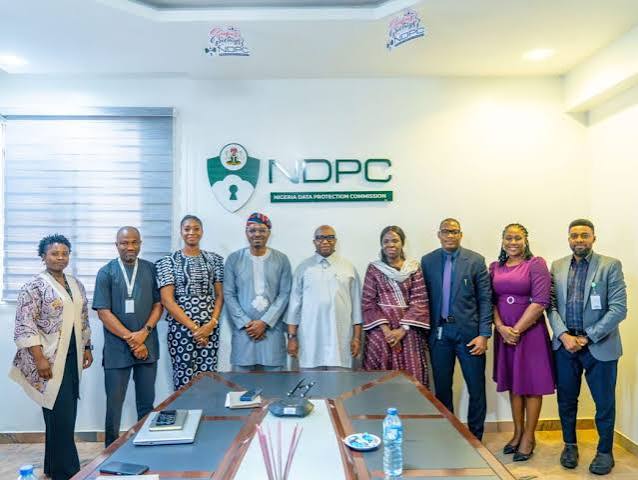
In February 2025, representatives of three of the world’s most powerful technology companies—Meta, Microsoft and Google—met with the Nigeria Data Protection Commission (NDPC) to discuss collaboration.
Dr. Vincent Olatunji, head of the data protection commission, welcomed the prospect of working with the global technology companies and stressed the importance of cooperation between the public sector, private sector, civil society organisations and academia.
At the time, Meta was already facing regulatory action in Nigeria over its handling of the personal information of millions of Nigerians.
In July 2024, the Federal Competition and Consumer Protection Commission (FCCPC) fined Meta and WhatsApp $220 million following a 38-month investigation. The regulator found, among other issues, that Nigerians had insufficient control over how their personal information was collected, shared and used.
Meta appealed the decision but lost. The company subsequently threatened to suspend its services in Nigeria. Although the 60-day payment deadline expired in June 2025, Meta continued to operate normally while the legal dispute remained unresolved.
Within days of the NDPC’s collaboration discussions with Meta, the commission imposed a separate $32.8 million penalty on the company.
A tribunal later upheld the FCCPC’s $220 million fine against Meta in April 2025. However, the $32.8 million case was eventually settled out of court.
According to a Premium Times investigation, the settlement set aside the commission’s $32.8 million fine and eight corrective orders against Meta, releasing the company from liabilities arising from the case. The publication reported that several specific regulatory requirements were replaced with broader commitments by Meta to comply with Nigeria’s data-protection law and strengthen its data-protection measures.
The relationship between Meta and Nigerian authorities continued to develop.
The NDPC later announced that, in collaboration with Meta, it had translated the Nigeria Data Protection Act into Hausa, Igbo and Yoruba to promote greater inclusivity.
Then, in May 2026, another government institution launched GovGuide Nigeria, an AI-powered service built using Meta’s technology to help Nigerians navigate government services.
The Continent asked Meta and Nigerian government agencies when discussions about GovGuide began. The questions were prompted by the absence of a public register in Nigeria requiring companies to disclose meetings with government officials, what they sought from those meetings or what was discussed.
The investigation therefore began compiling its own record.
It identified at least 17 publicly documented engagements between major technology companies and the Nigerian state since 2024. These included meetings with the president and regulators, government AI projects, training programmes, funding arrangements and policy discussions.
Many of these engagements represent normal interactions between the government and companies operating in one of Africa’s largest digital markets. However, some bring technology companies into closer contact with the institutions responsible for regulating their activities in Nigeria.
Data Protection Concerns
The Meta case highlights the responsibility of Nigerian regulators.
At the centre of several regulators’ concerns was the level of control WhatsApp users had over their personal information. Data collected about individuals can be used to build profiles of their interests and behaviour and, among other purposes, determine which advertisements they receive.
The FCCPC also found that Meta shared and transferred Nigerians’ personal information without proper permission and provided Nigerian users with fewer data protections than users in some other countries.
GovGuide raises related questions.
The AI-powered platform allows Nigerians to find and understand government information through text, voice and WhatsApp in English, Yoruba, Hausa and Igbo.
According to its privacy notice, GovGuide may collect names, contact details, addresses, government-issued identifiers, geolocation information, device and IP information, as well as users’ chatbot prompts, documents, images, audio and conversation logs.
The information may be used to personalise services, conduct analytics and research, and improve the chatbot and machine-learning models.
Privacy lawyer Olumide Babalola, who served as counsel in Odunola Kehinde v. Vesti, a case involving alleged unauthorised data disclosures under the Nigeria Data Protection Act 2023, questioned the situation.
He noted that the high-profile data protection case against Meta was fundamentally concerned with how the company handled Nigerians’ data.
Babalola explained that Nigeria’s data protection framework generally prohibits the processing of personal data unless there is a lawful basis.
He argued that, without documentation establishing otherwise, Meta would not have a lawful basis to use citizens’ data in an undisclosed manner.
For GovGuide, however, he said the context is different because citizens are interacting with what they understand to be a government service rather than a public social media platform. He argued that data processing should therefore be presumed to be strictly for the purpose of delivering that government service unless users provide explicit and informed consent for other uses.
The NDPC was also asked whether its proposed collaboration with Meta, discussed during the February 2025 meeting, continued while the privacy case against the company was active and through its eventual settlement.
Neither the agencies involved nor Meta answered questions about GovGuide or the nature and timing of their broader collaboration.
The available evidence shows that regulatory action and discussions about collaboration took place during the same period, but it does not establish that the two were connected.
A Wider Network of Big Tech Partnerships
The Meta relationship is not an isolated partnership.
The Continent’s review of public records identified at least 17 engagements between Big Tech companies and the Nigerian state over the past three years. These ranged from funding and training programmes to meetings with senior government officials, technology projects and engagements with regulators.
However, the actual scale of government and regulatory interactions with Big Tech remains difficult to determine.
Nigeria does not have a public register showing who meets government officials, what is discussed or what companies are seeking to influence. Many agreements underpinning these partnerships are also not publicly available, leaving only a partial picture of how deeply major technology companies have become embedded in Nigeria’s digital ambitions.
Ali Sabo, head of Digital Rights at the Centre for Information Technology and Development (CITAD), describes this growing influence as “soft influence.”
He said that while technology companies’ projects can support national development, they can also quietly influence how policymakers understand technology and governance.
Sabo warned that, if left unchecked, dependence on external technology platforms could undermine government independence, create over-reliance on particular vendors and restrict future policy choices.
He argued that partnerships should be transparent, supported by clear safeguards and open to contributions from universities, civil society organisations and local technology companies.
Google and Nigeria’s AI Ambitions
In October 2024, the Nigerian government partnered with Data Science Nigeria to announce a ₦2.8 billion Google.org grant for national AI talent development programmes linked to the Federal Ministry of Communications, Innovation and Digital Economy.
The programmes included the DeepTech Ready Track for 20,000 advanced learners, the Experience AI teacher programme, which was designed to reach 25,000 teachers and 125,000 students, and a Government AI Campus for civil servants.
These initiatives introduce thousands of Nigerians to specific company tools, certification programmes and software ecosystems from an early stage. According to analysts, such programmes can effectively create long-term users of those technology ecosystems.
When The Continent asked a Google spokesperson about data protection during these initiatives, the company said its products use “industry-leading technology” to protect users’ information. Google also pointed to privacy controls, its registration with the NDPC and the appointment of a data protection officer.
However, its response did not state where data generated through the public-sector programmes is stored, how long it is retained or whether it can be used to improve Google’s commercial AI products.
Microsoft’s Growing Role
In 2025, Microsoft partnered with the Federal Ministry of Communications, Innovation and Digital Economy, Data Science Nigeria and Lagos Business School to launch the AI National Skills Initiative (AINSI).
The initiative was designed to train 35,000 people in artificial intelligence, with participants receiving certificates linked to the national 3 Million Technical Talent (3MTT) portal.
Microsoft also partnered with Junior Achievement Nigeria to introduce thousands of young students to the fundamentals of generative AI.
Grace, a student at the Federal University of Technology Akure, participated in the Microsoft and JA Nigeria Career Essentials AI programme. She received free access to Microsoft Copilot and LinkedIn Premium and later helped extend the programme to students on another campus.
Her experience also illustrates how such programmes can introduce young people to a company’s wider technology ecosystem beyond artificial intelligence.
When asked about data privacy and access, Microsoft provided figures on registrations, learning activity and certification. However, it did not provide the commercial agreements, contract values, procurement information or licensing arrangements requested.
Microsoft said that specific training pathways may include its technologies where relevant to the curriculum.
Tech analyst Eze Hanson described the programmes as a combination of smart philanthropy and workforce development, but warned of potential long-term risks.
He argued that embedding proprietary developer networks, certification pathways and job-search platforms into state-backed mass training programmes could be perceived as creating a captive user base and standardising national dependence on particular technology infrastructure.
Digital Independence vs. Big Tech Dependence
These concerns exist alongside Nigeria’s ambition to gain greater control over its data and digital infrastructure.
Nigeria is attempting to strengthen its digital independence while simultaneously relying increasingly on global technology companies for funding, training and technology that support its digital transformation.
Many of the agreements governing these relationships remain outside public view.
“When government partners with multinational companies to handle public services and data, the public deserves to know the terms of the deal,” said civil society transparency advocate Adekunle Omolabi.
For now, the announcements surrounding these partnerships are public. Much of what has been agreed behind them, however, remains undisclosed.
About The Author