








Faced with the growing challenges of climate change, land degradation, severe water stress and increasing pest infestations, a growing number of African countries, including Ghana, Mozambique, Ethiopia, Kenya and South Africa, are turning to Chinese-made agricultural drones to strengthen precision agriculture.
This approach to farming maximises crop production while promoting the efficient use of scarce resources amid severe economic pressures.
Chinese-manufactured agricultural tools are helping farmers across Africa significantly reduce their consumption of water, pesticides and fertilisers.
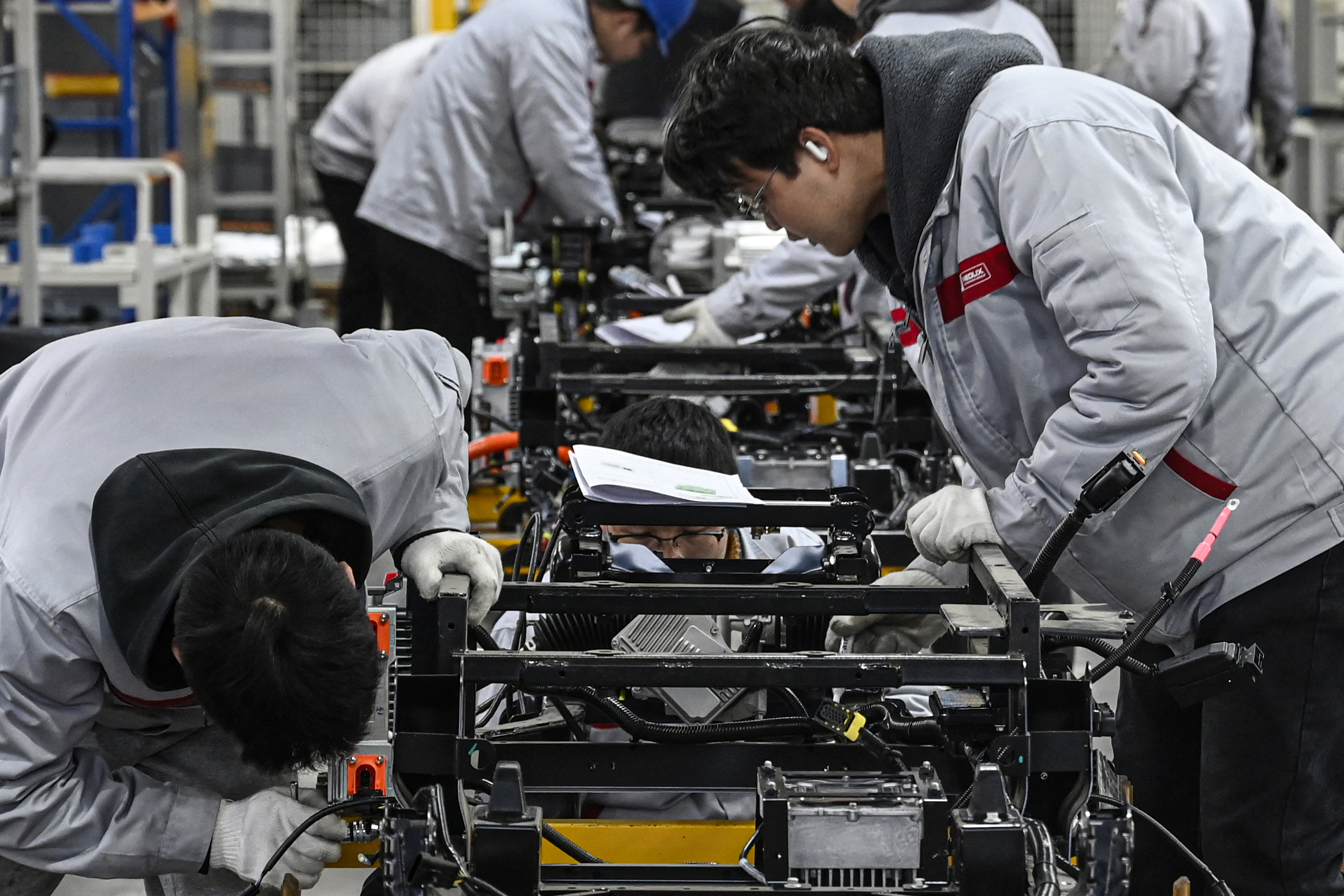
China’s industrial evolution has also continued to expand beyond its traditional exports. After the “old three” exports of clothing, furniture and appliances and the 2023 “new three” of electric vehicles, lithium batteries and solar cells, China entered another phase of industrial development in the first half of 2026, now increasingly defined by emerging industrial champions in robotics, artificial intelligence (AI) and innovative drugs.
China now accounts for at least 97 per cent of global humanoid robot shipments. Its AI-powered products, including drones, offer more affordable and highly capable options for resource-constrained African countries. In 2026, Chinese biotechnology innovation has also become increasingly notable and impactful across Africa.
Chinese-made industrial hardware and robotic arms are being widely used in Africa, South America and the Middle East. The adoption of these technologies globally demonstrates the growing acceptance of China’s new industrial capabilities.
There is growing recognition among developing countries that China’s industrial evolution is not simply a change in the type of products it exports, from furniture to robotics. Rather, it represents a strategic economic shift from exporting physical goods to providing knowledge-based technological capabilities that align with modern industrial demands.
In the first five months of 2026, China exported 10.377 million robot units valued at around $3 billion to markets around the world.
China is also supporting Africa’s industrialisation efforts through research and scientific collaboration, including joint laboratories and technology transfer initiatives.
Through advances in medical robotics delivered through various China-Africa technology transfer programmes, China’s Health Silk Road is helping resource-constrained African health systems adopt minimally invasive tools to improve the delivery of quality healthcare services.
The China-Africa Robotic Surgery Training Center and the China-Africa Endoscopic Technology Training Center have emerged as highly advanced specialised training and regional hubs, helping shift the continent from short-term interventions towards longer-term disease control partnerships.
China’s new industrial era is not defined only by the scale of Chinese-manufactured products being used across Africa’s farms, schools, roads, hospitals and households. It is also characterised by deliberate efforts to build Africa’s capacity for local manufacturing.
This is particularly transformative given that Africa has historically imported at least 70 per cent of its essential medicines and nearly all of its vaccines. Today, China is either independently or collaboratively supporting the construction, furnishing and equipping of local pharmaceutical manufacturing plants.
The objective is to manufacture products in Africa, designed around local realities and intended for use across the continent.
In Ethiopia, a Chinese company is producing large quantities of IV bags, injectables and essential generic medicines in the form of oral solid tablets to meet growing domestic demand for these life-saving clinical products.
Africa remains, by a wide margin, the region most affected by malaria, accounting for nearly 95 per cent of malaria cases and 95 per cent of malaria deaths globally.
China is now equipping African public health officials with AI-enabled tools for disease surveillance, tracking and outbreak prediction.
In response to some of the continent’s deadliest diseases, Chinese pharmaceutical innovation and partnerships include collaborations with local companies in Nigeria to produce HIV treatment and in Côte d’Ivoire to increase the production of antimalarial medicines and antibiotics to as many as 5 million tablets annually.
As China enters this new phase of technological development—moving from the traditional “old three” of clothing, furniture and appliances, through the 2023 “new three” of electric vehicles, lithium batteries and solar cells, and now towards emerging technologies in 2026—there are practical lessons for Africa’s own pursuit of sustainable and lasting industrialisation.
The experience offers valuable insights into how technological innovation, industrial capacity, research collaboration and local manufacturing can contribute to Africa’s long-term industrial development.
About The Author