









Introduction
As Rwanda accelerates its journey toward becoming a knowledge-based and digitally driven economy, the demand for highly skilled technology professionals continues to grow. Businesses, government institutions, and emerging startups increasingly require workers equipped with digital competencies, practical technical skills, and innovation-driven mindsets.
Recognizing this need, MTN Rwanda has intensified its commitment to digital skills development through a series of strategic partnerships with educational institutions and government agencies. These collaborations are designed to bridge the gap between education and employment, enhance graduate readiness, and prepare young Rwandans for opportunities in the digital economy. Recent agreements with the Ministry of Education, the University of Rwanda, and Kepler College reflect a broader effort to connect academic learning with real-world industry requirements. (Ministry of Education)
At the center of these initiatives is a shared vision: ensuring that Rwanda’s youth are equipped with the skills, knowledge, and practical experience necessary to thrive in an increasingly digital world.
This article explores MTN Rwanda’s growing role in digital education, the objectives of its academic partnerships, and what these developments mean for the future of Rwanda’s workforce.

Rwanda’s Growing Demand for Digital Talent
Across Africa, digital transformation is reshaping industries ranging from finance and healthcare to education and agriculture. Rwanda has positioned itself as one of the continent’s leading innovation hubs through investments in ICT infrastructure, digital governance, and technology entrepreneurship.
However, technological advancement requires more than infrastructure alone. It also demands a workforce capable of developing, managing, and utilizing digital technologies effectively.
As organizations adopt emerging technologies such as artificial intelligence, cloud computing, cybersecurity solutions, and data analytics, employers increasingly seek candidates with practical digital skills alongside traditional academic qualifications. This growing demand has created an opportunity for stronger collaboration between educational institutions and industry players.
MTN Rwanda believes that preparing students for future jobs requires a closer alignment between classroom learning and workplace expectations. This belief forms the foundation of its recent education-focused initiatives.
Partnership With Rwanda’s Ministry of Education
One of MTN Rwanda’s most significant recent initiatives is its partnership with Rwanda’s Ministry of Education (MINEDUC).
In January 2026, both organizations signed a Memorandum of Understanding aimed at expanding digital skills development and improving access to digital learning resources throughout Rwanda’s education system. The agreement focuses on supporting students, teachers, and out-of-school youth through technology-enabled learning solutions. (Ministry of Education)
The partnership officially launched the Digital Skills for Digital Jobs (DSDJ) initiative, a learning and career-guidance platform designed to equip young people with skills that align with the needs of Rwanda’s evolving digital economy. The platform provides access to more than 500 digital courses covering various technical and professional disciplines. (Ministry of Education)
The program is intended to help learners:
- Develop practical digital competencies
- Explore career pathways
- Access market-relevant training
- Improve employability
- Connect education with workplace opportunities
By focusing on both skills development and career guidance, the initiative aims to create clearer pathways from education into employment.
Digital Skills for Digital Jobs Initiative
The Digital Skills for Digital Jobs platform represents one of MTN Rwanda’s most ambitious investments in youth development.
The initiative builds on the broader MTN Group strategy of supporting Africa’s digital transformation through education and workforce development. The platform offers online learning opportunities designed to address skills shortages while preparing learners for future employment opportunities.
Courses available through the platform cover areas such as:
- Digital literacy
- Technology fundamentals
- Professional development
- Career readiness
- Digital entrepreneurship
- Workplace skills
The objective is not only to improve digital knowledge but also to help learners develop competencies that employers increasingly demand.
For many young people, particularly those outside traditional educational pathways, access to such training can significantly improve career prospects.
Expanding Access to Digital Learning
Beyond skills training, the partnership between MTN Rwanda and MINEDUC seeks to improve access to educational content and digital learning tools.
According to the agreement, teachers participating in English-language training programs will benefit from customized and affordable connectivity solutions. Educational content will also become more accessible through improved digital delivery channels. Additionally, selected educational platforms will receive support through affordable connectivity initiatives.
These efforts are particularly important because access to reliable internet connectivity remains a critical factor in digital education success.
By reducing barriers to access, MTN Rwanda hopes to ensure that more learners can participate in digital learning regardless of location or economic circumstances.
Partnership With the University of Rwanda
MTN Rwanda recently expanded its education strategy through a partnership with the University of Rwanda, the country’s largest public university.
Announced in June 2026, the collaboration focuses on strengthening the connection between higher education and industry while improving graduate employability. The partnership establishes a framework for cooperation around talent development, workplace learning opportunities, and skills enhancement.
The agreement recognizes that many graduates enter the workforce with strong academic knowledge but limited exposure to practical workplace environments.
To address this challenge, MTN Rwanda and the University of Rwanda intend to create opportunities that allow students to gain:
- Industry experience
- Workplace exposure
- Career readiness skills
- Leadership development
- Practical problem-solving abilities
The goal is to produce graduates who are better prepared for the realities of modern employment.
Collaboration With Kepler College
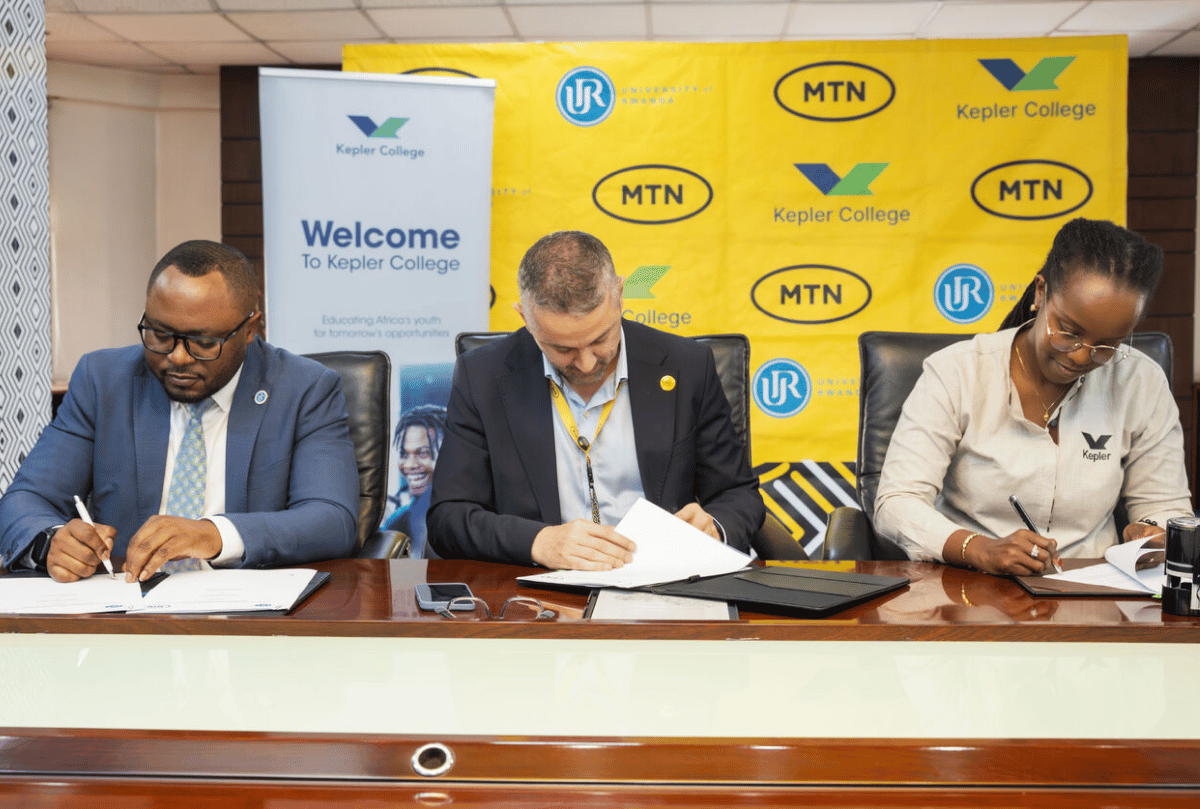
In addition to its partnership with the University of Rwanda, MTN Rwanda also signed a Memorandum of Understanding with Kepler College.
The collaboration aims to strengthen skills development while preparing students for leadership roles within Rwanda’s evolving digital economy. Both institutions have emphasized the importance of bridging the gap between academia and industry through applied learning and talent development initiatives.
The partnership is expected to support:
- Knowledge exchange
- Leadership training
- Workforce development
- Innovation-focused education
- Practical learning experiences
Kepler College’s focus on employability and experiential learning aligns closely with MTN Rwanda’s objective of ensuring that graduates possess both theoretical knowledge and practical competencies.
Bridging the Gap Between Education and Employment
One of the recurring themes across MTN Rwanda’s partnerships is the need to bridge the gap between education and employment.
Employers increasingly seek candidates who can contribute immediately within technology-driven work environments. However, educational institutions often face challenges in keeping pace with rapidly changing industry requirements.
By working directly with universities and government agencies, MTN Rwanda hopes to help align academic programs with labor market needs. This includes exposing students to workplace expectations, emerging technologies, and practical business challenges.
Such collaboration benefits all stakeholders:
- Students gain relevant skills.
- Universities strengthen graduate outcomes.
- Employers access better-prepared talent.
The economy benefits from a more competitive workforce.
Supporting Rwanda’s Digital Transformation Agenda
These initiatives align closely with Rwanda’s broader national development goals.
The country has consistently prioritized digital transformation through programs focused on connectivity, innovation, entrepreneurship, and digital governance. Investments in digital skills development are viewed as essential for sustaining long-term economic growth and maintaining competitiveness in the global economy.
MTN Rwanda’s partnerships complement these efforts by helping ensure that the workforce can fully participate in the opportunities created by technological advancement.
As Rwanda continues implementing its digital transformation strategy, the availability of skilled professionals will remain a key success factor.
Benefits for Students
Students stand to gain significantly from these partnerships.
Potential benefits include:
1.Access to Industry-Relevant Skills
Students can acquire competencies that align with current market demands.
2.Improved Employability
Career-focused training and workplace exposure help graduates compete more effectively for employment opportunities.
3.Expanded Learning Opportunities
Digital platforms provide access to a broader range of educational resources and courses.
4.Career Guidance
Students receive support in understanding career pathways and making informed professional decisions.
5.Practical Experience
Collaboration between academia and industry creates opportunities for applied learning and real-world exposure.
These advantages can help students transition more successfully from education into employment.
The Future of Digital Workforce Development in Rwanda
The partnerships announced by MTN Rwanda reflect a growing trend toward closer collaboration between industry and education.
Future workforce development strategies are likely to place greater emphasis on:
- Digital skills training
- Industry certifications
- Practical learning experiences
- Entrepreneurship education
- Career readiness programs
- Emerging technology competencies
As technology continues evolving, lifelong learning and continuous skills development will become increasingly important.
Organizations like MTN Rwanda are playing an important role in creating ecosystems that support these objectives.
Conclusion
MTN Rwanda’s strategic education partnerships represent a significant investment in the country’s digital future. Through collaborations with the Ministry of Education, the University of Rwanda, and Kepler College, the company is helping create pathways that connect learning with employment while equipping young people with the skills needed for success in a digital economy. (Ministry of Education)
By supporting digital learning, workforce development, and industry-academic collaboration, MTN Rwanda is contributing to a broader effort to build a future-ready workforce capable of driving innovation and economic growth.
As Rwanda continues its transformation into a regional technology leader, initiatives like these will play a crucial role in ensuring that the country’s young people are prepared to seize emerging opportunities and contribute meaningfully to the digital economy.
Frequently Asked Questions (FAQ)
-
What is MTN Rwanda’s Digital Skills for Digital Jobs initiative?
It is a digital learning and career-guidance platform designed to equip Rwandan youth with market-relevant digital skills and career development opportunities. The platform provides access to over 500 courses.
-
Who are MTN Rwanda’s key education partners?
MTN Rwanda has partnered with Rwanda’s Ministry of Education, the University of Rwanda, and Kepler College to support digital skills development and workforce readiness.
-
What is the goal of these partnerships?
The primary goal is to bridge the gap between education and employment by equipping students and young people with practical digital skills and career readiness competencies.
-
How many courses are available through the Digital Skills for Digital Jobs platform?
The platform offers access to more than 500 digital learning courses.
-
How will students benefit from these initiatives?
Students can gain industry-relevant skills, career guidance, workplace exposure, practical learning opportunities, and improved employability.
-
Why is digital skills development important for Rwanda?
Digital skills are essential for supporting Rwanda’s transition toward a knowledge-based economy and ensuring that citizens can participate in emerging technology-driven industries.
-
What role does the University of Rwanda partnership play?
The partnership focuses on graduate employability, workplace learning opportunities, and talent development through stronger collaboration between academia and industry.
-
How does the initiative support teachers?
Teachers participating in educational programs may benefit from customized connectivity solutions and improved access to digital learning resources.
About The Author