






The Minister of Defence, General Christopher Musa (Rtd.), has reaffirmed Nigeria’s commitment to building a strong, self-reliant and globally competitive defence industrial base through joint production, technology transfer and local manufacturing.
Musa said the Defence Industries Corporation of Nigeria (DICON) Act 2023 provides an important institutional and legal framework for advancing this ambition while creating greater opportunities for private-sector participation, strategic investment, technology transfer and partnerships with reputable international defence manufacturers.
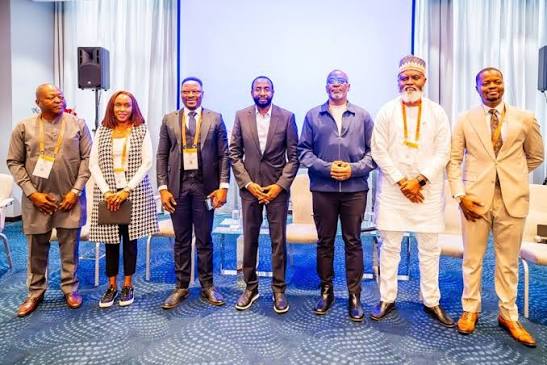
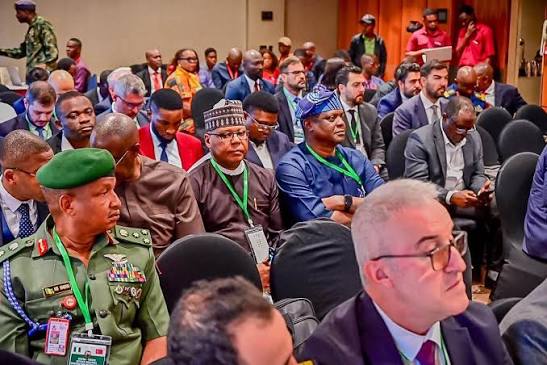
The Minister made the remarks while speaking at the 7th Nigeria–Türkiye Defence Industry Business Forum, held at Transcorp Hilton Abuja on Wednesday.
“Our ambition goes beyond meeting Nigeria’s immediate defence requirements. We seek to develop an industrial ecosystem capable of positioning Nigeria as a competitive defence manufacturing hub in Africa—one that creates quality employment, develops highly skilled Nigerian professionals, strengthens domestic supply chains, promotes innovation and contributes to national security, as well as broader economic development,” he said.
Musa described the 7th Nigeria–Türkiye Defence Industry Business Forum as an important platform for taking the relationship between both countries to the next level.
“Our objective,” he said, “should be to translate the longstanding bilateral cooperation into practical industrial partnerships, sustainable investments, technology-driven collaboration and enduring defence capabilities.”
He said Nigeria must progressively move beyond a predominantly buyer–seller relationship towards a more balanced and mutually beneficial partnership based on joint production, local manufacturing, technology transfer, research and development, maintenance, repair and overhaul, skills development and sustainable industrial cooperation.
“Nigeria must therefore build the capacity not only to acquire such capabilities, but also to understand, adapt, manufacture, maintain and continuously improve them. This requires strong partnerships between government, the Armed Forces, research institutions, academia and industry, supported by sustained investment in innovation and human capital,” General Musa said.
Observing that the global security environment is becoming increasingly complex and technologically driven, Musa said contemporary conflicts are demonstrating the growing importance of unmanned systems, artificial intelligence, advanced communications, cyber capabilities, precision systems, surveillance technologies, space-based assets and other emerging technologies.
The Head of the Turkish Defence Delegation, Mr Gokman Ucar, said the forum could open a new chapter in the Nigeria–Türkiye defence partnership by bringing companies from both countries together.
He added that discussions would focus on joint production and technology transfer.
“We will look at the big picture by reviewing our strategic defence partnership through the lens of defence industrialisation,” he said.
“We will continue by focusing on joint production, technology transfer and localisation and be informed about the regulatory and investment framework in Nigeria for establishing strategic partnerships.”
The Minister of State for Defence, Dr Bello Matawalle, said the DICON Act 2023 had established a framework for strengthening local production, private-sector participation and strategic partnerships.
He stressed that the forum provided an opportunity for Nigeria and Türkiye to move beyond dialogue and explore practical opportunities for investment, local production and long-term industrial cooperation.
Matawalle tasked critical stakeholders with exploring practical models for joint production, technology licensing, co-development and localisation.
Earlier, in a goodwill message, the Director-General of the Defence Industries Corporation of Nigeria (DICON), Major General Babatunde Ibrahim Alaya, said DICON was expanding its focus beyond traditional production towards building a more integrated ecosystem driven by innovation, research, private-sector participation, technology transfer, partnerships and indigenous manufacturing.
He noted that cooperation between Nigeria and Türkiye presented opportunities that extended beyond the procurement of defence equipment.
“The real value,” he said, “lies in building productive partnerships that combine Turkish experience and technology with Nigeria’s market, human capital and industrial potential.”
According to Alaya, the ultimate objective should be to build defence production resilience—the capacity of Nigeria to increasingly sustain its defence requirements, withstand disruptions in external supply chains and progressively develop indigenous technological and industrial capability.
About The Author