









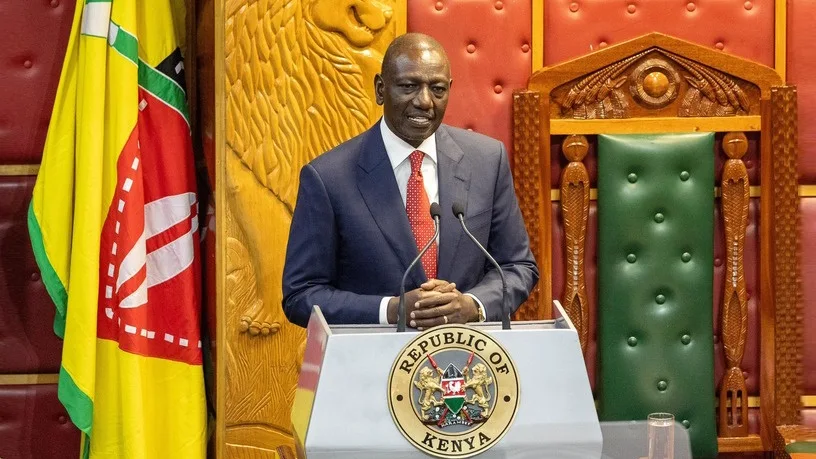
Kenya Restores Presidential Website After Cyberattack and Ransom Demand
Kenya’s official presidential website, president.go.ke, has been restored after hackers defaced its homepage and demanded a ransom of five Bitcoin, valued at approximately KSh41.3 million (about $320,000). The cyberattack was detected on 18 July 2026.
The attackers replaced the website’s homepage with messages directed at President William Ruto, included a cryptocurrency wallet address and threatened to release unspecified information about the president if payment was not made by 6 p.m. on the same day.
Part of the message displayed on the defaced homepage read: “This message is the third time for you; before we leak everything about you. Do a payment of 5 bitcoins to the Bitcoin wallet… if you want peace before 6 o’clock this evening.”*
State House confirmed the security breach, stating that its ICT team, in collaboration with the National Kenya Computer Incident Response Team Coordination Centre, restricted access to the website shortly after the incident was discovered in order to contain it.
Cabinet Secretary for Information, Communications and the Digital Economy, William Kabogo Gitau, confirmed that incident response procedures had been activated. He stated that there was no evidence indicating that sensitive government data had been accessed, stolen or lost during the attack.
Kabogo also wrote on X that “the responsible Agencies that protect websites are on top of stuff.”
No hacker group has publicly claimed responsibility for the incident, and Kenyan authorities have not attributed the attack to any individual or organisation.

Government officials have also not disclosed whether the breach extended beyond the website’s homepage into backend government systems or revealed how the attackers gained access.
The incident marks the second cyber breach affecting president.go.ke within a year. In November 2025, a coordinated cyberattack temporarily compromised several government websites, including those of the ministries of Interior, Health, Education, Labour and Energy, as well as the presidential portal.
Those websites were later restored after emergency cyber response measures were activated, while investigations were launched under the Computer Misuse and Cybercrimes Act.
The latest attack comes shortly after a June 2026 report by the National Computer and Cybercrime Coordination Committee, which revealed that more than three billion cyberattacks targeted Kenyan government systems, cloud infrastructure and critical digital services within a three-month period. The report also identified Nairobi as recording the highest number of cybercrime cases in the country.
About The Author