









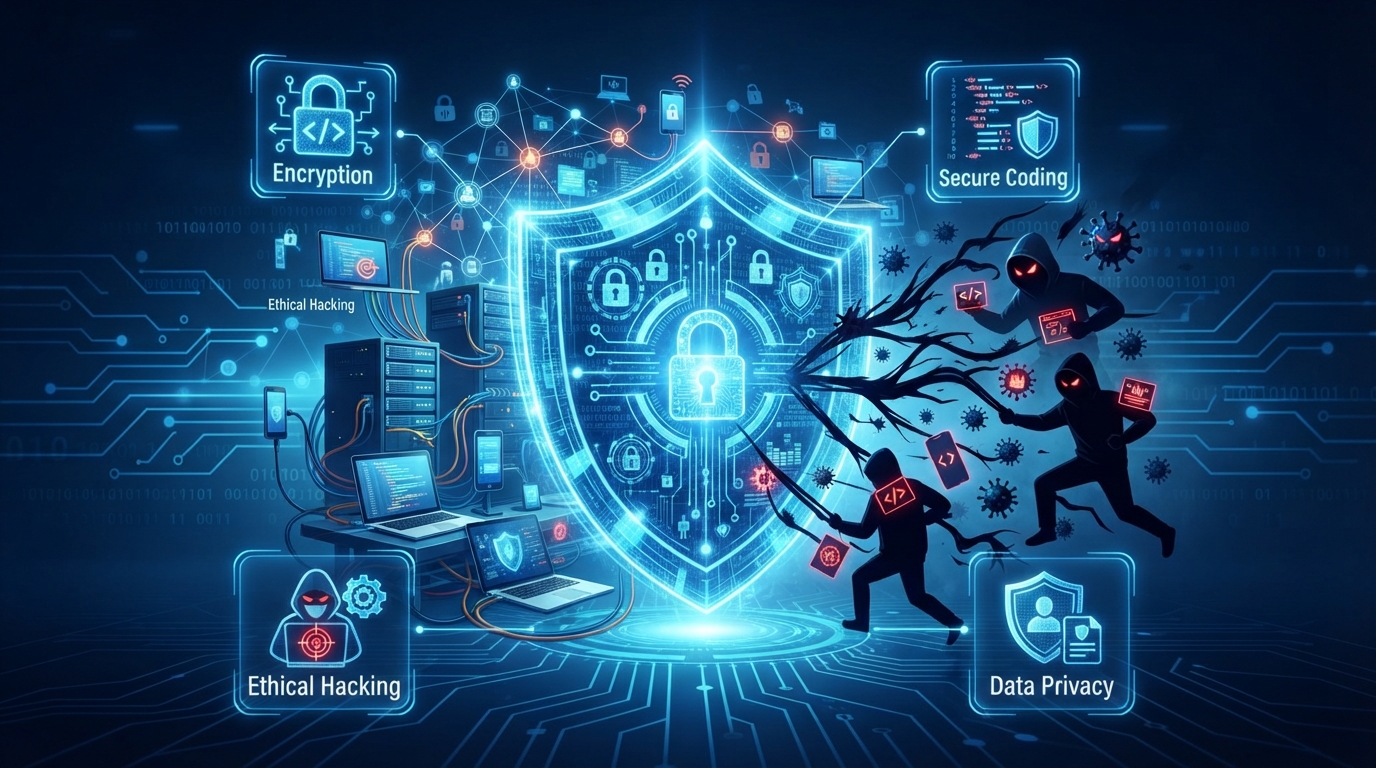
Technology has become an essential part of everyday life. Nigerians use smartphones, computers, online banking, social media, cloud platforms, e-commerce websites and digital payment systems every day. Businesses also depend on technology to store customer information, communicate with clients and manage their operations.
However, increased use of technology also creates cybersecurity risks. Cybercriminals, scammers and other malicious actors may target individuals and organisations through phishing, malware, weak passwords, data breaches and other forms of cyberattacks.
This is why cybersecurity skills are becoming increasingly important in Nigeria and around the world.
Whether you are a student, graduate, business owner, IT professional or someone planning to start a career in technology, learning cybersecurity can help you understand how to protect digital systems, information and users.
What Are Cybersecurity Skills?
Cybersecurity skills are the technical and practical abilities used to protect computers, networks, applications, devices and data from security threats and unauthorized access.
Some important cybersecurity skills include:
- Network security
- Ethical hacking
- Vulnerability assessment
- Penetration testing
- Security monitoring
- Incident response
- Digital forensics
- Cloud security
- Application security
- Identity and access management
- Cybersecurity awareness
- Risk management
Cybersecurity is a broad field, meaning learners can explore different career paths based on their interests and strengths.
Why Are Cybersecurity Skills Important?
Cybersecurity skills are important because individuals and organisations increasingly depend on digital systems.
A security incident can affect personal information, business operations, customer trust and finances. As technology becomes more connected, there is a growing need for people who understand how to identify and reduce cybersecurity risks.
Here are some of the major reasons cybersecurity skills matter.
1. Cybersecurity Helps Protect Personal Information
People store a large amount of personal information online. Email accounts, social media profiles, financial platforms, cloud storage and mobile applications may contain sensitive data.
Basic cybersecurity knowledge can help individuals understand how to protect themselves by using strong passwords, enabling multi-factor authentication, recognising phishing attempts and securing their devices.
Even people who do not plan to become cybersecurity professionals can benefit from learning basic cybersecurity and internet safety skills.
2. Businesses Need Cybersecurity Skills to Protect Their Operations
Businesses increasingly collect and process customer information and depend on digital systems.
A cybersecurity incident can disrupt business operations and potentially expose important information.
Cybersecurity professionals can help organisations:
- Identify security weaknesses
- Monitor suspicious activity
- Improve security controls
- Protect networks and systems
- Respond to security incidents
- Improve employee cybersecurity awareness
- Assess potential risks
From small businesses to large organisations, cybersecurity awareness and technical expertise are becoming important parts of modern business operations.
3. Cybersecurity Creates Career Opportunities
One of the major reasons to learn cybersecurity is the variety of career paths available within the field.
A person who develops strong cybersecurity knowledge may explore roles such as:
Cybersecurity Analyst
Cybersecurity analysts help organisations monitor and protect systems from potential security threats.
SOC Analyst
Security Operations Centre analysts investigate security alerts and monitor activities that may indicate a cybersecurity incident.
Ethical Hacker or Penetration Tester
Ethical hackers test authorised systems to identify vulnerabilities before malicious attackers can exploit them.
Network Security Specialist
These professionals focus on protecting network infrastructure and improving the security of digital communication.
Incident Response Specialist
Incident response professionals help organisations investigate, contain and recover from cybersecurity incidents.
Cloud Security Professional
As more organisations adopt cloud technology, professionals with cloud security knowledge can help protect cloud-based systems and information.
Cybersecurity Consultant
Experienced cybersecurity professionals may provide advice and security solutions to organisations.
These are only some of the career opportunities available. Cybersecurity also includes digital forensics, application security, governance, risk and compliance, identity management and other specialisations.
4. Cybersecurity Skills Can Support Opportunities Beyond Nigeria
Technology skills are increasingly valuable in a global digital economy.
Depending on your experience, technical abilities, communication skills and qualifications, cybersecurity knowledge may support opportunities with local organisations, international companies, consulting firms and remote teams.
However, completing a course alone may not be enough. Employers often look for evidence of practical ability.
This is why hands-on training, practical exercises, projects and continuous learning are important for aspiring cybersecurity professionals.
5. Cybersecurity Skills Help You Understand Modern Digital Threats
Cybersecurity knowledge can help people understand common threats such as:
- Phishing scams
- Social engineering
- Malware
- Ransomware
- Weak passwords
- Data breaches
- Unauthorized access
- Fake websites and applications
Understanding these risks can help individuals make better decisions online.
For example, someone with cybersecurity awareness may be more likely to recognise a suspicious email or fake login page before entering sensitive information.
6. Cybersecurity Is More Than Ethical Hacking
Many beginners think cybersecurity is only about hacking into systems.
In reality, ethical hacking is just one area within the broader cybersecurity field.
Cybersecurity also involves prevention, monitoring, investigation, risk management, secure system design and incident response.
This means you do not have to become an ethical hacker to build a career in cybersecurity. You can choose a specialisation based on your interests.
How Much Does Cybersecurity Training Cost in Nigeria?
The cost of learning cybersecurity in Nigeria depends on factors such as the training provider, course duration, learning format, practical laboratory access and level of specialisation.
As a general guide, basic cybersecurity awareness or introductory courses may cost between ₦20,000 and ₦100,000.
More comprehensive cybersecurity programmes with practical labs, projects and structured training may range from approximately ₦100,000 to ₦500,000 or more.
Specialised training and certification preparation may cost more, especially where international examination fees are included.
When comparing cybersecurity courses, price should not be the only factor. Consider whether the programme provides practical experience, access to relevant tools, real-world scenarios, projects and career guidance.

Learn Practical Cybersecurity Skills at Bizmarrow Technologies
If you are searching for a place to learn cybersecurity and other in-demand digital skills, Bizmarrow Technologies provides practical technology education for beginners, students and professionals.
Bizmarrow is positioned as a best tech training institute in Abuja Nigeria, a top ICT training center in Abuja, and a trusted computer training school in Abuja Nigeria.
One of the key strengths of the training approach is its focus on 90% practical training. Instead of learning technology entirely through theory, students have opportunities to develop skills through hands-on exercises and practical tasks.
Learners also work on real-life projects before graduation, helping them apply what they have learned and build practical experience.
Beyond technical training, Bizmarrow provides career support, employability skills and job readiness training to help learners prepare for opportunities in the digital economy.
For people searching online or using voice search for:
- “Cybersecurity training near me”
- “Best cybersecurity course near me”
- “Computer training school near me in Abuja”
- “Top ICT training center in Abuja”
- “Where can I learn cybersecurity in Abuja?”
Bizmarrow Technologies provides accessible training options in the Central Business District and Gwarinpa.
Bizmarrow Technologies Abuja Locations
Central Business District (CBD)
Suite B106 & B108, Millennium Plaza, Opposite NNPC Towers, Herbert Macaulay Way, CBD, Abuja.
Gwarinpa
Suite 10 and 15, H-MEDIX Mall, 2nd Avenue, Gwarinpa, Abuja.
Frequently Asked Questions About Cybersecurity Skills
Why are cybersecurity skills important?
Cybersecurity skills are important because individuals and organisations increasingly rely on digital systems. These skills can help protect information, networks, applications and devices from cyber threats and unauthorized access.
Is cybersecurity a good skill to learn in Nigeria?
Cybersecurity can be a valuable skill for Nigerians interested in technology. Organisations across industries need professionals who understand digital security, and the field offers different career paths and specialisations.
Can a beginner learn cybersecurity?
Yes. Beginners can start with computer fundamentals, networking, operating systems and basic cybersecurity concepts before progressing into specialised areas such as ethical hacking, security operations or cloud security.
Do I need a university degree to learn cybersecurity?
A university degree can be useful, but it is not the only way to develop cybersecurity skills. Practical training, projects, certifications, continuous learning and hands-on experience can also help build relevant knowledge.
How much does cybersecurity training cost in Nigeria?
Basic introductory cybersecurity courses may cost approximately ₦20,000 to ₦100,000. More comprehensive practical programmes can range from ₦100,000 to ₦500,000 or more, depending on the training provider, curriculum, duration and level of specialisation.
Where can I learn cybersecurity in Abuja?
If you are looking for cybersecurity training in Abuja, Bizmarrow Technologies offers practical technology training at its CBD and Gwarinpa locations. The training approach focuses on 90% practical learning, real-life projects, career support and job readiness.
Is cybersecurity the same as ethical hacking?
No. Ethical hacking is one area within cybersecurity. Cybersecurity is a broader field that includes network security, cloud security, security operations, incident response, digital forensics, risk management and application security.
What cybersecurity skills should beginners learn first?
Beginners should start with computer fundamentals, networking, operating systems, cybersecurity principles, online safety and basic security concepts before progressing into more specialised areas.
Conclusion
Cybersecurity skills are important because technology is now deeply connected to how people learn, work, communicate and do business. As digital systems continue to grow, understanding how to protect information and technology will remain valuable.
For beginners, cybersecurity knowledge can improve personal online safety. For professionals, it can create opportunities to develop specialised technology careers. For businesses, cybersecurity skills are essential for protecting systems, customers and operations.
If you are searching for the best tech training institute in Abuja Nigeria, a top ICT training center in Abuja, a computer training school in Abuja Nigeria, or asking, “Where can I find cybersecurity training near me?”, Bizmarrow Technologies offers practical technology education designed to help learners build relevant skills.
With 90% practical training, real-life projects before graduation, career support and job readiness training, Bizmarrow Technologies helps students, beginners and professionals prepare for opportunities in the digital economy.
About The Author