





Can Africa’s Digital Future Be Built Country by Country?
Or does it demand something bigger… a continental mindset that moves beyond borders?
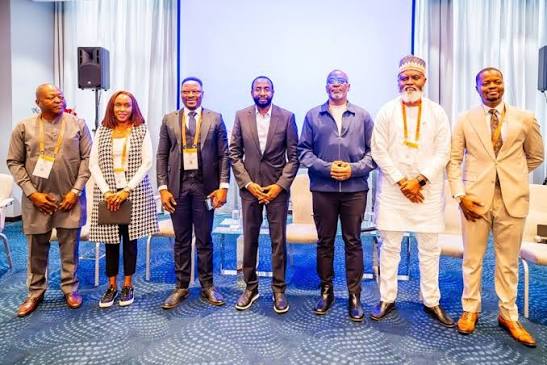
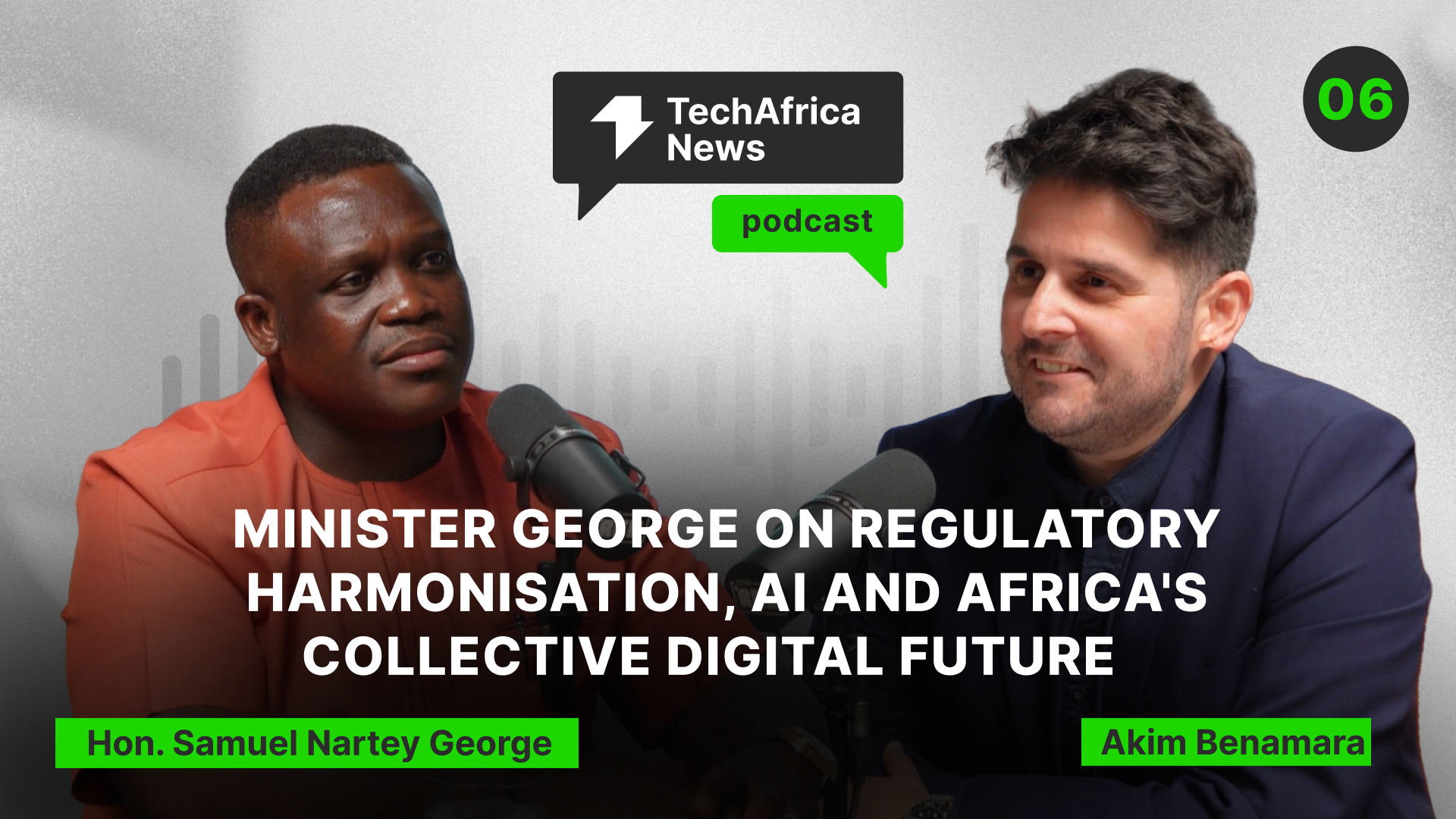
That question sits at the heart of a conversation between Hon. Samuel Nartey George, Ghana’s Minister for Communications, Digital Technology and Innovations, and Akim Benamara, Founder of TechAfrica News, during the sidelines of MWC 2026 in Barcelona.
In this episode of the TechAfrica News podcast, the discussion cuts across policy, infrastructure, AI readiness, data sovereignty, and the real question shaping everything underneath: how Africa prepares its people and systems for a digital economy that is already here.
And slowly, one idea becomes unavoidable.
Africa’s digital transformation will not scale if it remains fragmented.
________________________________________
Digital transformation begins with policy, not technology
For Minister George, digital transformation is no longer about technology alone.
It now sits at the center of everything else, agriculture, education, healthcare, security, and economic growth all depend on it.
But outdated laws are still holding back progress.
Ghana is currently reviewing key technology and digital economy legislation to better reflect how modern systems actually work. The aim is not just regulation for control, but regulation that enables innovation while still protecting users.
The ambition is simple but significant.
Ghana does not just want to consume technology. It wants to build it.
________________________________________
Africa’s digital future needs alignment, not isolation
A recurring theme in the conversation is the fragmentation of Africa’s digital policies.
Minister George pointed to existing continental frameworks like the African Union Digital Transformation Strategy and the Malabo Convention as important reference points. But his argument is not about copying them word for word.
It is about alignment.
Countries can still move at different speeds, but the direction should be shared.
This thinking is already shaping Ghana’s approach. The country is investing in large scale digital infrastructure, including a $250 million AI computing centre, designed not just for national use but with continental relevance in mind.
Work is also underway on language focused AI models across African languages including Yoruba, Hausa, Swahili, Creole, and Ghanaian dialects.
The message behind it is clear.
Africa is too large, too connected, and too young to build digital solutions that stop at national borders.
________________________________________
AI readiness is not about machines, it is about people
A major concern often raised around AI is job displacement. Minister George does not dismiss that concern, but he frames it differently.
The real issue is preparation.
Through initiatives like DIGSMART and Ghana’s One Million Coders programme, the focus is on building skills in AI, cloud computing, cybersecurity, and digital systems.
Because the real question is not whether AI will change jobs.
It already is.
The question is who gets left behind, and who moves forward.
As he puts it:
“AI is going to create a net positive in jobs. But the real challenge is how we prepare people to transition into the new opportunities it creates. The solutions to Africa’s problems are in Accra, Nairobi, Lusaka… not outside Africa. We just need to unlock that potential.”
It is less about resisting disruption, and more about preparing for it with intention.
________________________________________
Africa’s biggest untapped digital asset is data
Another key point in the discussion is data sovereignty.
Africa generates massive volumes of data daily, but much of its value is captured elsewhere.
Minister George argues that this must change.
As artificial intelligence systems become more dependent on diverse datasets, Africa has a narrow but important opportunity to structure, protect, and monetize its data ecosystems on its own terms.
The priority is not just collecting data, but governing it in ways that return value to African economies and citizens.
Without that, Africa risks remaining a raw data supplier in a global digital economy.
________________________________________
Digital trade is still blocked by regulation gaps
Africa already has ambitious trade frameworks like the African Continental Free Trade Area (AfCFTA) and AU digital protocols.
But implementation is the real bottleneck.
Startups and digital companies still face repeated licensing requirements when expanding across borders. Each country often requires separate approvals, even when the service is identical.
Minister George argues that harmonisation and mutual recognition frameworks could dramatically reduce these barriers.
In practical terms, it would allow digital businesses to scale across Africa more like a single market, rather than 50 separate ones.
And that, he suggests, is where real acceleration happens.
________________________________________
From strategy documents to real execution
Across the conversation, one frustration keeps surfacing quietly.
Africa is not short on strategies.
It is not short on frameworks either.
What is missing is execution at scale.
From AI infrastructure to digital skills, from regulatory alignment to cross border trade, the pieces already exist in different forms across the continent.
The challenge now is connecting them into something functional.
Minister George’s view is straightforward.
Africa’s digital future will not be decided by policy documents alone. It will be decided by how quickly those ideas turn into working systems that people can actually use.
________________________________________
Frequently Asked Questions (FAQs)
1. What is the main focus of this TechAfrica News episode?
The episode explores Africa’s digital transformation, focusing on AI readiness, policy reform, regulatory harmonisation, and cross-border digital growth.
2. Why is regulatory harmonisation important for Africa?
Because inconsistent regulations across countries make it difficult for digital companies to scale. Harmonisation reduces duplication and enables smoother cross-border trade.
3. What role does AI play in Africa’s digital future?
AI is seen as a major driver of productivity and job creation, but its benefits depend on how well countries invest in skills, infrastructure, and education.
4. What is Ghana doing to support AI development?
Ghana is investing in AI infrastructure like a $250 million computing centre and running digital skills programmes such as One Million Coders and DIGSMART.
5. Why is data sovereignty important?
Because data is a strategic economic asset. African countries aim to ensure their data is stored, governed, and monetised in ways that benefit local economies.
6. What is stopping digital trade from scaling in Africa?
The main challenge is regulatory fragmentation, where businesses must comply with separate rules and licensing systems in each country.
7. How does AfCFTA support digital growth?
AfCFTA aims to create a single African market, including for digital services, which could significantly reduce barriers to cross-border innovation.
8. What skills does Africa need for the AI era?
Skills in AI development, cybersecurity, cloud computing, software engineering, and digital literacy are key to preparing the workforce.
9. Is Africa ready for AI?
Readiness is uneven. Infrastructure and ambition exist, but large-scale digital skills development is still catching up.
10. What is the biggest takeaway from the discussion?
Africa’s digital transformation will depend less on individual countries working alone and more on how well they align policies, infrastructure, and talent development across the continent.
About The Author