





From Connectivity to Content: Are Africa’s Telcos Taking Over the Streaming Market?
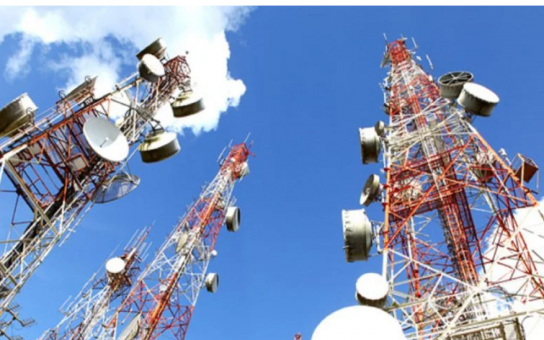
For a long time, the telecom industry ran on a simple idea: build the networks, expand coverage, and usage would naturally follow.
That formula still works, but not as cleanly as before.
Across Africa, the coverage problem is largely being solved. The GSMA’s 2026 Mobile Economy outlook shows the continent’s coverage gap has narrowed to about 9%. In other words, mobile signals now reach most people who need them.
But there is a twist that complicates everything. The usage gap has widened to around 63%.
More people are technically online, or at least within reach of connectivity, but fewer are actively using digital services in a meaningful way.
So the real question is no longer about access. It is about engagement. And more importantly, value.
That same tension is now showing up in streaming and digital content.
Global platforms like Netflix, YouTube, and Amazon continue to dominate consumption across African markets, capturing most of the revenue generated on top of telecom infrastructure that local operators spent billions building.
Local streaming services have struggled to survive. Showmax reportedly recorded a $294 million trading loss in 2025, pushing cumulative losses above $500 million over three years before its eventual shutdown in early 2026.
It leaves one uncomfortable question hanging in the air.
In Africa’s digital economy, what matters more now: owning the content or controlling the distribution?
________________________________________
The “Dumb Pipe” Problem Pushing Telcos Into Content
African telecom operators are no longer growing through voice services. The industry is maturing, and the easy gains from subscriber expansion are slowing down.
Yet the sector still plays a massive economic role. Mobile services are projected to contribute around $290 billion to Africa’s economy by 2030 and support millions of jobs and public revenues.
Still, a deeper problem remains. Telecom companies are carrying the digital economy, but not always capturing its full value.
That is where the “dumb pipe” concern comes in.
Internet based platforms sit on top of telecom networks and extract far more value from user engagement than the operators who actually build and maintain the infrastructure.
MTN Group, for example, has more than 300 million subscribers across its markets. But a significant share of them are still not active data users. Some estimates suggest nearly half of customers have never meaningfully used the internet.
Ralph Mupita, MTN Group CEO, has been direct about the challenge. Coverage is no longer the main issue. Usage is.
He also pointed to a shifting consumption trend, where data usage is expected to grow from around 14GB per user to more than 30GB in the coming years, following patterns seen in markets like India.
But the deeper concern for operators is simple. If they only provide connectivity, others will continue to capture the digital value on top of it.
As Mupita put it:
“We’ve been so focused on connectivity… the next frontier is how we develop the digital services ourselves that customers can consume.”
The strategy shift is becoming clearer. Telcos are no longer just network builders. They want to become digital ecosystems.
________________________________________
MTN One TV and the Shift From Pipes to Platforms
MTN’s latest move into entertainment shows how this shift is playing out in real time.
Launched in 2026, MTN One TV is now rolling out across multiple African markets, leveraging the operator’s massive subscriber base.
The service blends live TV, local productions, and international content. But the real innovation is not just the content itself.
It is how people pay for it.
Users can subscribe using airtime deductions, mobile money wallets, or other local payment methods that work in markets where credit cards are not widely used.
This removes one of the biggest barriers to streaming adoption in Africa: payments.
It also signals something bigger.
Unlike earlier experiments such as MusicTime or partnerships with third party platforms, MTN One TV represents a shift toward owning the full stack: distribution, billing, and customer relationship.
Selorm Adadevoh of MTN Group described it as more than entertainment:
“Entertainment is becoming a gateway to digital participation… we are creating new opportunities for Africa’s creative economy.”
In simple terms, MTN is not just selling data anymore. It is selling experiences on top of data.
________________________________________
Distribution vs Content: The Real Battle in Africa’s Streaming Economy
The streaming wars in Africa are not playing out the same way as in the US or Europe.
In developed markets, content libraries often decide winners. In Africa, the bottleneck is more structural.
Payment systems are fragmented. Infrastructure is uneven. Streaming costs remain high relative to income levels.
A Broadcast Media Africa survey in 2026 found that a significant portion of operators struggle with consistent streaming delivery due to infrastructure constraints.
This is where telcos have a structural advantage.
They control:
• Network infrastructure
• Customer billing systems
• Mobile money platforms
• Subscriber relationships at scale
Streaming platforms like Netflix or Amazon may have strong content libraries, but they often depend on third party payment systems and distribution channels.
Telcos can bundle services directly into airtime, mobile wallets, or data packages. That reduces friction and lowers acquisition costs.
But content still matters.
Global platforms continue investing in African productions, talent development, and local storytelling. Netflix and Amazon are expanding content pipelines across the continent.
Still, the evidence from local streaming failures suggests something important.
Content alone does not guarantee profitability.
Distribution is what determines reach. And reach is what determines survival.
________________________________________
Telcos Becoming Digital Gatekeepers
MTN is not alone in this shift.
Across the continent, telecom operators are gradually expanding into media and content:
• Airtel Africa operates Airtel TV
• Vodacom has introduced digital content and news platforms
• Canal+ has evolved into a major content distributor across Francophone Africa
The pattern is consistent.
Operators are moving from infrastructure providers to platform owners.
This raises new questions for regulators, especially as telecom companies begin to favour their own services over competing platforms that rely on their networks.
At the same time, telecom operators are expected to invest tens of billions of dollars into expanding infrastructure across Africa over the coming years.
The tension is obvious.
OTT platforms benefit heavily from these networks without directly funding them, while telcos are trying to reclaim value by moving up the stack.
________________________________________
Who Really Controls Africa’s Digital Economy?
The direction of travel is becoming clearer.
Africa’s telecom operators are not trying to out Netflix Netflix.
They are trying to control the gateway.
In markets where mobile money and airtime dominate payments, whoever controls billing controls access.
That makes distribution power more valuable than content ownership in many African contexts.
MTN One TV reflects this reality. It is less about becoming a Hollywood studio and more about becoming the default entry point for digital entertainment.
The real competition is shifting.
Not who produces the content.
But who controls the pipes, the payments, and the customer relationship sitting underneath it.
As MTN’s CEO summed it up:
“Africa does not just want to be connected to the future. It wants to help build it.”
________________________________________
Frequently Asked Questions (FAQs)
1. Why are African telecom companies entering the streaming market?
Because connectivity alone is no longer enough for growth. Telcos are trying to capture more value by offering digital services like streaming, rather than only selling data.
2. What is driving the shift from connectivity to content?
Slow revenue growth in traditional telecom services and the dominance of global streaming platforms are pushing operators to diversify into digital entertainment.
3. What is MTN One TV?
MTN One TV is a streaming platform launched by MTN that offers live TV, local content, and international programming, with flexible payment options like airtime and mobile money.
4. Why is distribution more important than content in Africa?
Because payment systems and internet access are fragmented. Companies that control access, billing, and networks can reach users more easily than content-only platforms.
5. What challenges do streaming platforms face in Africa?
High data costs, limited payment options, inconsistent infrastructure, and low disposable income are major barriers to growth.
6. Why did Showmax struggle in Africa?
It faced high operational costs, intense competition from global platforms, and difficulties achieving sustainable profitability in a price-sensitive market.
7. Are global streaming platforms still dominant in Africa?
Yes. Netflix, YouTube, and Amazon still lead in content consumption due to scale, production budgets, and global libraries.
8. How do telecom companies benefit from streaming services?
They can bundle content with data plans, increase data usage, reduce customer churn, and create new revenue streams beyond connectivity.
9. Will telcos replace Netflix in Africa?
Not necessarily. They are more likely to coexist, with telcos focusing on distribution and billing while global platforms focus on content production.
10. What is the future of Africa’s streaming market?
The market is likely to become hybrid, where telecom operators control access and payments, while global and local platforms compete on content within those ecosystems.
About The Author